Seed Biology: The Evolution, Structure, and Vital Role of Plant Reproduction
In the vast tapestry of life on Earth, few structures are as fundamental to the survival of terrestrial ecosystems as the seed. A seed is a specialized plant structure containing an embryo and a reservoir of stored nutrients, all encased within a protective outer layer known as a testa (seed coat). While the term is sometimes used broadly to include anything that can be sown—such as tubers or husks—in botanical terms, it refers to the product of a ripened ovule following fertilization.
The development of a seed marks a revolutionary milestone in evolutionary history. Unlike ferns, mosses, and liverworts, which rely on water-dependent methods to propagate, seed-bearing plants (spermatophytes) have successfully colonized nearly every land niche, from frozen tundras to tropical forests. This biological innovation allows plants to protect their offspring and wait for the ideal conditions to grow.
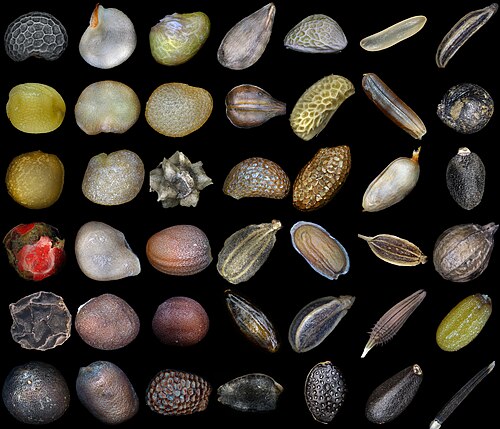
Key Facts
- Core Components: A typical seed consists of an embryo and a nutrient storage system.
- Evolutionary History: Gymnosperms were the first seed-bearing plants, appearing during the late Devonian period.
- Reproduction: Seeds form when an embryo sac is fertilized by sperm from pollen, creating a zygote.
- Dispersal Methods: Plants use wind (anemochory), water (hydrochory), and animals (zoochory) to spread their seeds.
- Economic Impact: In the U.S. alone, farmers spent approximately $22 billion on seeds in 2018.
The Anatomy of a Seed
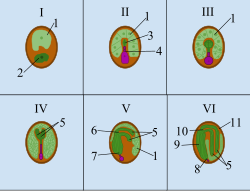
To understand how a plant begins its life, one must look closely at the internal architecture of the seed. The process begins with the ovule, which, after fertilization, develops into the seed. The embryo is the miniature plant waiting to emerge, developing from a zygote and growing within the mother plant until its development is halted.
The Embryo and Nutrient Storage
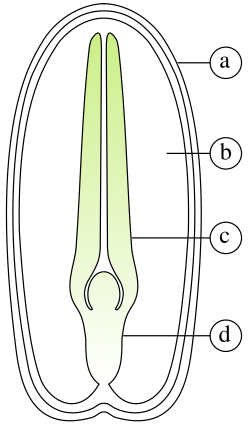
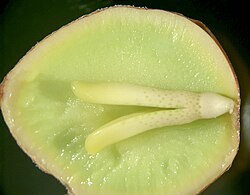
The embryo is the heart of the seed. It contains the essential blueprints for the future plant, including the radicle (the embryonic root) and the plumule (the embryonic shoot). To fuel its initial growth, the embryo relies on stored nutrients. In many species, this storage is found in the endosperm or within specialized structures called cotyledons (seed leaves).
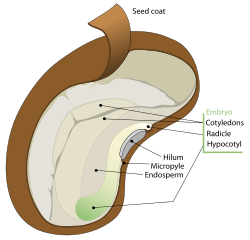
Seed Classification: Monocots vs. Dicots
Botanists often categorize seeds based on the number of cotyledons they possess. Monocotyledons (monocots) have a single seed leaf, while dicotyledons (dicots) possess two. This distinction leads to significant differences in their internal structure and overall morphology.
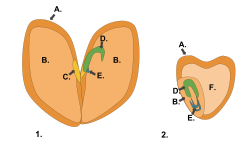
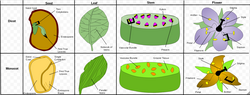
For example, a dicot seed might show a clear distinction between the hypocotyl and epicotyl, whereas a monocot might feature a specialized structure called a scutellum. These variations are critical for how the plant manages its energy during the germination process.
Evolutionary Origins and Diversity
The history of seeds is a journey spanning hundreds of millions of years. The first land plants evolved roughly 468 million years ago using spores. However, the gymnosperms—plants that produce "naked" seeds without an ovary—emerged during the late Devonian period (416 to 358 million years ago). These were followed by seed ferns during the Carboniferous period, which utilized cupules to protect developing seeds.
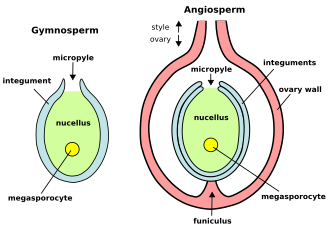
In contrast, angiosperms (flowering plants) evolved a more complex system where the ovary ripens into a fruit to protect and disseminate the seeds. This evolution has led to incredible diversity in seed appearance. Some seeds are enclosed in hard shells, like nuts (e.g., acorns), while others are part of "stone fruits" where a hardened endocarp surrounds the seed.
Morphology and Shape
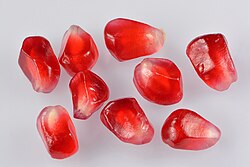
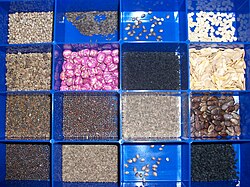
Seeds come in an array of shapes, which can be used to identify different species. Common descriptors include:
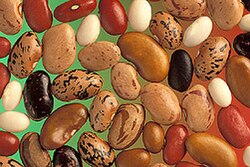
- Reniform: Bean-shaped or kidney-shaped.
- Globose: Spherical.
- Ovoid: Egg-shaped.
- Discoid: Disc-like with parallel faces.
- Lenticular: Lens-shaped.
Survival Strategies: Dispersal and Dormancy
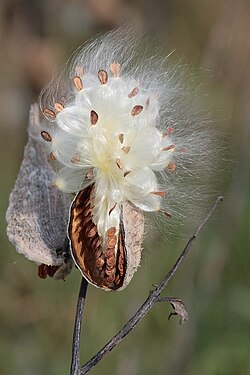
For a plant species to thrive, its seeds must travel away from the parent plant to avoid competition. This is achieved through various biological mechanisms:
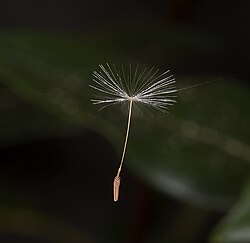
- Anemochory (Wind): Lightweight seeds, such as dandelion achenes, use the wind to travel long distances.
- Hydrochory (Water): Seeds that can float utilize water currents for transport.
- Zoochory (Animals): Seeds may be eaten and excreted by animals or cling to fur to hitchhike to new locations.
The Role of Dormancy
Not every seed germinates immediately. Dormancy is a survival mechanism that allows seeds to remain viable during unfavorable conditions. This can be exogenous (caused by external environmental factors) or endogenous (caused by internal physiological factors within the embryo itself).
Summary of Seed Characteristics
| Feature | Gymnosperms | Angiosperms |
|---|---|---|
| Ovule Protection | Naked seeds (no ovary) | Enclosed within an ovary |
| Dispersal Unit | Cones/Seeds | Fruit containing seeds |
| Evolutionary Era | Late Devonian | Later evolution |
| Common Examples | Ginkgo, Pines | Beans, Sunflowers, Peaches |
Economic and Legal Landscape
Seeds are a massive global commodity. In 2018, U.S. farmers spent $22 billion on seeds, a significant increase from previous decades. This market is heavily influenced by large corporations, with companies like DowDuPont and Monsanto holding significant shares in the corn and soybean markets. This concentration of power has led to complex legal debates regarding seed laws and farmer rights, particularly in regions like Kenya and the European Union.
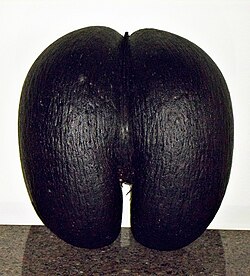
Beyond agriculture, seeds hold immense historical value. For instance, a Judean date palm seed recovered from an excavation in Israel was successfully germinated in 2005, despite being approximately 2,000 years old.
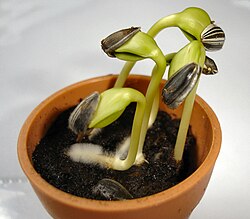
![Microbial transmission from seed to seedling[60]](/images/c6/1b/c61b0ea37aa8fdfb2c5d8f1f087a8fc6430899233f1fa929c858444b402ba654.gif)
Frequently Asked Questions
What is the difference between a seed and a fruit?
In botanical terms, a seed is the ripened ovule containing the embryo. A fruit is the ripened ovary of a flowering plant that often encloses the seed. Many items we call "seeds" commercially, like sunflower seeds, are actually the seeds inside a hard fruit wall.
How do seeds travel to new locations?
Seeds use several methods for dispersal: wind (anemochory), water (hydrochory), and animals (zoochory). Some seeds are designed to be carried by the wind, while others rely on being eaten by animals or sticking to their bodies.
What causes seed dormancy?
Dormancy can be caused by external factors (exogenous), such as temperature or light requirements, or by internal factors (endogenous) within the embryo itself that prevent immediate growth.
Can seeds stay viable for a long time?
Yes, some seeds can remain viable for centuries. A notable example is a 2,000-year-old Judean date palm seed that was successfully germinated in 2005.
What are monocots and dicots?
These terms refer to the number of cotyledons (seed leaves) in an embryo. Monocots have one cotyledon, while dicots have two. This is a primary way botanists classify flowering plants.