Scottish Fire and Rescue Service
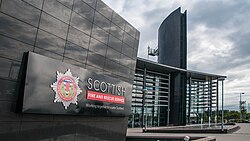
The Scottish Fire and Rescue Service (SFRS) serves as the national fire and rescue agency for Scotland. Established to provide a unified approach to public safety, the service operates under the motto "Working together for a safer Scotland." With its operational headquarters based in Cambuslang, the SFRS is the largest fire brigade in the United Kingdom, surpassing even the London Fire Brigade in scale.
The service was created on April 1, 2013, following the passage of the Police and Fire Reform (Scotland) Act 2012. This legislation mandated the merger of eight regional fire services into a single national entity to streamline operations and improve efficiency across the country.
Key Facts
- Established: April 1, 2013.
- Workforce: 7,556 employees (as of 2025).
- Infrastructure: 356 fire stations and 424 engines.
- Budget: £314.59 million operational and £43.05 million capital (2024/2025).
- Leadership: Led by Fire Chief Stuart Stevens.
- Scope: Largest fire brigade in the UK.
Consolidation and Organizational Structure
The transition to a national service began with a 2011 government consultation, leading to the merger of eight regional bodies: Central Scotland, Dumfries and Galloway, Fife, Grampian, Highlands and Islands, Lothian and Borders, Strathclyde, and Tayside. While an internal report eight months post-merger indicated that operational responses remained stable, the consolidation of eight control rooms into three initially led to some dispatching errors.
To maintain local efficacy, the SFRS is divided into three primary Service Delivery Areas:
- Northern Service Delivery Area: Headquartered in Dyce, Aberdeen, serving 1.2 million residents across 164 stations.
- East Service Delivery Area: Headquartered in Newbridge, Edinburgh, serving 1.6 million residents across 65 stations.
- Western Service Delivery Area: Headquartered in Hamilton, serving 2.4 million residents across 127 stations.
Staffing and Station Models
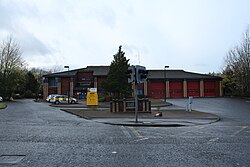
The SFRS utilizes a diverse staffing model to ensure coverage across Scotland's varied geography. The 356 stations are categorized as 74 Wholetime, 240 Retained Duty System (on-call), and 42 Volunteer stations. Some locations use a hybrid approach, such as the Livingston station, which employs wholetime firefighters for the first appliance and day-shift firefighters for the second, with retained staff covering nights and weekends.
Operational Capabilities and Specialist Response
While firefighting is the core mission—attending 25,002 fires in 2014/15—the SFRS handles a vast array of non-fire incidents. In the same period, the service responded to 10,740 specialist calls, including road traffic collisions (RTC) and chemical, biological, radiological, and nuclear (CBRN) threats.
The New Dimensions Programme
Launched in 2001 in response to the September 11 attacks, the New Dimensions (ND) programme enhanced Scotland's ability to handle terrorist incidents and major disruptive events. This initiative introduced Urban Search and Rescue (USAR) capabilities for collapsed buildings and mass decontamination (MD) protocols. As of 2020, the fleet included 39 resilience appliances specifically for these hazards.
Environmental and Water Rescue
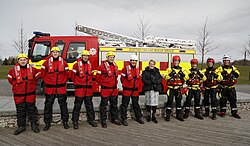
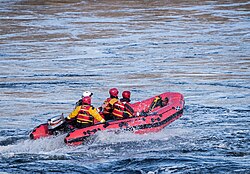
Given Scotland's geography, water rescue is a critical priority. The SFRS operates 20 dedicated water rescue units—consisting of a Mercedes Sprinter van and a rigid permanently inflated boat—and 78 stations with specialist flood response capabilities. This was evidenced during Storm Frank in 2015, where the service handled 350 flood-related calls in six days.
High Volume Pumps and Wildfires
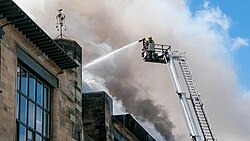
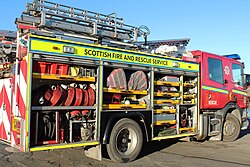
The service employs High Volume Pumps (HVP) in Elgin, Dundee, Falkirk, and Clydesmill. These units can transport large quantities of water from rivers or lakes via a kilometer of hose, proving essential for flooding and major fires, such as the 2018 Glasgow School of Art fire. Additionally, the service has faced an increase in wildfires, peaking in 2025 with a record 241 incidents.
Training and Medical Integration
The National Training Centre in Cambuslang provides a high-fidelity environment for firefighters, featuring a mock town with realistic motorways, railway tracks, and multi-storey tenements. Beyond rescue, the SFRS has integrated with the Scottish Ambulance Service to provide enhanced cardiopulmonary resuscitation (CPR) training and Community First Responder vehicles in areas like Braemar and Maud to improve cardiac arrest survival rates.
| Resource/Metric | Quantity/Value |
|---|---|
| Total Employees | 7,556 |
| Fire Stations | 356 |
| Fire Engines | 424 |
| Aerial Ladders | 16 |
| Fireboats | 20–35 |
| Rescue Boats | 20 |
| Operational Budget | £314.59 Million |
Frequently Asked Questions
When was the Scottish Fire and Rescue Service formed?
The SFRS was established on April 1, 2013, following the merger of eight regional fire services under the Police and Fire Reform (Scotland) Act 2012.
What is the New Dimensions programme?
The New Dimensions programme is a strategic initiative started in 2001 to prepare Scotland for terrorist incidents, urban search and rescue (USAR), and mass decontamination events.
How does the SFRS handle water rescues?
The service utilizes 20 dedicated water rescue units equipped with rigid permanently inflated boats and has 78 stations with specialist flood response capabilities to manage rivers, lochs, and coastal incidents.
What are the different types of fire stations in Scotland?
There are three main types: Wholetime stations (full-time staff), Retained Duty System stations (on-call staff), and Volunteer stations.
Where is the SFRS headquartered?
The operational headquarters and the National Training Centre are both located in Cambuslang, South Lanarkshire.