Scottish Cinema: The Visionaries and Stars Shaping Global Film
Scotland has long been a powerhouse of cinematic creativity, producing a diverse array of directors, animators, and actors who have left an indelible mark on global screens. From the pioneering days of early motion pictures to the modern era of prestige art-house cinema and blockbuster franchises, Scottish talent has consistently pushed the boundaries of storytelling.
Key Facts
- Sean Connery was the first Scottish actor to win an Academy Award for acting.
- Frank Lloyd was Scotland's first Academy Award winner and a founding member of the Academy of Motion Picture Arts and Sciences.
- John Grierson is credited with coining the term "documentary" in 1926.
- Norman McLaren pioneered multiple animation techniques, including pixilation and graphical sound.
- Lynne Ramsay has had three films shortlisted for the prestigious Palme d'Or.
The Architects of the Screen: Notable Directors
Scottish directors have ranged from national storytellers to international auteurs. Bill Forsyth is highly regarded for his commitment to national filmmaking, with his works Gregory's Girl (1980) and Local Hero (1984) standing as hallmarks of his career; the former earned him a BAFTA for Best Screenplay.
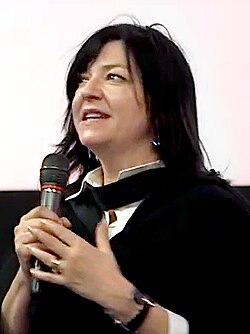
In the realm of contemporary cinema, Lynne Ramsay has achieved significant international acclaim. After establishing herself with Scotland-based films Ratcatcher (1999) and Morvern Callar (2002), she gained global attention with We Need to Talk About Kevin (2011), You Were Never Really Here (2017), and Die My Love (2025), all of which were shortlisted for the Palme d'Or.
Pioneers and Innovators
The technical foundations of cinema owe much to Scottish influence. Norman McLaren was a pioneer in animation, experimenting with pixilation (a technique where live actors are photographed one frame at a time) and graphical sound. Similarly, John Grierson, known as the "father of British and Canadian documentary film," coined the term "documentary" in 1926 while reviewing Robert J. Flaherty's Moana. Grierson later founded the National Film Board of Canada in 1939.
Early technical advancements also include William Kennedy Dickson, the son of a Scotsman, who developed an early motion picture camera while working for Thomas Edison.
Award-Winning Visionaries
Frank Lloyd holds a unique place in history as Scotland's first Oscar winner. He served as president of the Academy of Motion Picture Arts and Sciences from 1934 to 1935. In 1929, he achieved the rare feat of receiving three nominations in a single year for a silent film (The Divine Lady), a part-talkie (Weary River), and a full talkie (Drag), winning for the former.
Other significant directorial contributions come from actors who transitioned behind the camera. Peter Capaldi won an Academy Award and a BAFTA for the 1993 short Franz Kafka's It's a Wonderful Life, while Peter Mullan won Best Director at the 2011 BAFTA Scotland Awards for Neds.
International Icons: Film and Television Actors
Scottish actors are perhaps the most visible ambassadors of the country's culture. Sean Connery remains an icon, having originated the role of James Bond in six Eon Productions films between 1962 and 1971. Connery's versatility was recognized with an Academy Award and Golden Globe for The Untouchables (1987), making him the first Scot to win an acting Oscar.
Modern cinema has seen a surge of Scottish talent in mainstream and independent roles. Ewan McGregor gained fame in Trainspotting (1996) and the Star Wars prequel trilogy. Robbie Coltrane became globally recognized as Rubeus Hagrid in the Harry Potter series, and David Tennant is celebrated for his roles as the 10th and 14th Doctors in Doctor Who. James McAvoy has similarly found success in the X-Men series and M. Night Shyamalan's Split and Glass.
Tilda Swinton, though not born in Scotland, identifies as Scottish "first and foremost" due to her childhood and links to Clan Swinton. A frequent collaborator with auteur Wes Anderson, she was named one of the 21st century's best actors by The New York Times in 2020.
| Name | Primary Role | Key Achievement/Work |
|---|---|---|
| Sean Connery | Actor | First Scot to win an acting Oscar; original James Bond |
| Frank Lloyd | Director | Scotland's first Academy Award winner |
| John Grierson | Documentarian | Coined the term "documentary" (1926) |
| Lynne Ramsay | Director | Three Palme d'Or shortlists |
| Norman McLaren | Animator | Pioneer of pixilation and graphical sound |
Frequently Asked Questions
Who was the first Scottish person to win an Academy Award?
Frank Lloyd was Scotland's first Academy Award winner, winning for the silent film The Divine Lady in 1929.
Which Scottish actor was the first to win an Oscar for acting?
Sean Connery was the first Scottish actor to win an acting Oscar, receiving the award for Best Supporting Actor for his role in The Untouchables (1987).
What is John Grierson's contribution to cinema?
John Grierson is considered the "father of British and Canadian documentary film" and is credited with coining the term "documentary" in 1926.
Which Scottish directors are known for their international acclaim?
Lynne Ramsay is highly acclaimed internationally with multiple Palme d'Or shortlists, and Bill Forsyth is noted for his influential national filmmaking, including Local Hero.
Who are some of the most successful modern Scottish actors?
Prominent modern actors include Ewan McGregor, David Tennant, James McAvoy, Robbie Coltrane, and Tilda Swinton.