Science Fiction Westerns: A Genre-Bending Fusion of Frontiers
The intersection of the American Old West and speculative technology creates a unique hybrid: the science fiction Western. While traditional Westerns focus on the taming of a limited, physical frontier, science fiction typically deals with an ever-expanding horizon. When these two collide, the result is a narrative space where six-shooters meet starships, and dusty trails lead to dystopian futures or alien encounters.
Key Facts
- Genre Contrast: Westerns focus on a finite, tamable frontier, whereas science fiction explores an infinite, expanding one.
- Subgenres: Includes steampunk Westerns (Victorian-era tech in the West) and weird Westerns (incorporating supernatural or occult elements).
- Common Tropes: Time travel, androids, alien technology, and the "Man with No Name" archetype.
- Cross-Media Presence: The genre spans novels, comic books, cinema, television, and gaming.
Literary Foundations and Novels
Early explorations of this hybrid genre often highlighted the tension between the closed frontier of the West and the openness of space. Works like John J. McGuire's Lone Star Planet (1958) and John Jakes' Six-Gun Planet (1970) emphasize the Western aspect by placing their stories within closed frontiers.
Modern literature has expanded these boundaries. Stephen King's The Dark Tower series blends multiple genres, featuring Roland Deschain, a gunslinger protagonist inspired by the "Man with No Name" persona. Other notable entries include Mike Resnick's The Buntline Special (2010), which leans into steampunk—a subgenre of science fiction that incorporates steam-powered machinery—and Steven S. Drachman's The Ghosts of Watt O'Hugh (2011), which captures the fast pace of 19th-century pulp novels.
Visual Storytelling: Comics and Film
Comic books have utilized the genre to create high-concept conflicts. Cowboys & Aliens by Scott Mitchell Rosenberg depicts a clash where humans use recovered alien technology to fight extraterrestrial invaders. In contrast, East of West by Jonathan Hickman and Nick Dragotta presents a dystopian United States where Death, one of the Four Horsemen, serves as the protagonist. For those preferring robots in the desert, Doug Tennapel's Iron West provides a steampunk perspective.
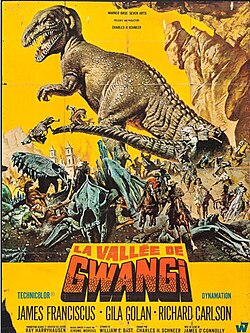
Cinema began integrating these elements as early as the 1930s with serials like The Phantom Empire (1935) and Ghost Patrol (1936). By the 1960s, the trend shifted toward fantasy crossovers, such as The Valley of Gwangi (1969), where cowboys battle dinosaurs.
Later films introduced time travel as a primary plot device, seen in Timerider: The Adventure of Lyle Swann (1982) and Back to the Future Part III (1990). Other interpretations include the post-apocalyptic frontier of The Postman (1997) and the steampunk aesthetics of Wild Wild West (1999).
Television and Digital Media
Television has often used the sci-fi Western to pivot away from traditional tropes. The 1960s series The Wild Wild West was described by creator Michael Garrison as "James Bond on horseback," featuring Secret Service agents James West and Artemus Gordon using advanced gadgets during the Ulysses Grant administration.
More recent hits like HBO's Westworld (2016), based on Michael Crichton's 1973 film, explore the concept of androids in a futuristic Western-themed resort. Other examples include the Doctor Who serial The Gunfighters (1966), the time-traveling Outlaws (1986), and The Adventures of Brisco County Jr. (1993). Even modern anthologies like The Grimm Variations (2024) have utilized the setting for specific retellings.
Gaming and Other Media
The genre's flexibility makes it ideal for interactive media. The role-playing game Deadlands blends spaghetti Westerns with horror and steampunk. Video games such as Tin Star, Wild Guns, Wild Arms, and the steampunk-influenced Darkwatch have further cemented the genre's popularity. Even toy lines, such as Nerf's "Zombie Strike," draw from these thematic elements.
| Medium | Title | Key Sci-Fi/Fantasy Element |
|---|---|---|
| Novel | The Dark Tower | Multiverse/Gunslinger |
| Comic | Cowboys & Aliens | Extraterrestrial Technology |
| Film | Back to the Future Part III | Time Travel |
| TV | Westworld | Androids/AI |
| Game | Deadlands | Steampunk/Horror |
Frequently Asked Questions
What is the difference between a Western and a Science Fiction Western?
A traditional Western focuses on the taming of a limited, historical frontier. A science fiction Western introduces speculative elements—such as advanced technology, aliens, or time travel—often contrasting the "tamed" nature of the West with the "expanding" nature of sci-fi.
What is a steampunk Western?
A steampunk Western is a subgenre that blends the American Old West setting with steampunk technology, which typically involves steam-powered machinery and anachronistic industrial inventions, as seen in Iron West or Wild Wild West.
Who is the "Man with No Name" archetype?
The "Man with No Name" is a stoic, mysterious protagonist common in spaghetti Westerns. This archetype has been adapted into sci-fi Westerns, most notably influencing the character of Roland Deschain in The Dark Tower.
Are there any examples of this genre in video games?
Yes, several titles explore this fusion, including Tin Star, Wild Guns, Wild Arms, and Darkwatch, the latter of which specifically utilizes steampunk themes.
How does time travel fit into the sci-fi Western genre?
Time travel allows 20th-century or futuristic characters to be displaced into the Old West, forcing them to adapt their modern knowledge to a frontier setting, as seen in Back to the Future Part III and Outlaws.