Savannah, Georgia: The Hostess City of the South
Known affectionately as "The Hostess City of the South," Savannah is a coastal gem located in Chatham County, Georgia. Established on February 12, 1733, the city serves as a living museum of American history, blending colonial charm with a vibrant modern economy. From its iconic cobblestone streets to its sprawling canopy of oaks, Savannah offers a unique intersection of culture, art, and maritime industry.
The city was founded by General James Edward Oglethorpe, who was commissioned by King George II to establish a buffer zone south of the Savannah River. This strategic location was intended to protect the British Carolinas from the threats posed by Spanish Florida and French Louisiana.

Key Facts
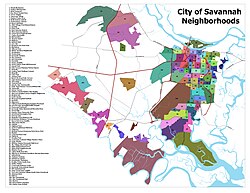
- Founded: February 1733 by James Oglethorpe.
- Population: 147,780 (2020 Census), with a 2025 estimate of 149,440.
- Geography: Located in Chatham County with a total area of 113.27 square miles.
- Nickname: "The Hostess City of the South."
- Economy: Heavily influenced by the Port of Savannah and a robust tourism sector.
Geography and Climate
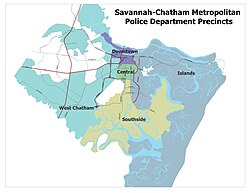
Savannah is situated at an elevation of 20 feet (6.1 meters), making it susceptible to coastal weather patterns. The city's climate is characterized by humid subtropical conditions, with significant rainfall peaking in the summer months.
| Metric | Winter (Jan) | Summer (Jul) | Annual Average |
|---|---|---|---|
| Mean Maximum Temp | 77.5°F (25.3°C) | 98.8°F (37.1°C) | 99.7°F (Record High) |
| Mean Daily Minimum | 40.0°F (4.4°C) | 73.7°F (23.2°C) | 57.2°F (14.0°C) |
| Average Precipitation | 3.28 in (83 mm) | 5.75 in (146 mm) | 48.12 in (1,222 mm) |
Cityscape and Historic Districts
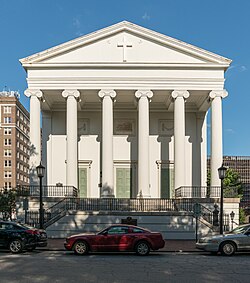
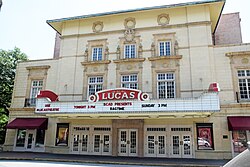
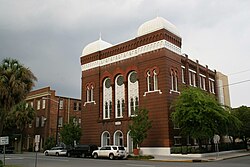
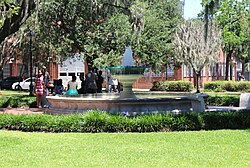
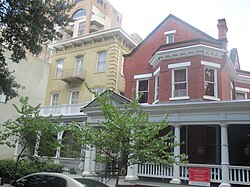
The architectural identity of Savannah is defined by its meticulously preserved historic districts. The Savannah Historic District is world-renowned for its grid system and public squares, while the Victorian Historic District showcases the city's later architectural evolution.
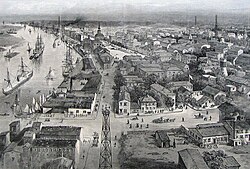
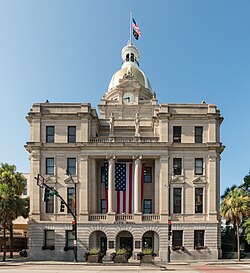
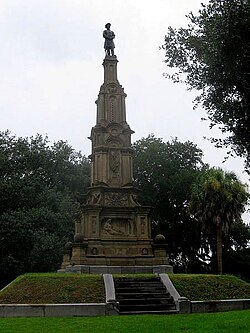
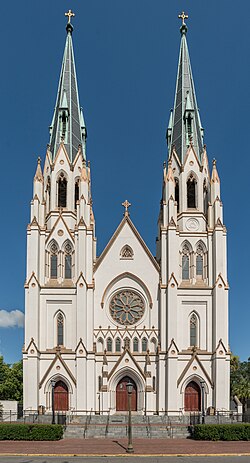
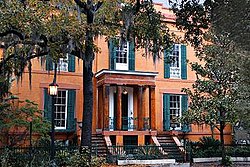
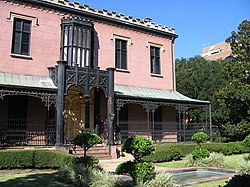
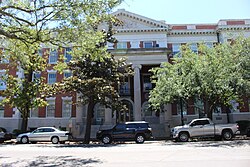
Notable landmarks include the Cathedral Basilica of St. John the Baptist, the Sorrel–Weed House, and the Green–Meldrim House. The city's municipal heart is the City Hall, completed in 1906, which features a distinctive dome covered in 23-karat gold leaf.
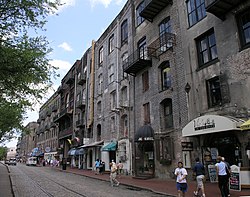
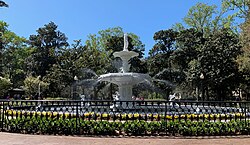
Public spaces like Forsyth Park serve as the lungs of the city, providing a lush escape for residents and visitors alike. The riverfront, particularly River Street, remains a focal point for commerce and tourism, linking the city's historic core to the active shipping lanes of the Savannah River.
Demographics and Community
Savannah has seen steady population growth over the centuries, evolving from a small colonial outpost of roughly 5,000 people in 1800 to nearly 150,000 today. The city is a diverse metropolitan hub with a rich racial tapestry.
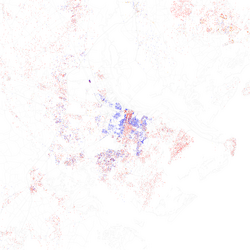
According to 2020 data, the population is composed of approximately 48.62% Black or African American residents and 36.60% White residents. The Hispanic or Latino community has seen notable growth, reaching 6.62% of the population by 2020.
Economy, Education, and Sports
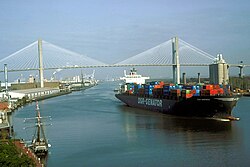
The economy is anchored by the Port of Savannah, one of the busiest container ports in the United States. This maritime strength is complemented by educational institutions such as the Savannah College of Art and Design (SCAD) and Savannah State University.
Sports culture in Savannah is diverse, ranging from the traditional baseball of the Savannah Bananas at Grayson Stadium to the professional ice hockey of the Savannah Ghost Pirates at Enmarket Arena.
Frequently Asked Questions
Who founded the city of Savannah?
Savannah was founded on February 12, 1733, by General James Oglethorpe under the direction of King George II.
What is the significance of the Savannah Historic District?
The district is celebrated for its unique urban planning, including a series of public squares and well-preserved colonial and Victorian architecture.
What is the current population of Savannah?
As of the 2020 Census, the city population was 147,780, with estimates for 2025 placing it at approximately 149,440.
Which professional sports teams are based in Savannah?
Current and recent teams include the Savannah Bananas (Baseball/Banana Ball) and the Savannah Ghost Pirates (ECHL Ice Hockey).
What is the climate like in Savannah?
Savannah has a humid subtropical climate with hot, rainy summers and mild winters, averaging about 48.12 inches of precipitation annually.