Sauna Traditions and Customs Around the World
While the concept of the sauna has been imported and adapted across nearly every continent, the experience varies wildly depending on where you are. From the spiritual sweat lodges of North America to the highly structured Aufguss sessions of Germany, sauna culture is a blend of ancient ritual, health necessity, and modern luxury. While some regions maintain traditions passed down through generations, others have adopted the sauna as a contemporary wellness fashion.
At its core, a sauna is a room designed to induce sweating through heat, but the "correct" way to use one—including dress codes, social norms, and temperature preferences—is subject to local custom.
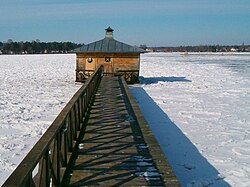
Key Facts
- Finland has between 2 and 3.2 million saunas for a population of 5.5 million.
- Aufguss is a specialized German practice where a Saunameister (sauna master) circulates hot air using a towel.
- Banya is the Russian term for a public bath or sauna, often involving venik (birch bunches) for massage.
- Jjimjilbang are elaborate Korean public bathhouses that often include various steam rooms and Jacuzzis.
- Nudity rules vary from mandatory (Japan, Germany) to strictly prohibited (Iran, mixed-sex US saunas).
European Sauna Cultures
Nordic and Baltic Traditions
In Finland and Estonia, the sauna is central to daily life. Sessions typically range from 70 to 100 °C (158 to 212 °F). A unique feature of this region is the use of vihta or vasta (Finnish) and viht (Estonian)—bundles of birch twigs used to slap the skin to stimulate pores and cells.
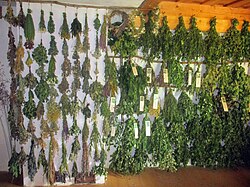
Estonian traditions historically viewed the sauna as a spiritual space, used not only for washing but also for childbirth and preparing the dying for their final journey. Similarly, in Latvia and Lithuania, the pirts or pirtis (bathhouse) dates back to pagan times, where it served as a site for rituals dedicated to the goddess Laima.
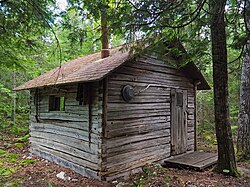
Central and Western Europe
In German-speaking countries (Germany, Austria, Switzerland, Luxembourg, and Liechtenstein), saunas are often viewed as places of healing rather than socializing, meaning loud conversation is discouraged. A defining feature here is the Aufguss, a scheduled session where a professional Saunameister pours water on hot stones and uses a towel to distribute the heat. Nudity is generally the rule in these public facilities, and cold plunges or Frischluftraum (fresh air rooms) are considered essential parts of the cycle.
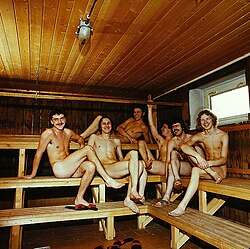
In the Netherlands and Flanders, mixed-sex nudity is common, though some facilities offer women-only hours to accommodate different cultural needs. Meanwhile, in the UK and Southern Europe, single-gender saunas are more prevalent, and the practice of alternating between a sauna and a jacuzzi is common, despite being viewed as a faux pas in Northern Europe.
Asian Sauna and Bathhouse Customs
East Asia
In Japan, saunas are frequently found in sentō (public bathhouses). Nudity is required, and facilities are strictly gender-separated. In Korea, the jjimjilbang represents an elaborate version of the public bathhouse, often incorporating hot tubs, showers, and steam rooms. The term "sauna" in Korea (Konglish) often refers to the entire complex rather than just a steam room.
West and Southeast Asia
In Iran, saunas are common in gyms and pools, categorized as dry sauna (higher temperature) and steam sauna. Unlike in Finland, these are seen as tools for detoxification and relaxation rather than bathing rituals; nudity is prohibited, and rooms are segregated by gender.
Laos features the hom yaa, a wood-fired herbal steam sauna popular among women. These sessions often include beauty treatments using tamarind or yogurt pastes, accompanied by muktam (bael fruit) tea.
The Americas and Africa
North America
Sauna culture in the US is strongest in the Lake Superior Region (Michigan, Minnesota, Wisconsin, and Iowa) due to Finnish and Swedish heritage. In some Finnish-American farming communities, sauna ownership rates have historically exceeded those in Finland itself.
Distinct from recreational saunas is the sweat lodge used by Native American and First Nations cultures. These are spiritual ceremonies—such as the Inipi—where sweating is secondary to the spiritual experience.
Africa
In Africa, saunas are primarily found in high-end hotels, spas, and health clubs. These facilities generally follow European design and technology, offering traditional saunas or steam showers regardless of the warmer outdoor climate.
Russian Banya
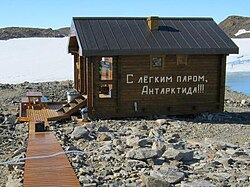
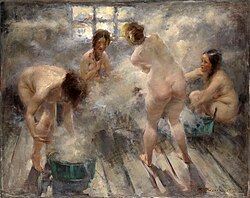
The Russian banya is a social pillar in many regions. Similar to the Finnish style, it often involves the use of venik (leafy birch bunches) for massage. A common winter tradition involves running outdoors to roll in the snow or swim in ice water before returning to the heat.
Global Sauna Comparison Summary
| Region | Primary Term | Key Feature | Typical Etiquette |
|---|---|---|---|
| Finland/Estonia | Sauna | Birch twigs (vihta) | Social, often nude |
| Germany/Austria | Sauna | Aufguss (Saunameister) | Quiet, nude, strict rules |
| Russia | Banya | Venik massage, snow rolling | Single-sex, social |
| Japan | Sentō | Public bathhouse integration | Nudity required, segregated |
| Korea | Jjimjilbang | Large wellness complexes | Mixed facilities, varied dress |
| Laos | Hom yaa | Herbal steam, beauty pastes | Gender-separated steam rooms |
Frequently Asked Questions
What is the difference between a Finnish sauna and a Russian banya?
While both use heat and steam, the Russian banya is often more focused on the social ritual of massaging the body with venik (birch bunches) and frequently involves extreme temperature contrasts, such as rolling in snow during winter.
What is an Aufguss session?
An Aufguss is a structured session common in German-speaking countries where a Saunameister pours water on hot stones and uses a large towel to circulate the resulting steam and heat throughout the room to intensify sweating.
Is nudity required in all saunas?
No. Nudity is often mandatory in Germany and Japan, but strictly prohibited in Iranian saunas and many mixed-sex facilities in the United States, Canada, and Australia.
What are birch twigs used for in Nordic saunas?
Known as vihta or vasta, these birch twigs are soaked and used to gently slap the skin. This practice is intended to stimulate blood flow, open pores, and invigorate the cells.
How does a sweat lodge differ from a traditional sauna?
A sweat lodge is a spiritual and ceremonial space used by Native American and First Nations cultures. Unlike recreational saunas, the primary purpose of a sweat lodge is spiritual ceremony, with the physical act of sweating being secondary.