Satchels: A History of the Classic Book Bag
A satchel is a soft-sided bag equipped with a strap, traditionally designed for the transport of books. Unlike a rigid briefcase, the satchel is characterized by its flexibility and a distinctive flap that extends from the back to cover the top, fastening securely at the front. To ensure comfort and stability, the strap is typically worn diagonally across the body, allowing the bag to rest on the opposite hip.

Key Facts
- Design: Soft-sided construction with a fold-over front flap.
- Wearing Style: Traditionally worn cross-body or as a V-shaped backpack.
- Cultural Significance: A staple of English student life for centuries.
- Modern Evolution: Transitioned from a functional school tool to a global fashion accessory.
The Satchel in Education
For centuries, the satchel has been an iconic accessory for students in England. Its cultural presence is so deeply rooted that it appears in William Shakespeare's famous "All the world's a stage" monologue, which describes the "whining school-boy, with his satchel and shining morning face."
Traditional Styles and Variations
The classic Oxford and Cambridge styles typically feature a simple pouch with a front flap. Over time, various modifications emerged, including the addition of single or double front pockets and top handles for easier carrying.
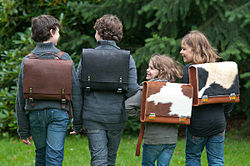
Some versions, known as satchel backpacks, utilized two straps that converged in a V-shape at the center of the bag's back, rather than having separate straps on each side. This allowed students to carry their loads more evenly across their shoulders.
Global Perspectives and Transitions
While the satchel dominated English schools, other cultures developed their own versions. In Japan, the specific term for a school bag satchel is randoseru. However, the dominance of the traditional satchel began to wane in the late 1960s. During this period, lightweight nylon daypacks and canvas book bags began to replace shoulder satchels, leading to the widespread adoption of the modern backpack.
The Shift to Fashion
In the 2000s and 2010s, the satchel experienced a resurgence, evolving from a utilitarian school item into a high-fashion accessory. This trend saw a proliferation of satchel-shaped handbags from various brands, most notably the Cambridge Satchel Company, which helped bring the humble British design to a global audience.
Satchel Comparison and Variations
| Type | Key Characteristic | Context/Origin |
|---|---|---|
| Traditional Satchel | Soft-sided with front flap | English Education |
| Randoseru | Specific school satchel | Japan |
| Carriel | Leather satchel | Colombia |
| Loculus | Military satchel | Roman Legionaries |
| Satchel Backpack | V-shaped rear straps | Student Utility |
Frequently Asked Questions
How does a satchel differ from a briefcase?
The primary difference is the construction; a satchel is soft-sided, whereas a briefcase is typically rigid.
How is a satchel traditionally worn?
It is traditionally worn with the strap crossing the body diagonally, so the bag hangs on the hip opposite the shoulder carrying the strap.
When did modern backpacks replace satchels in schools?
The transition began in the late 1960s when lightweight nylon daypacks and canvas bags became popular.
What is a randoseru?
A randoseru is the Japanese term for a school bag satchel.
Which brands helped make satchels a fashion trend?
The Cambridge Satchel Company is one of the prominent brands that contributed to the satchel's popularity as a fashion accessory in the 2000s and 2010s.