Sarpech: The Regal Turban Ornaments of India and Persia
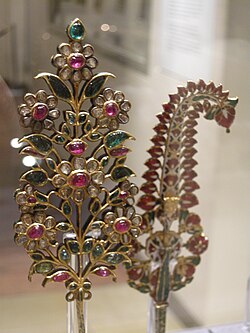
Across the royal courts of Asia, headwear has long served as a primary symbol of authority, status, and divine right. Among the most exquisite of these adornments is the sarpech, a sophisticated turban ornament worn by significant Hindu, Sikh, and Muslim princes. More than mere decoration, these pieces represented the prestige of the wearer and the artistic mastery of the era's finest jewelers.
Etymology and Meaning
The word sarpech is derived from Persian roots. In this linguistic context, sar translates to "head" or "front," while pech means "screw." Literally, the term describes "that which is screwed onto the front (of the turban)," referring to the mechanical way the ornament was secured to the fabric of the headwear.
Regional Variations and Names
While the sarpech is most closely associated with the Indian subcontinent, similar ornaments were prominent in other Islamic empires, each with its own terminology.
Persia
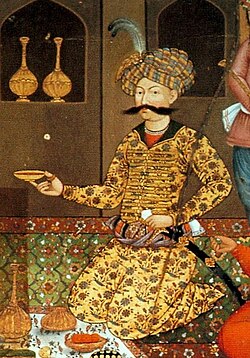
In Persia, this type of ornament was known as a jikka (or jiqa), a term meaning "crest" or "tuft." These pieces were central to the royal attire of the Safavid dynasty.
Turkey
In Turkey, the ornament was referred to as the sorguch. Historians consider this name to be a corrupt form of the Persian word sarpush.
The Indian Tradition
In the Indian context, royal headgear was typically adorned with two distinct types of ornaments: the sarpech and the Kalgi. While both served to embellish the turban, they differed in their specific design and placement, contributing to the complex visual language of nobility.
Key Facts
- Literal Meaning: "That which is screwed onto the front" (from Persian sar and pech).
- Cultural Reach: Worn by Hindu, Sikh, and Muslim royalty.
- Persian Equivalent: Known as jikka or jiqa (meaning "crest" or "tuft").
- Turkish Equivalent: Known as sorguch.
- Indian Varieties: The two primary types of ornaments are the sarpech and the Kalgi.
| Region | Term | Literal Meaning / Origin |
|---|---|---|
| India | Sarpech | Screwed onto the front |
| Persia | Jikka / Jiqa | Crest or tuft |
| Turkey | Sorguch | Derived from Persian sarpush |
Frequently Asked Questions
What is a sarpech?
A sarpech is a decorative ornament worn on the front of a turban, traditionally used by high-ranking Hindu, Sikh, and Muslim princes to denote status.
What does the word "sarpech" literally mean?
Derived from Persian, it literally means "that which is screwed onto the front," where sar means head/front and pech means screw.
How did the sarpech differ from the Kalgi?
In India, the sarpech and the Kalgi are the two dominant types of turban ornaments, though they differ in their specific form and style.
Was the sarpech only used in India?
No, similar ornaments were used in Persia (where they were called jikka or jiqa) and Turkey (where they were called sorguch).
What is the origin of the Turkish term "sorguch"?
The term sorguch is believed to be a corrupt form of the Persian word sarpush.