Sapienza University of Rome: A Legacy of Wisdom and Research
Founded in 1303, Sapienza University of Rome (Italian: Università degli Studi di Roma "La Sapienza") stands as one of the oldest and most prestigious institutions of higher learning in the world. Known simply as La Sapienza (meaning "The Wisdom"), this public research university is not only a cornerstone of Italian intellectual life but also the largest university in Europe by student population.
With a sprawling urban presence in Italy's capital, Sapienza serves as a global hub for education and research, leveraging extensive funding, numerous laboratories, and a vast network of libraries to push the boundaries of human knowledge. Its motto, "Il futuro è passato qui" ("The future has passed here"), reflects its deep historical roots and its role in shaping the modern world.
Key Facts
- Established: 1303 by Pope Boniface VIII.
- Student Population: Over 110,000 students, making it Europe's largest university.
- Global Standing: Ranked 1st in the world for Classics and Ancient History by QS World University Rankings.
- Academic Reach: 11 faculties and 65 departments across pure and applied sciences and humanities.
- Resources: 50 libraries containing over 2.7 million books and 19 museums.
- Notable Alumni: 10 Nobel laureates, multiple Italian prime ministers, and a pope.
Historical Evolution
The university began as a Studium—a center of learning—for ecclesiastical studies, established via a papal bull on April 20, 1303. Unlike the more independent universities of Bologna and Padua, Sapienza was designed to be under closer papal control, making it the first pontifical university.
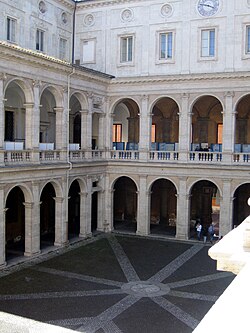
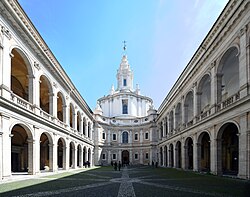
In 1431, Pope Eugene IV reorganized the institution, expanding its curriculum to include Law, Medicine, and Philosophy alongside Theology. By the 1650s, the university adopted the name "Sapienza," symbolizing wisdom and knowledge.
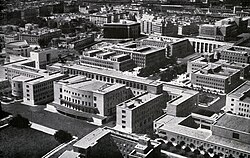
The 19th century brought a pivotal shift. Following the capture of Rome by the Kingdom of Italy in 1870, La Sapienza transitioned from a papal institution to the primary university of the newly unified Italian state's capital. To accommodate its rapid growth, a new campus designed by architect Marcello Piacentini was completed in 1935.
Campus and Facilities
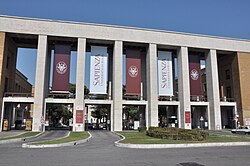
The heart of the university is the Città Universitaria (University City), a 44-hectare (110-acre) campus located near the Campo Verano cemetery. However, the university's influence extends across Rome through various specialized campuses, laboratories, and libraries.
Among its most significant landmarks is the Alessandrina University Library, established in 1667 by Pope Alexander VII, which houses 1.5 million volumes. The university also maintains a renowned botanical garden, founded in 1703 by Pope Clement XI, and three university hospitals.
Academic Excellence and Global Rankings
Sapienza is a powerhouse of research in engineering, natural sciences, biomedical sciences, and the humanities. It currently employs approximately 8,000 academic and administrative staff to support its massive student body, which includes over 63,000 undergraduates and 18,000 doctoral students.
The university consistently ranks among the top institutions globally. It is particularly dominant in the humanities, holding the top global spot for Classics and Ancient History and ranking 10th for Archaeology. It also maintains strong global positions in Physics & Astronomy (36th) and Medicine (72nd).
| Category | Detail |
|---|---|
| Type | Public Research University |
| Location | Rome, Italy |
| Total Students | 112,564 |
| Staff | 8,000 |
| Key Colors | Pompeian red & gold |
| Accreditation | CESAER |
Distinguished Alumni and Faculty
The university's impact is evident in its alumni, which include some of the most influential figures in science, politics, and the arts. In the realm of physics, Sapienza is linked to giants such as Enrico Fermi and Giorgio Parisi, both Nobel laureates.
Beyond science, the university has produced political leaders like Sergio Mattarella (12th President of Italy) and Mario Draghi, as well as cultural icons like filmmaker Federico Fellini and educational pioneer Maria Montessori.
Frequently Asked Questions
When was Sapienza University of Rome founded?
The university was founded on April 20, 1303, by decree of Pope Boniface VIII.
Why is it called "La Sapienza"?
The name "Sapienza" means "wisdom" or "knowledge" in Italian, a title the university adopted in the 1650s.
Is Sapienza the largest university in Europe?
Yes, with over 110,000 students, it is recognized as the largest university in Europe.
What are the university's strongest academic subjects?
Sapienza is world-leading in Classics and Ancient History (ranked 1st) and is also highly ranked in Archaeology, Physics, and Arts and Humanities.
Who designed the main university campus?
The new university campus, completed in 1935, was planned by the architect Marcello Piacentini.