Santiago Morning: A History of the Bohemians of Chilean Football
The story of Santiago Morning is one of the most dramatic arcs in South American sports. Known as "The Bohemians," the club has experienced the highest peaks of professional glory and the deepest troughs of amateur struggle. From its roots in the early 20th century to its role as a founding member of professional football in Chile, the club remains a symbol of resilience and passion.
Foundation and the Amateur Era
The origins of the club date back to 1903, when a football association was formed in Santiago. This movement was sparked by residents of Cousino Park (now O'Higgins Park) and students from Santiago College. Under the guidance of a professor named Mister Vincent, a demonstration match at Mars Field attracted significant interest, leading to the official formation of Santiago Football Club on October 16, 1903. The team played its inaugural match just three days later, on October 19, against the teacher's team.
During the amateur era, the club found success in the Liga Central de Football, winning the league title in 1928. Meanwhile, another local entity, Morning Star, was founded in 1907 in the Independencia neighborhood, sporting a blue kit with white shorts.
The Transition to Professionalism
In 1933, Santiago FC became one of the eight founding members of the Chilean Primera División (the top flight of professional football in Chile). The club holds a unique place in history as the first team to play a professional match in the league, though they suffered a 3–1 loss to Audax Italiano at Estadio Santa Laura. While they finished sixth in their first professional season, they were relegated to Serie B in 1935 after finishing 12th.
A pivotal moment occurred in March 1936 when Santiago FC and Morning Star merged to create Santiago Morning. The newly merged club began its professional journey with a 2–1 victory over Magallanes and maintained a steady presence in the top four during the 1936 and 1937 seasons.
The Golden Era and the 1942 Championship
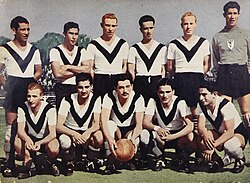
The late 1930s saw the club's rise to prominence. In 1939, Santiago Morning secured second place in the table, marked by high-scoring victories, including a memorable 8–2 win over Universidad Católica. This momentum culminated in 1942 when the club won its first professional title, finishing first with 29 points, narrowly beating Magallanes by a single point.
The 1942 squad featured Raúl Toro, regarded as the greatest player in the club's history, and Domingo Romo, who was the tournament's top scorer with 16 goals. Their championship run was defined by dominant performances, including 5–1 wins over both Audax Italiano and Magallanes.
The Cycle of Decline and Recovery
Following their peak, the club entered a period of instability. After several irregular seasons, they were relegated to the Second Division for the first time in 1956. The following decades were characterized by a "yo-yo" existence, bouncing between the first and second tiers throughout the 1960s, 70s, and early 80s.
The club hit its lowest point in 1983 when it was relegated to the Tercera División (the third tier). This made Santiago Morning the first-ever Primera División champion to compete in the semi-professional third division. Financial difficulties plagued the club for years, and despite a narrow loss to Curicó Unido in a 1994 final, they finally won the Tercera División in 1996 to regain professional status in Primera B.
Under the leadership of coach Jorge Aravena, the club returned to the top flight in 1998 after a 14-year absence, following a victory over Provincial Osorno in the promotion play-offs.
The Modern Era: 2000 to 2010
The turn of the millennium brought a brief resurgence. In 2000, the club reached the Copa Chile final (losing to Universidad de Chile) and qualified for the Copa Libertadores playoffs. Key players during this era included Fernando Martel, Francisco Arrué, Carlos Tejas, and Manuel Ibarra.
Despite another relegation in 2002, the club returned to the Primera División in 2005 under coach Ivo Basay, featuring talents like Esteban Paredes and Rodrigo Goldberg. By 2009, the club achieved a historic milestone by qualifying for the play-offs for the first time. They notably defeated Audax Italiano 5–4 in an aggregate series, secured by a dramatic 90th-minute goal from goalkeeper Víctor Loyola.
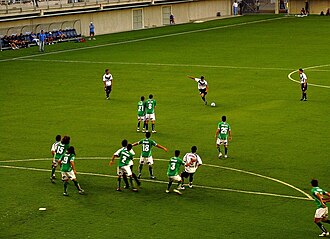
The decade closed with a struggle for survival; in 2010, the club narrowly avoided relegation through a last-minute extra-time goal by Pablo Calandria in a play-off against Antofagasta.
Key Facts
- Founded: October 16, 1903 (as Santiago Football Club).
- Major Title: Chilean Primera División Champions in 1942.
- Historical First: First team to play a professional match in the Chilean Primera División.
- Legendary Players: Raúl Toro (all-time best) and Domingo Romo (1942 top scorer).
- Unique Record: First top-flight champion to ever drop to the third tier (Tercera División).
| Year | Event | Outcome/Significance |
|---|---|---|
| 1903 | Foundation | Established as Santiago Football Club |
| 1928 | Amateur Success | Won the Liga Central de Football |
| 1933 | Professionalism | Founding member of Primera División |
| 1936 | Merger | Santiago FC and Morning Star form Santiago Morning |
| 1942 | League Title | First Primera División Championship |
| 1983 | Historic Low | Relegated to Tercera División |
| 1996 | Professional Return | Crowned Tercera División champions |
| 2009 | Play-off Debut | First time qualifying for league play-offs |
Frequently Asked Questions
How was Santiago Morning formed?
The club was created in March 1936 through the merger of two earlier entities: Santiago Football Club (founded in 1903) and Morning Star (founded in 1907).
Who is considered the greatest player in the club's history?
Raúl Toro is widely regarded as the best player to ever play for Santiago Morning, particularly during their championship-winning era in the early 1940s.
What is the club's most significant achievement?
Their most significant achievement was winning the Chilean Primera División title in 1942, finishing the season with 29 points.
Why is the club's relegation in 1983 historically significant?
It was a landmark event because Santiago Morning became the first team to have won the Primera División championship and subsequently be relegated to the third tier (Tercera División) of Chilean football.
Who was the top scorer during the 1942 title run?
Domingo Romo was the team's leading scorer and the tournament's top goalscorer, netting 16 goals during the campaign.