Santa Claus, Arizona: The Rise and Fall of a Desert Christmas Town
In the heart of the arid Arizona desert, far from the snowy landscapes typically associated with the holiday season, once existed a whimsical destination known as Santa Claus. Founded in 1937, this themed resort town attempted to bring the magic of the North Pole to the parched landscapes northwest of Kingman. While it flourished for decades as a quirky roadside attraction, it eventually succumbed to time, becoming a poignant example of the fading American highway icon.
The Vision of Nina Talbot
The town was the brainchild of Nina Talbot, a former Los Angeles resident and real estate agent who moved to Kingman, Arizona, in the 1930s. In 1937, Talbot established Santa Claus on an 80-acre site approximately 14 miles northwest of Kingman. Her ambitious plan was to subdivide the land into lots to create a full-scale resort town centered on a Christmas theme.
To drive land sales, Talbot constructed a series of attractions designed to mimic Santa's Workshop. These included themed buildings and a dedicated North Pole atmosphere that transformed the desert environment into a holiday getaway. By 1942, the site had evolved into a legitimate tourist destination.
A Golden Era of Holiday Magic
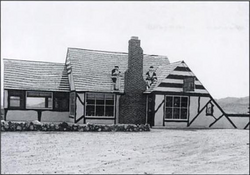
During its peak, Santa Claus offered a variety of immersive experiences. The town featured a U.S. post office that became a hub of activity every December, as children sent letters to Santa and adults sought the novelty of a "Santa Claus" postmark. One of the most distinctive structures was Cinderella's Doll House, which was designed to resemble a Swiss chalet.
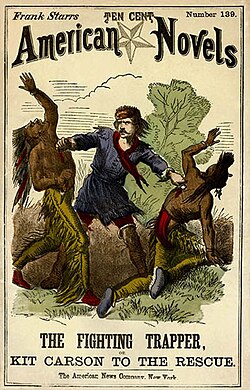
Dining was a central part of the attraction. The Kit Carson Guest House was rebranded as the Santa Claus Inn, where visitors could enjoy an air-conditioned restaurant serving a "big farm breakfast" for $.75. The menu featured themed delicacies such as Chicken à la North Pole and the restaurant's famous Rum Pie à la Kris Kringle. The "French Room" served as a highlight of the establishment, complete with a photo of Santa Claus positioned over the fireplace.
Celebrity Appeal and Literary Fame
In the early 1950s, the establishment was renamed The Christmas Tree Inn. Despite being located several miles off Arizona State Route 66, it received high praise from the renowned restaurant rater Duncan Hines, who cited it as one of the best eating places in the region. This endorsement attracted high-profile guests, including actress Jane Russell, who hosted a dinner party for ten friends there on August 5, 1954.
The town also captured the imagination of science fiction author Robert A. Heinlein. In his 1950 short story Cliff and the Calories (later reprinted in the 1982 collection Expanded Universe), Heinlein featured the town and described a gourmet feast served by Mrs. Claus—a fictionalized version of Mrs. Douglas, who managed the restaurant during the 1940s.
The Long Decline
Despite its early success, Talbot's dream of a residential resort never fully materialized, as the only permanent residents were the employees. Talbot sold the town in 1949. While the town attempted to maintain its relevance—offering remailing services for Christmas cards via Popular Mechanics in 1961 and proposing street names like Prancer Parkway and Donner—the momentum began to fade by the 1970s.
By the mid-1970s, the development closed and was eventually removed from the official Arizona State Map. In 1983, owner Tony Wilcox attempted to sell the remaining 4-acre community for $95,000, but the town's condition continued to deteriorate.
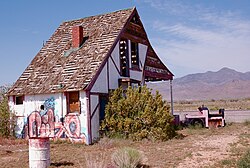
By 1988, the site had become a ghost of its former self. Writer Mark Winegardner described a scene of decay: burned-out Christmas lights, faded plastic figures of Saint Nick, and a lopsided 20-foot artificial tree. The gift shop, which once sold holiday treasures, had devolved into a place selling flea-market knickknacks and battered paperbacks.
The Final Years and Erasure
A brief resurgence occurred in the early 1990s with the introduction of "Santa Claus burgers" and "Dasher and Dancer omelettes," but the final gift shops and amusements closed by 1995. By 2003, the population had dwindled to just 10 people living in five houses.
By 2004, the site was described as an abandoned pull-off on the western side of the expanded U.S. Route 93, with only two original signs remaining: "This is it! Santa's Land" and "Santa's Desert Retreat." The U.S. Postal Service eventually ceased its remailing services, and all mail addressed to Santa Claus, Arizona, is now routed to Santa Claus, Indiana. By early 2022, all remaining buildings had been removed from the site.
Key Facts
- Founded: 1937 by Nina Talbot.
- Location: Approximately 14 miles northwest of Kingman, Arizona.
- Original Size: 80-acre site intended as a resort town.
- Famous Dish: The Santa Claus Inn's Rum Pie.
- Literary Connection: Featured in Robert A. Heinlein's Cliff and the Calories.
- Final Status: All buildings removed by early 2022.
| Era | Status | Key Feature |
|---|---|---|
| 1937–1949 | Growth | Establishment of Santa's Workshop and the Santa Claus Inn. |
| 1950s–1960s | Peak Popularity | Renamed Christmas Tree Inn; celebrity visits and Duncan Hines approval. |
| 1970s–1980s | Decline | Removal from state map; site falls into disrepair. |
| 1990s–2022 | Abandonment | Final business closures and eventual removal of all structures. |
Frequently Asked Questions
Who founded the town of Santa Claus, Arizona?
The town was founded in 1937 by Nina Talbot, a real estate agent from Los Angeles who envisioned a Christmas-themed resort town in the desert.
What was the most famous food item at the Santa Claus Inn?
The restaurant became particularly famed for its Rum Pie à la Kris Kringle.
Did the town have a real post office?
Yes, it featured a U.S. post office that was widely used by children sending letters to Santa and adults wanting a "Santa Claus" postmark.
Why did the town eventually fail?
The original plan to create a residential resort town was never fully realized, and the town relied primarily on tourism. Over time, popularity declined, and the site fell into disrepair.
Where does mail sent to Santa Claus, Arizona go now?
As of 2005, all U.S. mail addressed to Santa Claus, Arizona, is sent to Santa Claus, Indiana.
What remains of the town today?
As of early 2022, all remaining buildings have been removed from the site.