Santa Clara: The Heart of Villa Clara, Cuba
Centrally located within the nation, Santa Clara serves as the capital of the Villa Clara province. As the fifth-most populous city in Cuba, it stands as a vital transport hub and a cultural beacon, blending colonial charm with a profound revolutionary history. With a municipal population of 245,959, the city is a bustling center of education, administration, and art.
Key Facts
- Founded: July 15, 1689
- Province: Villa Clara, Cuba
- Population: Approximately 191,000 (city) / 245,959 (municipality)
- Elevation: 125 meters (410 feet)
- Key Figures: Marta Abreu de Estévez and Ernesto "Che" Guevara
- Major Landmark: Parque Vidal
The Founding and Early History
Santa Clara was established on July 15, 1689, by a group of 175 settlers. The majority were from two local families, while 37 others migrated from the coastal city of San Juan de los Remedios to escape frequent pirate attacks. According to local tradition, the city was founded following a mass celebrated under a tamarind tree at a site now known as Loma del Carmen (Carmen's Hill).
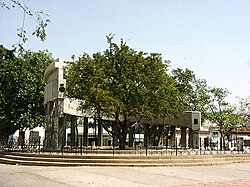
The city underwent several name changes—including Cayo Nuevo, Dos Cayos, and Villa Nueva de Santa Clara—before settling on its current name. Following Spanish urban planning standards, the city was designed with a squared layout centered around a main plaza, originally called Plaza Mayor and now known as Parque Vidal.
While the city grew rapidly due to its strategic position between Havana and eastern Cuba, it has not been without controversy. In 1923, the mayor ordered the demolition of the original Catedral de Santa Clara de Asís to expand the plaza, a decision that remains criticized by locals today.
Marta Abreu: The Benefactress of the City
Few figures are as revered in Santa Clara as Marta Abreu de Estévez. Known as "the Benefactress of the City," Abreu and her husband, Luis Estévez, were staunch supporters of the Cuban independence movement against Spain. Abreu dedicated her wealth to philanthropic projects that modernized the city's infrastructure.
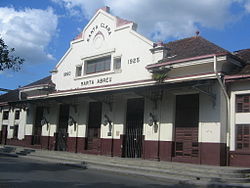
Her legacy is visible throughout the urban landscape, including the city's fire station, an electric plant, and the train station. Her most significant architectural contribution is the Teatro La Caridad, one of only seven colonial-era theaters still standing in Cuba. Abreu funded the theater entirely, designating its proceeds to support schools for underprivileged children.
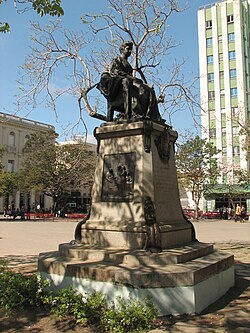
Additionally, Abreu donated her personal palace to the city, which now serves as the Biblioteca Martí, a stunning example of neoclassical architecture located on Parque Vidal.
The Battle of Santa Clara and the Cuban Revolution
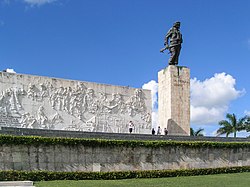
In late 1958, Santa Clara became the stage for the decisive final battle of the Cuban Revolution. Guerrilla columns led by Ernesto "Che" Guevara and Camilo Cienfuegos launched a coordinated attack to topple the government of Fulgencio Batista.
Guevara's forces famously used a bulldozer to destroy railroad tracks, derailing a train filled with government troops and supplies. By the afternoon of December 31, 1958, the city was captured. This victory triggered the collapse of the Batista regime, leading to his flight from Cuba less than 12 hours later.
Geography and Climate
Santa Clara is situated on a plain below a hillside, positioned roughly 71.5 km from the Caribbean Sea and 51.7 km from the Atlantic Ocean. The municipality is divided into various repartos (divisions) and 18 consejos populares (wards), ranging from urban centers like Centro to rural areas like San Miguel.
The city experiences a tropical climate with significant rainfall, particularly between May and October. The average annual precipitation is approximately 1,070 mm.
| Month | Max Temp (°C) | Min Temp (°C) | Precipitation (mm) |
|---|---|---|---|
| January | 27 | 17 | 18 |
| April | 29 | 19 | 46 |
| July | 32 | 22 | 120 |
| October | 28 | 18 | 160 |
| Yearly Avg | - | - | 1,070 |
City Attractions and Culture
Parque Vidal remains the social heart of the city. Historically, it was a place for courtship, where women walked the inner paths and men walked the outer perimeter. Today, it is surrounded by landmarks such as the Santa Clara Libre hotel and the Teatro La Caridad.
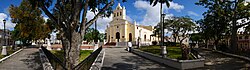
Other must-visit sites include the Mausoleo Che Guevara, which houses the remains of Guevara and sixteen combatants, and the Parque del Tren Blindado, a museum commemorating the armored train derailment.
Transport and Education
The city is a major transit point, crossed by the Carretera Central highway and the Autopista A1 motorway. The Santa Clara railway station is a key stop on the main line connecting Havana to Santiago. For air travel, the Abel Santamaría Airport provides domestic and international connections.
Educationally, the city is anchored by the University "Marta Abreu" of Las Villas, which has graduated 35,000 professionals, including engineers and medics. The Universidad de Ciencias Médicas de Villa Clara, founded in 1966, further strengthens the city's academic standing.
Frequently Asked Questions
Who is Marta Abreu?
Marta Abreu was a philanthropic native of Santa Clara known as "the Benefactress of the City." She funded numerous public works, including schools, a fire station, and the Teatro La Caridad.
What is the significance of the Battle of Santa Clara?
The battle in December 1958 was the decisive victory for the Cuban Revolution. Led by Che Guevara and Camilo Cienfuegos, the capture of the city led to the flight of Fulgencio Batista from Cuba.
What is Parque Vidal?
Parque Vidal is the central plaza of Santa Clara and serves as the city's primary social gathering point, surrounded by historic hotels, theaters, and libraries.
Where is Che Guevara buried?
Ernesto "Che" Guevara is buried in a mausoleum in Santa Clara, alongside sixteen of his fellow combatants who died during the Bolivia campaign in 1967.
How is Santa Clara connected to other cities?
The city is connected via the Carretera Central, the Autopista A1, and a major railway line linking Havana to the east of the country. It also has the Abel Santamaría Airport.