Samuel Franklin Cody: Pioneer of British Aviation
The dawn of flight in Great Britain was shaped significantly by the ingenuity of Samuel Franklin Cody. From his early experiments with high-altitude kites to the construction of the nation's first powered aircraft, Cody's journey was one of relentless experimentation and technical evolution. His work bridged the gap between simple wind-borne structures and the complex machinery of early 20th-century aeronautics.
The Evolution of the Cody Kite
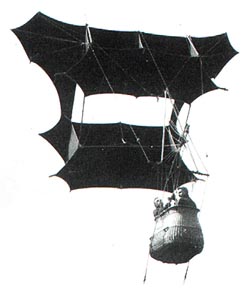
Cody's fascination with kiting began through various influences, including a friendship with balloonist Auguste Gaudron and a reported encounter with a Chinese cook. His primary goal was to create kites capable of reaching extreme altitudes and lifting human weight. By refining Lawrence Hargrave's double-cell box kite—specifically by adding side wings to increase lift—Cody developed a sophisticated system of multiple kites flown on a single line.
This design, patented in 1901 as the Cody kite, allowed for the transport of several men in a gondola. Unlike balloons, which required light winds, Cody's kites operated in stronger winds, making them ideal for meteorological and military observation. This utility earned him a Fellowship in the Royal Meteorological Society.
Military Application and the "War Kite"
In December 1901, Cody introduced his "War Kite" to the War Office for use in the Second Boer War. After successful demonstrations in London reaching 2,000 ft (610 m), the Admiralty recognized the potential for observation posts. Cody demonstrated these capabilities from the deck of the battleship HMS Revenge in 1908, leading the Admiralty to purchase four of his designs.
By 1906, Cody was appointed Chief Instructor of Kiting for the Balloon School in Aldershot and joined the Army Balloon Factory at Farnborough. This institution eventually evolved into the Royal Aircraft Establishment. The training programs Cody led laid the groundwork for what would eventually become No. 1 Squadron of the Royal Air Force.
From Gliders to Power-Kites
Cody continued to push the boundaries of control and propulsion. In 1905, he developed a glider-kite, a tailless biplane launched on a tether that was later released for free flight. This machine was pioneering for its effective use of ailerons (specifically elevons) to control roll.
In 1907, he transitioned to powered flight with an unmanned "power-kite." Equipped with a 15 hp Buchet engine, this aircraft featured larger wings and a tailplane with twin fins. Due to safety constraints, Cody flew this machine indoors within the Farnborough Balloon Shed using a long aerial wire.
The Nulli Secundus Airship
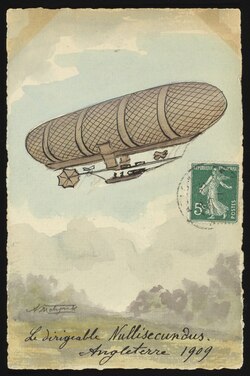
Before focusing entirely on aeroplanes, Cody was tasked with completing a powered airship. He sourced a 40 hp Antoinette engine from France and designed the propulsion system and understructure for the British Army Dirigible No 1 Nulli Secundus.
On 5 October 1907, the Nulli Secundus made history by flying from Farnborough to London in 3 hours and 25 minutes. While the flight was a success, strong 18 mph headwinds forced Cody and Colonel J E Capper to land at the Crystal Palace, where the airship sustained wind damage.
The Birth of the British Aeroplane
In late 1907, the Army backed the development of the British Army Aeroplane No 1. On 16 October 1908, Cody achieved a flight of 1,390 ft (420 m), marking the first official flight of a piloted heavier-than-air machine in Great Britain.
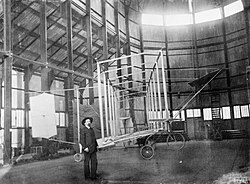
Despite the War Office ending its development contract in April 1909, Cody continued his research independently. On 14 May 1909, he set the first official British distance and endurance records by flying over a mile. He later carried passengers, including Lela Cody, in August 1909.
Challenges and Later Achievements
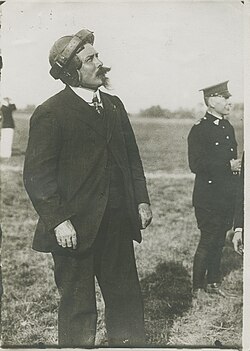
Cody's career was not without peril. In late 1909, while testing a new aircraft, a gust of wind caused the plane to pitch forward and crash. Cody suffered serious injuries to his head and shoulders but recovered quickly.
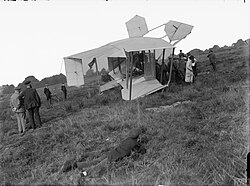
His subsequent achievements include winning the Michelin Cup in 1910 for a flight of 4 hours and 47 minutes and finishing fourth in the 1911 "Circuit of Great Britain" air race. His Cody V biplane, powered by a 120 hp engine, won first prize at the 1912 British Military Aeroplane Competition. His final design was the versatile Cody Floatplane, capable of operating on both land and water.
Key Facts
- First Official Flight: Cody achieved the first official piloted heavier-than-air flight in Great Britain on 16 October 1908.
- Innovation: His 1905 glider-kite was the first aircraft to effectively use ailerons/elevons for roll control.
- Military Impact: His "War Kites" were adopted by the British Army and Admiralty for observation.
- Airship Milestone: The Nulli Secundus was Britain's first powered airship, flying from Farnborough to London in 1907.
- Records: Cody established the first official British distance and endurance records in May 1909.
| Aircraft | Year | Key Feature/Achievement |
|---|---|---|
| Cody War Kites | 1901 | Military observation and high-altitude lift |
| Glider-kite | 1905 | First effective use of ailerons |
| Nulli Secundus | 1907 | First powered British airship |
| British Army Aeroplane No 1 | 1908 | First official piloted flight in Great Britain |
| Cody V Biplane | 1912 | Winner of British Military Aeroplane Competition |
| Cody Floatplane | 1913 | Dual land and water capability |
Frequently Asked Questions
What was the significance of the British Army Aeroplane No 1?
It is recognized as the first official flight of a piloted heavier-than-air machine in Great Britain, achieving this milestone on 16 October 1908.
How did Cody's kites differ from balloons?
Balloons could only be operated in light winds, whereas Cody's kites required stronger winds, allowing meteorological and military observation to occur in a wider range of weather conditions.
What was the Nulli Secundus?
The Nulli Secundus was Britain's first powered airship. In October 1907, it flew from Farnborough to London, though it was later damaged by high winds at the Crystal Palace.
What technical innovation did Cody introduce with his glider-kite?
The 1905 glider-kite was notable for being the first aircraft to effectively use ailerons (specifically elevons) to control the roll of the aircraft.
Which military organization evolved from Cody's kiting school?
The group Cody trained evolved into the Air Battalion of the Royal Engineers, which eventually became No. 1 Squadron of the Royal Flying Corps and later No. 1 Squadron of the Royal Air Force.