Saint George: The History, Legend, and Global Veneration of the Great Martyr
Saint George is one of the most revered figures in global religious history, known variously as a Megalomartyr (Great Martyr), Wonderworker, and Victory-Bearer. While he is most famously recognized in Western culture as the dragon-slaying knight, his legacy spans multiple continents and faiths, from the Eastern Orthodox and Catholic churches to veneration within Islam and the Druze faith.
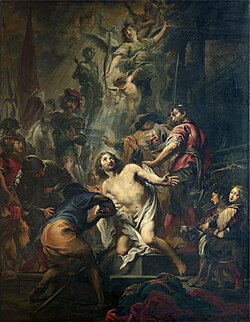
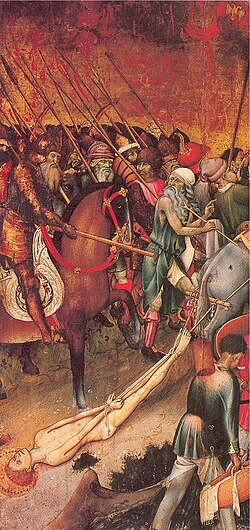
Born in the 3rd century in Cappadocia, Anatolia, George's life is a blend of historical martyrdom and enduring legend. He is traditionally believed to have been martyred on April 23, 303 AD, in Diospolis (modern-day Lydda), Syria Palaestina, during the Roman Empire.
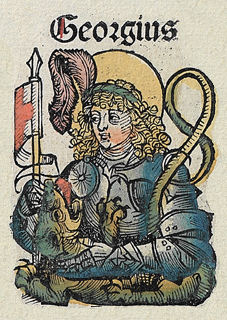
Key Facts
- Born: 3rd century, Cappadocia, Anatolia.
- Death: April 23, 303 AD, in Diospolis (Lydda).
- Primary Titles: Megalomartyr, Wonderworker, Trophy-Bearer.
- Patronage: England, Portugal, Catalonia, and various other regions.
- Symbol: A red cross on a white field (Saint George's Cross).
- Feast Day: April 23 (General Roman Calendar and Eastern Orthodox).
The Historical and Legendary Origins
The historical identity of Saint George has been a subject of scholarly debate. The English historian Edward Gibbon once suggested that the legend was based on a 4th-century Arian bishop from Cappadocia, though this theory is widely considered improbable by later historians like J. B. Bury. Most evidence suggests George was a Roman soldier who was martyred before 290 AD for his Christian faith.
One of the oldest traditions of his life was found in a Coptic manuscript discovered in 1964 at Qasr Ibrim in Nubia, dated between 350 and 500 AD. This text describes George as the son of Gerontius, a Roman official in Nobatia, and Polychronia, a Christian. According to this account, George was born between 270 and 275 AD and was baptized in secret by his mother.
![George in the Acta Sanctorum, as collected in late 1600s and early 1700s. The Latin title De S Georgio Megalo-Martyre; Lyddae seu Diospoli in Palaestina translates as St. George Great-Martyr; [from] Lydda or Diospolis, in Palestine](/images/5a/a9/5aa92383d6a50f7f23a4bbcaf8872e863f8c7c6f6dafe83a164d482d7ca171d8.png)
The Legend of the Dragon
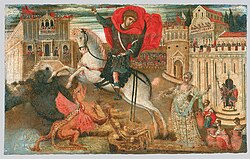
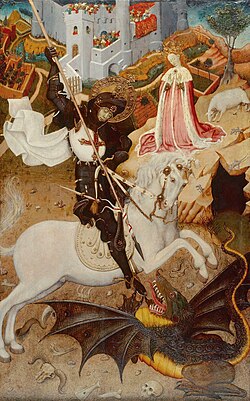
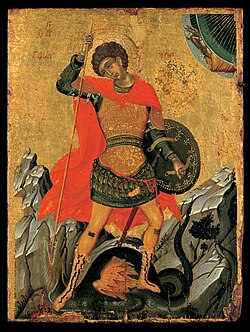
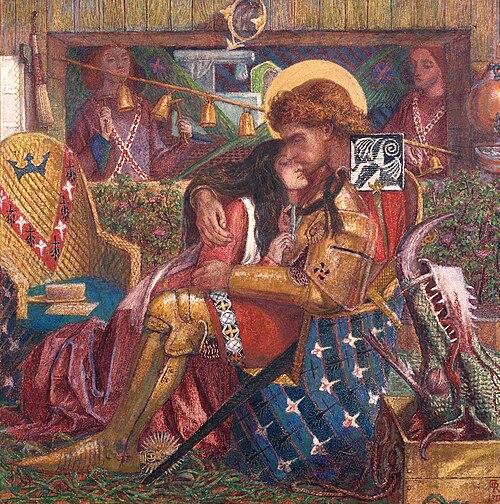
The most enduring image of Saint George is that of the dragon-slayer. This narrative, which evolved over centuries, depicts George rescuing a princess by slaying a dragon, symbolizing the victory of faith over evil. This imagery became a cornerstone of chivalric culture in the Middle Ages.
Global Veneration and Patronage
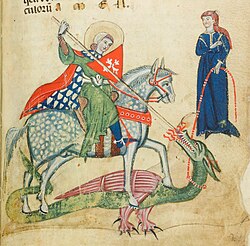
Saint George's influence extends far beyond a single denomination or country. He is honored across the Eastern Orthodox, Catholic, Oriental Orthodox, and Anglican traditions, as well as in the Church of the East and Lutheranism.
Patronage in Europe
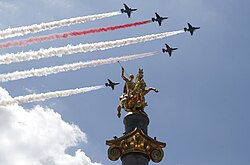
- England: While mentioned by the monk Bede in the 8th century, George did not become the patron saint of England until the 14th century. By 1552, during the English Reformation, his banner became the primary symbol of the nation.
- Portugal: Devotions date back to the 12th century. He became the patron saint under King John I, and the cry "Portugal and Saint George" remains a battle cry for the Portuguese Army.
- Catalonia: Known as Sant Jordi, he has been the patron saint of Catalonia since 1456. His cross is featured on the flag of Barcelona and the crest of FC Barcelona.
Veneration in the Levant and Muslim World
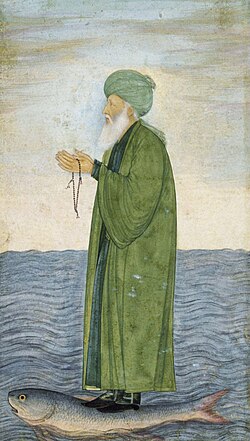
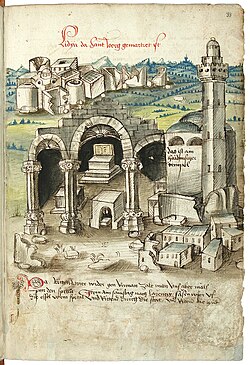
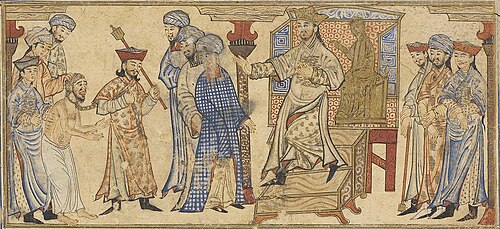
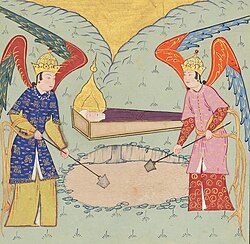
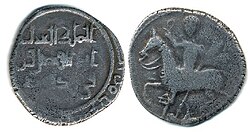
In the Levant, George is deeply revered by both Christians and Muslims. In the Muslim world, he is often identified with Al-Khidr (the Verdant One). A significant site of shared veneration is the Church of Saint George and the Mosque of Al-Khadr in Lydda.
Iconography and Symbols
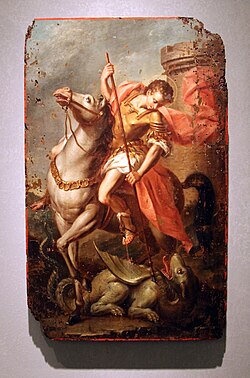
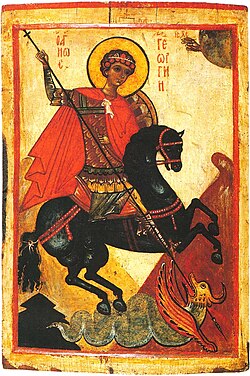
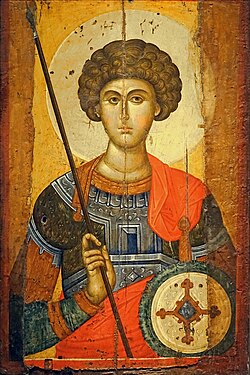
The visual representation of Saint George varies by region. In Eastern iconography, he is often depicted as a soldier-saint or a martyr. In Western art, he is typically portrayed as a knight in armor on horseback.
The Saint George's Cross—a red cross on a white background—likely originated in Genoa during the 12th century. This simple yet powerful symbol was eventually adopted by England and other regions as a sign of bravery and faith.

| Tradition/Calendar | Date | Significance |
|---|---|---|
| General Roman Calendar | April 23 | Main Commemoration |
| Eastern Orthodox (Julian) | April 23 (May 6 Gregorian) | Death Anniversary |
| Coptic Calendar | 23 Parmouti (May 1) | Feast Day |
| Russian Orthodox | November 3 | Consecration of Lydda Cathedral |
| Russian Orthodox | November 26 | Church of St. George at Kyiv |
Frequently Asked Questions
![St George, the dragon and the Princess, by Paolo Uccello[78]](/images/9a/5d/9a5d8e56be4ba41625b55eb0a5b49f0d3f7432c984963b1979ca5244fe247509.jpg)

Who is Saint George?
Saint George was a 3rd-century Roman soldier from Cappadocia who was martyred for his Christian faith in 303 AD. He is widely venerated as a Great Martyr and is the patron saint of several countries, including England, Georgia, and Ethiopia.
Why is he associated with a dragon?
The dragon-slaying story is a later legendary addition to his hagiography. It serves as an allegory for the triumph of Christianity over paganism or the victory of good over evil.
What is the significance of the red cross on a white background?
Known as Saint George's Cross, this symbol likely originated in Genoa in the 12th century before becoming the national symbol of England and a mark of various chivalric orders.
Is Saint George recognized in Islam?
Yes, in many Muslim traditions, particularly in the Levant, Saint George is identified with the prophetic figure Al-Khidr, and they are often venerated at the same shrines.
When is Saint George's Day celebrated?
The most common date is April 23. However, depending on the calendar (Julian vs. Gregorian) or the specific church tradition, celebrations may also occur on May 6 or other dates throughout the year.