Sadhu Sundar Singh: The Apostle with Bleeding Feet
Sadhu Sundar Singh remains one of the most enigmatic and revered figures in the history of Indian Christianity. Born into a Sikh family in the village of Rampur, Punjab, Singh's life was a journey of intense spiritual searching, transitioning from the traditions of Sikhism and Hinduism to a unique, indigenous expression of Christian faith. Known for his ascetic lifestyle and daring missions, he sought to bridge the gap between the gospel and Indian culture.
During his youth, Singh was exposed to a diverse spiritual landscape. His mother encouraged him to study with a Hindu sadhu (an ascetic holy man) while also attending Ewing Christian High School in Ludhiana to learn English. However, his early relationship with Christianity was fraught with conflict; following the death of his mother when he was fourteen, he expressed his anger by burning a Bible page by page.
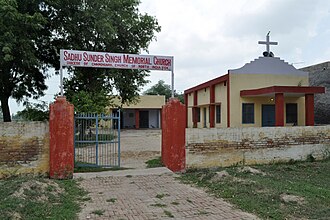
Conversion and Early Trials
Driven by a search for ultimate meaning that he felt was missing from his religious pursuits, Singh reached a point of deep despair and contemplated suicide. He challenged the "true God" to appear before him, leading to a vision of Jesus that night. This experience prompted his conversion to Christianity, a decision that brought immediate turmoil to his family. His father, Sher Singh, rejected him, and his brother, Rajender Singh, attempted to poison him multiple times. He also faced local persecution, including having snakes thrown into his home, though he eventually found refuge with a British Christian.
Singh was publicly baptized at a parish church in Simla in the Himalayan foothills on his sixteenth birthday. Before this, he had dedicated himself to serving leprosy patients at the Christian Missionary Home in Sabathu.
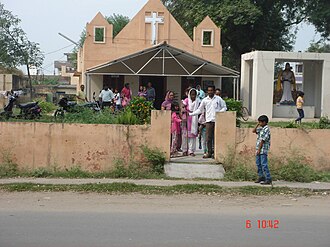
The Path of the Christian Sadhu
In October 1906, Sundar Singh embarked on a missionary journey with a distinct vision: he would propagate the gospel not as a Westerner, but as an Indian. He adopted the saffron turban and robe of a sadhu, believing that Indians would only be open to conversion if it occurred in a culturally familiar way. He vowed to own no possessions and belong to the road, sharing in the suffering of his people.
His missions took him across the Punjab, through the Bannihal Pass into Kashmir, and into the challenging terrains of Muslim Afghanistan, Baluchistan, and the North-West Frontier. Because of the physical hardships he endured, Christian communities in the north dubbed him "the apostle with the bleeding feet." His journeys often involved arrest, stoning, and mystical experiences.
In 1908, Singh crossed into Tibet. There, he encountered extreme living conditions and faced hostility; he was once stoned for bathing in cold water, as local beliefs held that holy men did not wash. He also attempted to visit Palestine via Bombay in 1908, but was denied a permit.
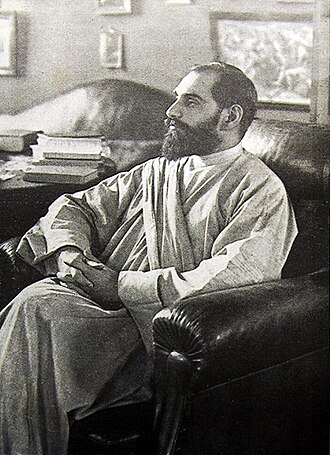
Conflict with Western Institutionalism
Despite his devotion, Singh struggled with the colonial influence within the church. He viewed Western civilization as the antithesis of original Christian values, lamenting that Indian Christians often adopted British dress and customs that were irrelevant to the faith. This tension peaked during his formal training at an Anglican college in Lahore starting in December 1909.
Singh felt ostracized by his peers and found the academic curriculum irrelevant to the needs of India. He eventually left the college in July 1910. Biographers suggest his departure was accelerated by Bishop Lefroy, who required Singh to discard his sadhu robes for European clerical dress and adhere to formal Anglican worship and English hymns—requirements Singh rejected in favor of a pure, non-Western expression of Christ's message.
Mysticism and Global Influence
Singh's later years were marked by accounts of miracles and mystical encounters. In 1912, he reported spending weeks with the Maharishi of Kailas, a 300-year-old hermit in a mountain cave. He also recounted surviving being thrown into a dry well filled with decaying remains in the town of Rasar.
He claimed knowledge of a "secret missionaries group" of approximately 24,000 members across India, allegedly linked to the Magi and the disciples of the Apostle Thomas. While these accounts were viewed as mystical by some and lacked written documentation, they formed a core part of his spiritual identity.
By his twenties, Singh had gained international fame. He toured South India and Ceylon in 1918, followed by visits to Burma, Malaya, China, and Japan in 1919. He later visited Britain, the United States, Australia (1920), and Europe (1922). He was often praised for his humility and his ability to speak in a manner that reminded listeners of Jesus, though he remained critical of the materialism and irreligion he observed in the West.
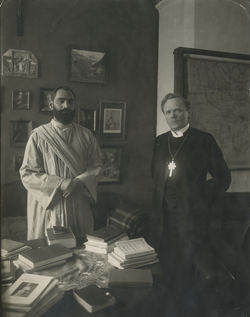
The Final Journey and Legacy
After a grueling trip to Tibet in 1923, Singh's health declined. He spent several years in the Simla hills focusing on meditation and writing. In April 1929, despite warnings from friends, he set out for Tibet one last time. He was last seen in Kalka on April 18, 1929. His ultimate fate remains a mystery, though it is believed he may have died of exhaustion in the mountains.
His legacy continued through his family; in the 1940s, his brother Rajender was converted and baptized by Bishop Augustine Peters. Today, Singh is remembered as a towering figure in Indian missionary history, commemorated by the Church of England on June 19 and respected by the Coptic and Malankara Orthodox Syrian Churches.
Key Facts
- Identity: A former Sikh who became a Christian missionary adopting the lifestyle of a sadhu (ascetic).
- Missionary Reach: Traveled extensively through Punjab, Kashmir, Afghanistan, Tibet, and later to the West and East Asia.
- Core Philosophy: Rejected the blending of Christianity with British colonial culture, advocating for an indigenous Indian Christian identity.
- Nickname: Known as "the apostle with the bleeding feet" due to his arduous travels.
- Disappearance: Vanished during a final journey to Tibet in April 1929.
| Period/Event | Details |
|---|---|
| Early Life | Born into a Sikh family in Rampur, Punjab; studied with a Hindu sadhu. |
| Conversion | Converted after a vision of Jesus; baptized in Simla at age 16. |
| Missionary Work | Traveled as a Christian sadhu to Tibet, Afghanistan, and across Asia. |
| Global Tours | Visited UK, USA, Australia, and Europe (1920-1922). |
| Final Journey | Disappeared in Tibet in April 1929. |
Frequently Asked Questions
Why did Sundar Singh dress as a sadhu?
He believed that for Christianity to be accepted in India, it needed to be presented in an Indian way. By wearing the saffron robes of a sadhu, he identified with the local spiritual tradition of asceticism rather than appearing as a representative of Western colonialism.
What was his relationship with the Anglican Church?
While he was baptized by an Anglican priest and trained at an Anglican college in Lahore, he eventually broke away. He disagreed with the requirement to adopt European clerical dress and formal English worship, which he felt obscured the true message of the gospel.
What happened to him in 1929?
Sundar Singh set off for Tibet in April 1929 against the advice of his friends. He was last seen in Kalka, and his disappearance remains a mystery, though it is widely assumed he perished during the journey.
Did he believe in eternal punishment?
In his later writings and talks, Singh expressed universalist tendencies. He suggested that while there is punishment after death, it is not eternal, and that every soul would eventually have a fair chance to return to God.
How is he recognized today?
He is revered as a formative figure in Indian Christianity. The Church of England commemorates him on June 19, and he is respected by various Eastern Orthodox and Oriental Orthodox traditions.