Russian Rock Music: From Soviet Underground to Global Influence
Russian rock is more than just a musical genre; it emerged as a powerful cultural movement that mirrored the social and political upheavals of the Soviet Union. Born from a fusion of Western rock influences and the traditional bard songs (acoustic songs focused on storytelling and poetry), Russian rock evolved from clandestine amateur gatherings into a massive industry that defined the youth of the Perestroika era.
Unlike many Western counterparts, Russian rock placed a profound emphasis on lyrics, often using poetry to convey ideological and aesthetic messages. While the 20th century saw a unified movement, the 21st century has seen the genre diversify into nearly every rock sub-genre, making the term "Russian rock" a broad umbrella for a wide variety of sounds, most of which continue to be performed in the Russian language.
Key Facts
- Origins: Emerged in the 1960s, blending Western rock and roll with Soviet bard traditions.
- Golden Age: The 1980s, particularly during Perestroika, when underground bands gained official recognition.
- Lyric-Centric: The genre is characterized by a heavy emphasis on poetic and symbolist lyrics over instrumental complexity.
- Key Figures: Iconic bands include Kino, Mashina Vremeni, Aquarium, and DDT.
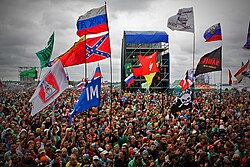
- Major Event: Nashestvie became one of the largest rock festivals, attracting up to 200,000 fans annually.
The Early Years: 1960s and 1970s
The roots of the movement were planted in the 1960s through the influence of Western music and local bard traditions. Early development occurred largely in the provinces, where the beat music movement flourished. In 1965, the first Russian rock and roll magazine, Beat-Echo, was released as samizdat (self-published, clandestine literature).
The late 60s and 70s saw the rise of early festivals and venues. Notable events included the first USSR rock festival in Kamensk-Uralsky in 1966 and the "Woodstock-na-Donu" in Rostov-na-Donu in 1969. In Moscow, the Power Engineering Institute became a legendary hub for bands. Because official studio recording was restricted, music was primarily distributed via tape recorders, with fans copying recordings from one another.
During this era, the "forefathers" of the scene emerged. Andrey Makarevich founded Mashina Vremeni in 1969, and Boris Grebenshchikov established Aquarium in 1972.
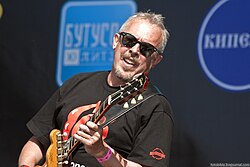

While underground scenes grew, some official VIA (Vocal-Instrumental Ensembles) began releasing rock-influenced albums, such as Ariel's "Russian pictures" (1977) and Pesnyary's "Guslar" (1979). The period also saw the rise of the rock opera, with works like Juno and Avos (1981) gaining prominence.
The 1980s: The Golden Era
The 1980s marked the "Golden Age" of Russian rock. This period saw a synthesis of 1960s/70s Western rock, New Wave, punk, and the New Wave of British Heavy Metal (NWOBHM). The creation of official "rock clubs" allowed underground artists to transition toward legality.
Many bands of this era were centered around a single charismatic songwriter or leader. Kino, led by Viktor Tsoi, became one of the most popular acts in the Soviet Union, while Alisa and DDT gained fame for their powerful messages. In the Sverdlovsk region, Nautilus Pompilius helped launch a distinct new-wave scene.
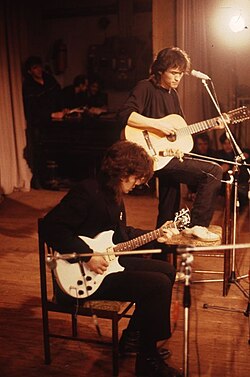

The 1980s also saw the first official rock festivals, such as "Spring Rhythms: Tbilisi-80" and "Fiztech—1982," the latter of which catalyzed the popularity of the new wave sound.
Diverse Scenes and Regional Movements
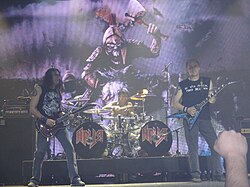
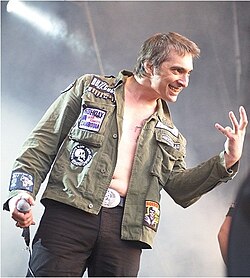
As the movement grew, various sub-genres and regional styles emerged. Heavy metal found a stronghold with bands like Aria, while the horror punk scene was defined by the energetic lead singer of Korol i Shut, Mikhail Gorsheniov.
Beyond the mainstream, Tatar rock developed as a distinct branch, prioritizing Tatar language lyrics and vocals. Early pioneers included Saq-Soq and Bolgar in the late 1980s, followed by modern acts like Alqanat and Xat.
Transition to the Post-Soviet Era
The era of Perestroika opened doors for Russian musicians to tour and record in the West. This period was marked by high-profile collaborations, such as Brian Eno producing Zvuki Mu and Dave Stewart producing Boris Grebenshchikov's Radio Silence.
The "classic" era is generally considered to have ended with two pivotal events: the death of Viktor Tsoi in 1990 and the dissolution of the Soviet Union in 1991. However, the sound persisted. The 1990s saw the rise of specialized rock media, including magazines like Rockcor, Rock City, and Dark City.
The late 90s witnessed the launch of Nashe Radio, which became a kingmaker for Russian rock artists and founded the massive Nashestvie festival.
Evolution in the 21st Century
The 2000s were characterized by a blend of 90s experimentation and a revival of the 80s classic sound. The scene diversified further into progressive rock, with bands like Little Tragedies and the annual InProg festival, as well as instrumental rock featuring the Kostarev Group.
By the 2010s, the landscape shifted again, with the music scene occasionally reflecting the political tensions of the era, including divisions following the Crimean Crisis.

![1990s were an important and eventful period in the life and work of DDT and personally for its leader, Yuri Shevchuk.[100]](/images/40/12/4012d71c34a87c55e70cb93fad04cd769b2e6ca3e902a2c0a1dcdce886586a77.jpg)
| Period | Key Characteristics | Notable Acts/Events |
|---|---|---|
| 1960s - 1970s | Underground, samizdat, bard influence | Mashina Vremeni, Aquarium, Woodstock-na-Donu |
| 1980s | Golden Age, Perestroika, New Wave | Kino, Alisa, DDT, Nautilus Pompilius |
| 1990s | Post-Soviet transition, commercialization | Nashe Radio, Nashestvie Festival |
| 2000s - Present | Genre diversification, Progressive rock | InProg Festival, Little Tragedies |
Frequently Asked Questions
What makes Russian rock different from Western rock?
The primary difference is the heavy emphasis on lyrics and poetry. Russian rock often functioned as a cultural and ideological movement, blending Western sounds with the storytelling traditions of Russian bard music.
Who are the most influential bands in Russian rock history?
Some of the most influential include Kino, Mashina Vremeni, Aquarium, DDT, and Alisa, all of whom played pivotal roles during the movement's golden age in the 1980s.
What was the role of 'samizdat' in the music scene?
Samizdat refers to the clandestine self-publishing of materials. In rock music, this manifested as the illegal distribution of magazines like Beat-Echo and the sharing of home-recorded tapes among fans.
What was the significance of the Perestroika era?
Perestroika allowed underground rock bands to move into the public eye, release records officially, and tour internationally, effectively ending the era of total secrecy for rock musicians.
What is the Nashestvie festival?
Founded by Nashe Radio, Nashestvie is one of the largest open-air rock festivals in Russia, historically attracting up to 200,000 fans annually.