Articles/Russian Empire: The Rise and Fall of a Global Superpower (1721–1917)
Russian Empire historyPeter the GreatCatherine the GreatRomanov dynastyRussian Imperial history
Russian Empire: The Rise and Fall of a Global Superpower (1721–1917)
Russian Empire: The Rise and Fall of a Global Superpower (1721–1917) From its official proclamation in 1721 to its dramatic collapse in 1917, the Russian Empire stood as one of the most e...
Russian Empire: The Rise and Fall of a Global Superpower (1721–1917)
From its official proclamation in 1721 to its dramatic collapse in 1917, the Russian Empire stood as one of the most expansive and influential political entities in human history. Spanning vast territories across Europe and Asia, the empire underwent profound transformations—from a burgeoning state under Peter the Great to a complex, multi-ethnic superpower that shaped the course of the modern world.
This article examines the foundational eras, the expansion of territory, the socio-economic structures, and the eventual revolutionary collapse of the imperial era.
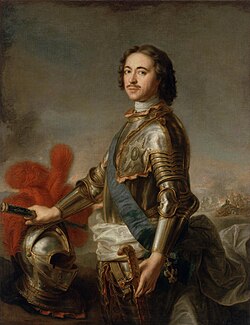
Peter the Great officially proclaimed the Russian Empire in 1721 and became its first emperor. He instituted sweeping reforms and oversaw the transformation of Russia into a major European power. Painting by Jean-Marc Nattier, 1717.: Peter the Great officially proclaimed the Russian Empire in 1721 and became its first emperor. He instituted sweeping reforms and oversaw the transformation of Russia into a major European power. Painting by Jean-Marc Nattier, 1717.
Key Facts
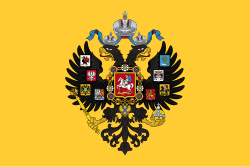
Imperial standard of the emperor from 1858 to 1917. Previous variations of the black eagle on gold background were used as far back as Peter the Great's time. The emblems on the wings represent the tsardoms of Kazan, Astrakhan, Poland, Siberia, Taurida, and Georgia, the grand principalities of Kiev, Vladimir, and Novgorod, and the grand duchy of Finland.
Duration: 1721–1917
First Emperor: Peter I (Peter the Great)
Last Emperor: Nicholas II
Capital Cities: Saint Petersburg (primarily) and Moscow
Official Language: Russian
Peak Area: Approximately 22,800,000 km² (by 1895)
Major Religion: Eastern Orthodox Christianity
The Foundation and Expansion of Empire
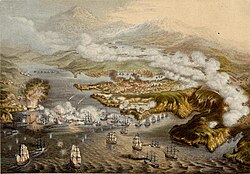
The eleven-month siege of a Russian naval base at Sevastopol during the Crimean War
The empire was formally established following the Treaty of Nystad in 1721. Peter I, known as Peter the Great, was the architect of this new era, implementing sweeping reforms that transitioned Russia into a major European power. His reign set the stage for centuries of imperial dominance.
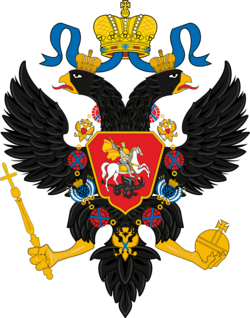
Coat of arms during the reign of Peter I: Coat of arms during the reign of Peter I
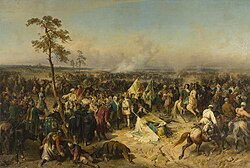
Following the foundation, the empire saw significant territorial growth through military conquest and diplomacy. Notable milestones included the victory at Poltava and the subsequent expansion into various regions. The empire's reach eventually extended deep into Central Asia and the Caucasus, absorbing diverse territories and cultures.
The Victory at Poltava, painted by Alexander von Kotzebue in 1862: The Victory at Poltava, painted by Alexander von Kotzebue in 1862
The Era of Enlightenment and Modernization
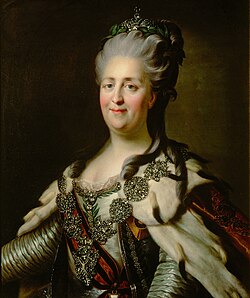
The 18th century brought the reign of Catherine the Great (1762–1796), an era characterized by the Russian Enlightenment. As an enlightened absolutist, she continued the empire's expansion and modernization, fostering cultural and intellectual growth while strengthening the central authority of the throne.
Empress Catherine the Great, who reigned from 1762 to 1796, continued the empire's expansion and modernization. Considering herself an enlightened absolutist, she played a key role in the Russian Enlightenment (painted in the 1780s).: Empress Catherine the Great, who reigned from 1762 to 1796, continued the empire's expansion and modernization. Considering herself an enlightened absolutist, she played a key role in the Russian Enlightenment (painted in the 1780s).
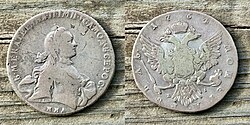
During this period, the empire's economic and administrative systems were further refined. The use of the Russian ruble became a cornerstone of the imperial economy, with significant coinage produced to reflect the empire's growing prestige.
1764, Ruble Catherine II ММД, Krasny Mint: 1764, Ruble Catherine II ММД, Krasny Mint
Catherine II Sestroretsk Ruble (1771) is made of solid copper measuring 77 mm (3+1⁄32 in) (diameter), 26 mm (1+1⁄32 in) (thickness), and weighs 1,041 g (2 lb 4+3⁄4 oz).[39]: Catherine II Sestroretsk Ruble (1771) is made of solid copper measuring 77 mm (3+1⁄32 in) (diameter), 26 mm (1+1⁄32 in) (thickness), and weighs 1,041 g (2 lb 4+3⁄4 oz).[39]
Military Might and Territorial Conquest
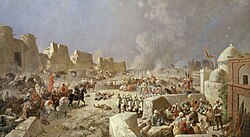
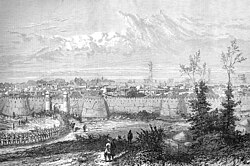
Russian troops taking Samarkand (8 June 1868)
The history of the Russian Empire is inextricably linked to its military achievements. From the storming of strategic fortresses to large-scale campaigns against the Ottoman and Persian empires, the imperial military was a primary tool of statecraft.
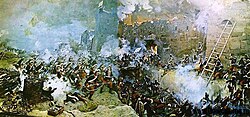
The Storming of Izmail on 22 December 1790, by Russian troops under the command of Alexander Suvorov. Suvorov's victory was immortalized with the empire's newfound national anthem: "Let the Thunder of Victory Rumble!".: The Storming of Izmail on 22 December 1790, by Russian troops under the command of Alexander Suvorov. Suvorov's victory was immortalized with the empire's newfound national anthem: "Let the Thunder of Victory Rumble!".
The empire engaged in numerous conflicts, including the Russo-Persian Wars and the Russo-Turkish Wars, which expanded its influence in the East and South. These conflicts often involved significant sieges and decisive battles that redefined regional borders.
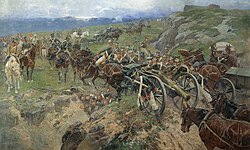
This 1892 painting imagines a scene of Russian troops forming a bridge with their bodies, moving equipment to prepare for invading Persian forces during the Russo-Persian War (1804–1813), which occurred contemporaneously with the French invasion of Russia.: This 1892 painting imagines a scene of Russian troops forming a bridge with their bodies, moving equipment to prepare for invading Persian forces during the Russo-Persian War (1804–1813), which occurred contemporaneously with the French invasion of Russia.
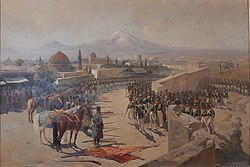
Franz Roubaud's 1893 painting of the Erivan Fortress siege in 1827 by the Russian forces under leadership of Ivan Paskevich during the Russo-Persian War (1826–1828): Franz Roubaud's 1893 painting of the Erivan Fortress siege in 1827 by the Russian forces under leadership of Ivan Paskevich during the Russo-Persian War (1826–1828)
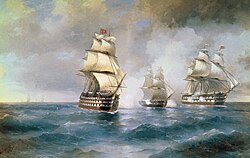
1892 painting depicting Imperial Russian Navy Brig "Mercury" Attacked by Two Turkish Ships in a scene from the Russo-Turkish War (1828–1829), by Ivan Aivazovsky: 1892 painting depicting Imperial Russian Navy Brig "Mercury" Attacked by Two Turkish Ships in a scene from the Russo-Turkish War (1828–1829), by Ivan Aivazovsky
Defending the Heartlands
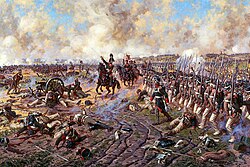
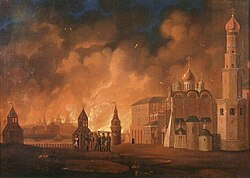
Military history also includes the defense of the Russian heartland, most notably during the Napoleonic Wars. The 1812 invasion of Russia saw the empire endure the Fire of Moscow and significant combat, such as the Battle of Borodino, to repel French forces.
Pyotr Bagration at the Battle of Borodino: Pyotr Bagration at the Battle of Borodino
An 1813 painting depicting the Fire of Moscow, Russia had burned the city just before Napoleon could reach and occupy it.: An 1813 painting depicting the Fire of Moscow, Russia had burned the city just before Napoleon could reach and occupy it.
Society, Demographics, and Economy
Russian troops entering Khiva in 1873
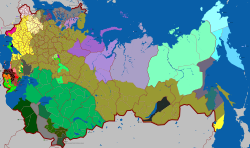
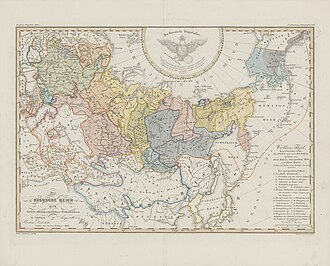
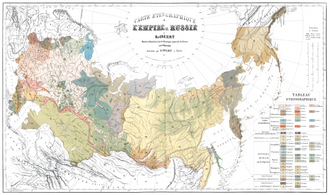
The Russian Empire was a vast mosaic of ethnicities and religions. According to the 1897 census, while the majority of the population was Eastern Orthodox Christian, the empire was home to significant Muslim, Catholic, Jewish, and Buddhist communities. This diversity was both a source of cultural richness and a source of social tension.
Map of subdivisions of the Russian Empire by largest ethnolinguistic group (1897): Map of subdivisions of the Russian Empire by largest ethnolinguistic group (1897)
Ethnographic Map of the Russian Empire by Heinrich Berghaus 1852: Ethnographic Map of the Russian Empire by Heinrich Berghaus 1852
Ethnographic Map of the Russian Empire by Pauli Gustav-Fedor Khristianovich 1862: Ethnographic Map of the Russian Empire by Pauli Gustav-Fedor Khristianovich 1862
Socially, the empire was defined by the institution of serfdom, a system of peasant bondage that was not abolished until the Emancipation Reform of 1861. The transition from a feudal agrarian society to an industrializing one was a period of immense upheaval.
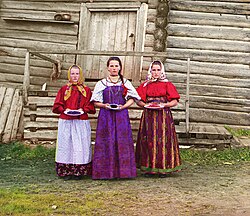
Young Russian peasant women in front of a traditional wooden house (c. 1909 to 1915), color photograph taken by Sergey Prokudin-Gorsky: Young Russian peasant women in front of a traditional wooden house (c. 1909 to 1915), color photograph taken by Sergey Prokudin-Gorsky.
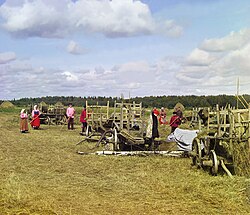
Peasants in Russia (color photograph taken by Prokudin-Gorsky in 1909): Peasants in Russia (color photograph taken by Prokudin-Gorsky in 1909)
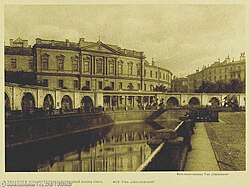
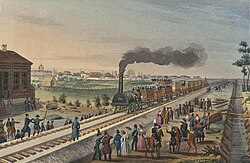
Economically, the empire relied heavily on agriculture, mining, and heavy industry. The Ural region and the Caucasus were vital for mineral extraction, including gold, platinum, and iron. By the late 19th century, the development of railways and the establishment of the State Bank in 1860 signaled a push toward modern financial and transport infrastructure.
The State Bank of the Russian Empire was founded in 1860 as a central bank structure (headquarters in Saint Petersburg, photographed in 1905).: The State Bank of the Russian Empire was founded in 1860 as a central bank structure (headquarters in Saint Petersburg, photographed in 1905).
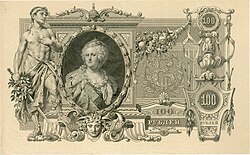
100 ruble banknote (1910): 100 ruble banknote (1910)
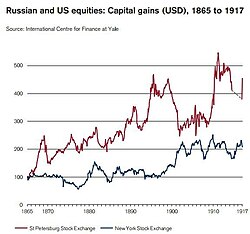
Russian and US equities, 1865 to 1917: Russian and US equities, 1865 to 1917
Watercolor-tinted lithgraph, from the 1840s, depicting the arrival of the first Tsarskoye Selo Railway train at Tsarskoye Selo from St. Petersburg on 30 October 1837: Watercolor-tinted lithgraph, from the 1840s, depicting the arrival of the first Tsarskoye Selo Railway train at Tsarskoye Selo from St. Petersburg on 30 October 1837
The Path to Revolution and Collapse
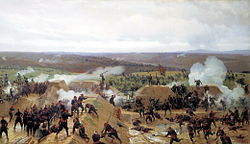
Capturing of the Ottoman Turkish redoubt during the Siege of Plevna (1877)
The early 20th century brought a series of crises that undermined imperial stability. The 1905 Revolution forced the creation of the State Duma, a legislative body, but the underlying social and political tensions remained unresolved. The empire's involvement in World War I proved to be the final catalyst for collapse.
A scene from the First Russian Revolution, by Ilya Repin[79]: A scene from the First Russian Revolution, by Ilya Repin
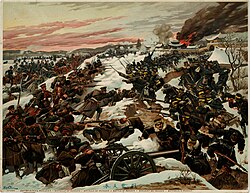
Russian soldiers in combat against Japanese at Mukden (inside China), during the Russo-Japanese War (1904–1905): Russian soldiers in combat against Japanese at Mukden (inside China), during the Russo-Japanese War (1904–1905)
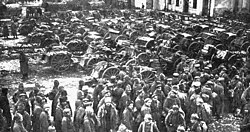
Disastrous military defeats, such as the Battle of Tannenberg, and the immense strain of total war led to widespread unrest. The February Revolution of 1917 eventually resulted in the abdication of Nicholas II, the last emperor, and the proclamation of a republic, marking the end of the imperial era.
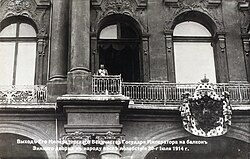
The Russian Emperor Nicholas II declared war on Germany, on the balcony of the Winter Palace, on 2 August 1914.: The Russian Emperor Nicholas II declared war on Germany, on the balcony of the Winter Palace, on 2 August 1914.
Russian POWs and equipments which were captured by Germany after the Battle of Tannenberg, a major disaster for Russia: Russian POWs and equipments which were captured by Germany after the Battle of Tannenberg, a major disaster for Russia
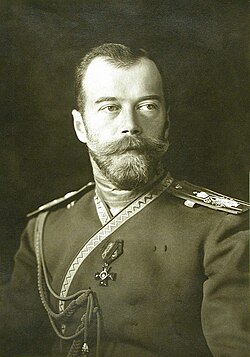
Nicholas II was the last emperor of Russia, reigning from 1894 to 1917.: Nicholas II was the last emperor of Russia, reigning from 1894 to 1917.
The transition from empire to republic was marked by profound political shifts, including the rise of new leadership and the eventual establishment of a different political order in the wake of the imperial collapse.
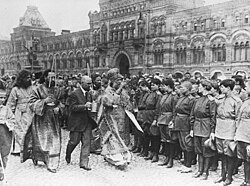
Patriarch Tikhon of Moscow in 1917: Patriarch Tikhon of Moscow in 1917
Summary of Imperial Statistics and Data
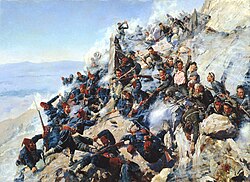
Russian troops fighting against Ottoman troops at the Battle of Shipka Pass (1877)
Key Data of the Russian Empire
Category
Details / Values
Time Period
1721–1917
Primary Capital
Saint Petersburg
Population (1897)
~125.6 Million
Population (1910)
~161 Million
Dominant Religion
Eastern Orthodox (71.3% in 1897)
Currency
Russian Ruble
Frequently Asked Questions
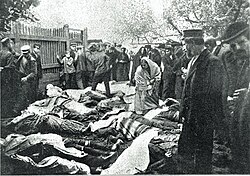
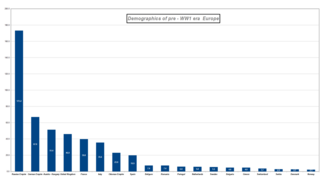
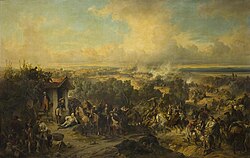
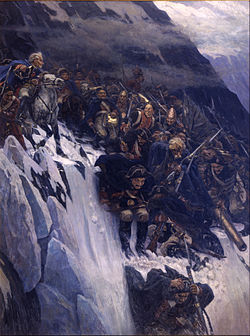
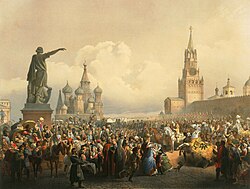
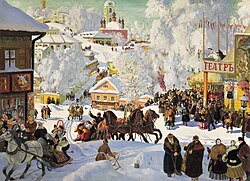
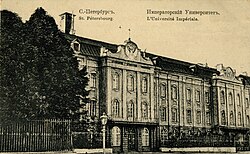
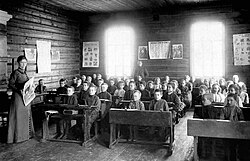
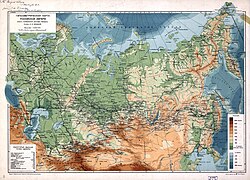
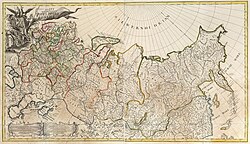
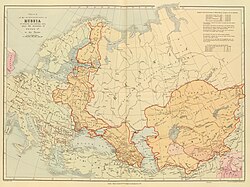
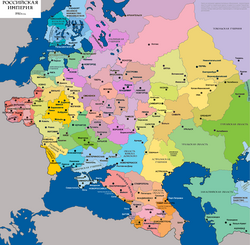
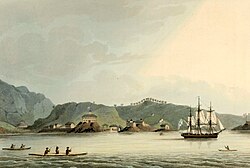
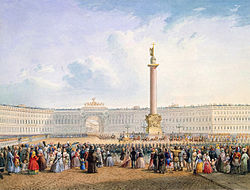
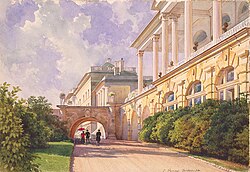
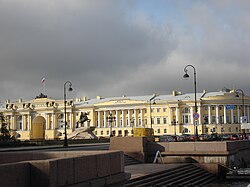
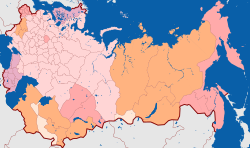
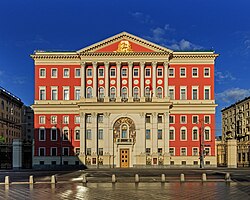
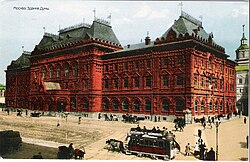
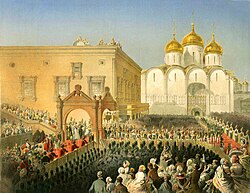
Topographic map of the Russian Empire in 1912Map of the Russian Empire in 1745Acquisitions of Russia in Europe and Central Asia from 1700 to 1900Map of governorates of the western Russian Empire in 19101814 artwork depicting the Russian warship Neva and the Russian settlement of St. Paul's Harbor (present-day Kodiak town), Kodiak IslandThis painting from c. 1847 depicts the General Staff Building opposite the Winter Palace, which was the headquarters of the Army General Staff. Today, it houses the headquarters of the Western Military District/Joint Strategic Command West.The Catherine Palace, located at Tsarskoe Selo, was the summer residence of the imperial family. It is named after Empress Catherine I, who reigned from 1725 to 1727 (watercolor painting from the 19th century).The Senate and Synod headquarters – today the Constitutional Court of the Russian Federation on Senate Square in Saint PetersburgMap showing subdivisions of the Russian Empire in 1914Residence of the governor of Moscow (1778–82) as seen in 2015The Moscow City Duma c. 1900 (colorized photograph)Contemporary painting of the procession of Emperor Alexander II into Dormition Cathedral in Moscow during his coronation in 1856Portrait of Muslim Circassian tribes fleeing from persecution after the Russian conquest of Circassia during the 1860s. Summing up the imperial policy of Circassian genocide, Russian military historian Rostislav Fadeyev wrote: "The state needed the Circassians' land, but had absolutely no need of them."[164]Corpses of Jewish victims collected for burial in the aftermath of the Białystok pogrom (1906)Demographics of pre-WW1 European countriesBattle of the Trebbia (1799) by Alexander von KotzebueSuvorov crossing the Alps. By Vasily Surikov.1856 painting imagining the announcement of the coronation of Alexander II that yearThe 1916 painting Maslenitsa by Boris Kustodiev, depicting a Russian city in winterSaint Petersburg Imperial UniversityRussian primary school in the 1900s
Who was the first emperor of the Russian Empire?
Peter I, commonly known as Peter the Great, was the first emperor of the Russian Empire, following its official proclamation in 1721.
When was serfdom abolished in Russia?
Serfdom, which had been legally enshrined in Russia since 1649, was officially abolished through the Emancipation Reform in 1861.
What was the capital of the Russian Empire?
Saint Petersburg served as the primary capital for most of the empire's history (1721–1728 and 1732–1917), though Moscow served as the capital briefly between 1728 and 1732.
What caused the end of the Russian Empire?
The empire collapsed due to a combination of internal social unrest, the pressures of World War I, and the revolutionary movements of 1917, which led to the abdication of Nicholas II.
How diverse was the population of the empire?
The empire was highly diverse, containing various ethnic and religious groups including Russians, Ukrainians, Belarusians, Tatars, Jews, Poles, Finns, and many others, with Eastern Orthodoxy being the official state religion.
![Catherine II Sestroretsk Ruble (1771) is made of solid copper measuring 77 mm (3+1⁄32 in) (diameter), 26 mm (1+1⁄32 in) (thickness), and weighs 1,041 g (2 lb 4+3⁄4 oz).[39]](/images/61/3b/613bda57f2608115af05dfd293d5435ca85564fbd813df2eb17f63f797fd611b.jpg)
![A scene from the First Russian Revolution, by Ilya Repin[79]](/images/43/eb/43eb7e03b98a6ca7eb97c8ec3203b3acb0c1666719e8abf5119dd13d2ae40716.jpg)
![Portrait of Muslim Circassian tribes fleeing from persecution after the Russian conquest of Circassia during the 1860s. Summing up the imperial policy of Circassian genocide, Russian military historian Rostislav Fadeyev wrote: "The state needed the Circassians' land, but had absolutely no need of them."[164]](/images/32/f2/32f2ea2411a6890a21effb111b6ad4ec54aba740b991bf889023870ab811e12e.jpg)