Royalists of the Spanish American Wars of Independence
The Royalists (known in Spanish as Realistas) were a diverse coalition of Europeans and Hispanic Americans—including significant numbers of native and indigenous peoples—who fought to maintain the integrity of the Spanish monarchy during the Spanish American wars of independence between 1810 and 1829.
Far from being a monolithic group of colonial administrators, the Royalists represented a wide spectrum of society. Their primary goal was to preserve the authority of the Spanish Empire, though their internal ideologies shifted dramatically as Spain itself oscillated between liberal constitutionalism and absolute monarchy.
Key Facts
- Active Period: 1810–1829.
- Primary Allegiance: The Spanish Empire and King Ferdinand VII.
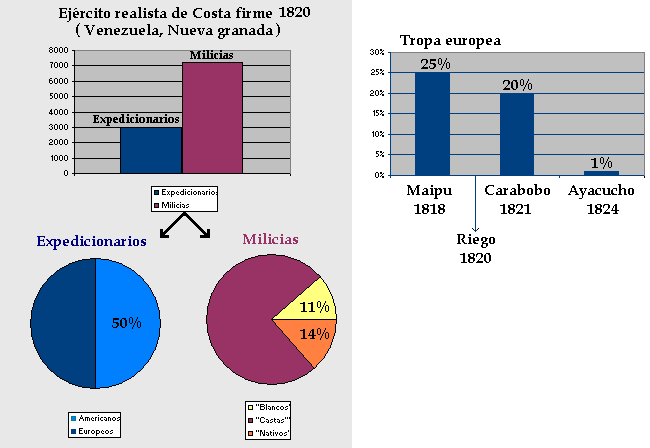
- Composition: Predominantly Spanish Americans; Europeans made up only about 10% of the total Royalist forces.
- Political Shifts: Divided between liberals (supporting the Constitution of Cádiz) and absolutists (supporting traditional absolute monarchy).
- Key Conflict: Fought against patriot forces seeking independence in South and Central America.
Political Evolution and the Crisis of Authority
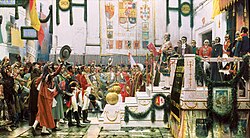
The Royalist movement was born out of a crisis of legitimacy in Spain. In 1808, Napoleon Bonaparte forced King Ferdinand VII to abdicate, installing Joseph Bonaparte on the throne. This triggered a wave of resistance in Spain and its colonies. Initially, the Supreme Central Junta and later the Cortes of Cádiz (a national assembly) governed in the name of the absent king, attempting to create a pan-Hispanic state.
In Spanish America, this power vacuum led to the creation of local juntas (governing councils). While some juntas eventually sought full independence, many initially claimed to act in the name of Ferdinand VII. This created a deep rift between those who wished to maintain the status quo and those who believed local rule was necessary to protect the Americas from French influence or an ineffective rump government in Spain.
The Role of Regional Rivalry
The conflict was not merely a struggle between Spain and the Americas, but also a series of internecine wars driven by regional rivalries. The collapse of central imperial authority led to balkanization—the fragmentation of a region into smaller, often hostile, units. Local elites often prioritized their province's independence from a regional capital over their loyalty to Spain.
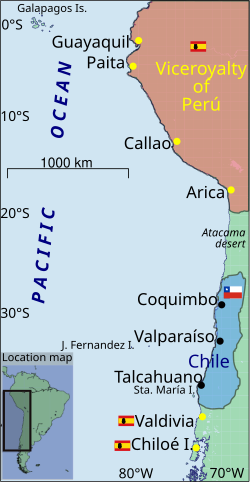
For example, Peru remained a stronghold of Royalism largely due to its rivalry with Río de la Plata. Having lost control of Upper Peru in 1776, the Peruvian elite saw the Royalist cause as a means to regain formal control over that territory.
The Restoration of Ferdinand VII
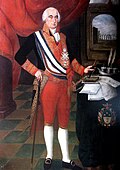
When Ferdinand VII returned to the throne in 1814, he repudiated the liberal Constitution of 1812 and restored absolute monarchy. He declared all American juntas and constitutions invalid, reverting to old law codes. This move alienated moderates and pushed many who had previously been loyal to the crown toward the cause of full independence.
To reclaim control, Spain launched a massive military effort in 1815, sending 10,500 troops and nearly sixty ships to New Granada and Venezuela. While this force was initially effective, the soldiers were eventually depleted by tropical diseases and spread too thin across the vast terrain.
The Final Collapse and Independence
The Royalist cause suffered a fatal blow from within. In 1820, a liberal rebellion in Spain forced Ferdinand VII to restore the Constitution, creating a divide between liberal and absolutist officers in the American armies. This internal strife, combined with the strategic pincer movements of Simón Bolívar in the north and José de San Martín in the south, led to the steady erosion of Royalist power.
In South America, many Royalist units began to defect to the patriot side as the situation grew dire. The final collapse occurred in Peru, where an internecine war between liberal Viceroy José de la Serna and the absolutist General Pedro Antonio Olañeta allowed republican forces to advance. This culminated in the Battle of Ayacucho on December 9, 1824, effectively ending Spanish rule in South America.
![King's and Regimental Colors of the Foot Regiments of Royalist Army modeled on the Cross of Burgundy flag (the local coat of arms would replace the grey circles represented here). Motto: Por la Religión, la Patria y el Rey. Viva Fernando VII[13]](/images/19/14/191441691ef357db6b22d46de1f8b1f35699125c29832b6c2878ca29eda64b17.png)
The Royalist Army: Composition and Leadership
A common misconception is that the Royalist armies were composed primarily of Europeans. In reality, the forces were overwhelmingly Spanish American. As European casualties were replaced by local recruits, the percentage of Peninsular Spaniards dropped significantly. By the Battle of Ayacucho, Europeans represented less than 1% of the force.
The racial makeup of the militias mirrored the local populations, consisting of white españoles, Castas (mixed-race individuals), and Native soldiers.
| Region | Prominent Leaders |
|---|---|
| New Spain, Guatemala, Cuba & Puerto Rico | Félix María Calleja |
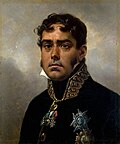
| New Granada, Venezuela & Quito | Pablo Morillo |
| Río de la Plata, Montevideo & Paraguay | Santiago de Liniers |
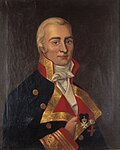
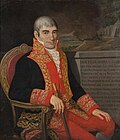
| Chile, Lower & Upper Peru | José Fernando de Abascal |
Frequently Asked Questions
Who were the Royalists?
The Royalists were individuals in Hispanic America and Europe who fought to preserve the Spanish monarchy's authority during the wars of independence from 1810 to 1829.
Were the Royalist armies mostly made up of Spaniards from Europe?
No. Europeans formed only about a tenth of the Royalist armies. The vast majority of the soldiers were Spanish Americans, including indigenous peoples and mixed-race populations.
What was the impact of the Constitution of Cádiz?
The Constitution of 1812 created a divide within the Royalist camp. Liberals supported the constitutional monarchy, while absolutists supported the traditional, unrestricted power of King Ferdinand VII.
Why did Peru remain Royalist longer than other regions?
Peru's loyalty was driven in part by regional rivalry with Río de la Plata. By remaining Royalist, Peru was able to regain formal control of Upper Peru during the conflict.
What event marked the end of the Royalist cause in South America?
The Battle of Ayacucho on December 9, 1824, and the subsequent surrender of the Royal army of Upper Peru in April 1825, effectively ended Spanish imperial control in the region.