Royal United Hospital: A History of Care and Evolution
The Royal United Hospital (RUH) stands as a cornerstone of healthcare in Bath, evolving over two centuries from small, specialized charities into a comprehensive modern medical complex. Its journey reflects the broader history of British medicine, moving from the treatment of destitute laborers to the integration of high-tech specialized centers.
The Founding of the Institution
The RUH was formed through the union of two distinct 18th-century medical efforts. The Bath Casualty Hospital was established in 1788 to treat serious injuries sustained by laborers working on the city's expanding architecture. Simultaneously, the Bath City Dispensary and Infirmary was founded in 1792, growing out of the Bath Pauper Scheme—a charity created in 1747 to provide medical care for the city's destitute population.
In 1826, these two entities merged to become the Bath United Hospital, operating from a building in Beau Street designed by architect John Pinch the elder. The institution received its "Royal" title from Queen Victoria in 1864, coinciding with the opening of the Albert Wing, named in honor of the late Prince Consort.
Transition to Combe Park
On December 11, 1932, the hospital relocated to its current site at Combe Park. This location had a deep military medical history, having served as the Bath War Hospital from 1916 through the First World War, and later as the Bath Ministry of Pensions Hospital until 1929.
The site also integrated other specialized facilities. The Forbes Fraser Hospital and the Bath and Wessex Orthopaedic Hospital, both established in 1924, merged into the RUH around 1980. Additionally, the hospital absorbed the Ear Nose and Throat Hospital in 1959 and the Bath Eye Infirmary in 1973.
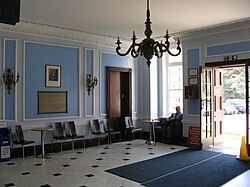
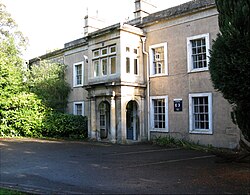
Among the site's architectural treasures is the former manor house. Originally a medieval structure remodeled in the 18th century, it now serves as an administrative building. It is designated as a Grade II* listed building, recognized specifically for its exquisite Adam style interior.
Modern Expansion and Specialization
In recent decades, the RUH has undergone significant modernization to meet contemporary healthcare standards. A major milestone occurred in July 2011 with the opening of the Dyson Centre, a specialized unit for neonatal care (the care of newborn infants, especially premature babies). The center cost £6.1 million, with over half of the funding raised by the Forever Friends Appeal charity.
Further growth was detailed in a 2008 proposal for a £100 million redevelopment of the pre-WWII North buildings, focusing on increasing single-occupancy rooms. This evolved into a confirmed £110 million development plan in 2014, which delivered several critical upgrades:
- A new cancer centre and pharmacy.
- An integrated therapies unit and pathology block.
- A dedicated IT centre.
- 400 additional public parking spaces.
Integration of Rheumatic Diseases and Sulis Hospital
Between 2015 and 2016, the RUH Trust took over the Royal National Hospital for Rheumatic Diseases, transferring endoscopy and children's services to the RUH. Construction on a dedicated building for these services began in November 2017, and the final transfer of all rheumatic disease services was completed in autumn 2019.
The RUH also operates Sulis Hospital in Peasedown St John, located approximately 6 miles (10 km) south of Combe Park. Built by Circle Health in 2010 and acquired by the NHS in 2021, Sulis Hospital provides both privately-funded and NHS treatment as a subsidiary of the RUH.
Key Facts
- Founded: Union of hospitals established in 1788 and 1792.
- Royal Title: Granted by Queen Victoria in 1864.
- Current Site: Moved to Combe Park on December 11, 1932.
- Notable Facility: The Dyson Centre for neonatal care (£6.1 million).
- Recent Investment: £110 million development plan confirmed in 2014.
- Subsidiaries: Includes Sulis Hospital at Peasedown.
| Period/Year | Event/Development | Key Detail |
|---|---|---|
| 1788 & 1792 | Founding Institutions | Casualty Hospital and City Dispensary & Infirmary |
| 1826 | Union | Opened as Bath United Hospital in Beau Street |
| 1864 | Royal Charter | Named "Royal" by Queen Victoria; Albert Wing opened |
| 1932 | Relocation | Moved to Combe Park site |
| 2011 | Neonatal Care | Dyson Centre opened |
| 2019 | Specialization | Full transfer of Rheumatic Diseases services |
Frequently Asked Questions
How did the Royal United Hospital start?
The hospital began as a union between the Bath Casualty Hospital (founded 1788 for injured laborers) and the Bath City Dispensary and Infirmary (founded 1792 for the destitute), eventually opening as the Bath United Hospital in 1826.
When did the hospital move to Combe Park?
The hospital moved to the Combe Park site on December 11, 1932. This site had previously served as a war hospital during World War I.
What is the Dyson Centre?
The Dyson Centre is a neonatal care facility for premature babies that opened in July 2011. It cost £6.1 million, with significant funding provided by the Forever Friends Appeal.
What is the significance of the manor house on the RUH site?
The former manor house is a Grade II* listed building known for its fine Adam style interior. It currently serves as an administrative building for the hospital.
What is Sulis Hospital?
Sulis Hospital is a subsidiary of the RUH located in Peasedown St John. It provides both NHS and private treatment and was purchased by the NHS in 2021.