Royal Ontario MuseumROM TorontoMichael Lee-Chin CrystalCanadian museumsnatural history museum Toronto

Royal Ontario Museum: A Landmark of Art, Culture, and Natural History

Royal Ontario Museum: A Landmark of Art, Culture, and Natural History The Royal Ontario Museum (ROM) stands as a premier institution of art, world culture, and natural history in Toronto,...

Royal Ontario Museum: A Landmark of Art, Culture, and Natural History

The Royal Ontario Museum (ROM) stands as a premier institution of art, world culture, and natural history in Toronto, Ontario. As the largest museum in Canada and one of the most significant in North America, it serves as a global hub for research and conservation. With a massive collection exceeding 18 million artifacts and attracting over 1.4 million visitors annually, the ROM is a cornerstone of Canada's cultural and scientific landscape.

Located in the University district north of Queen's Park, the museum is easily accessible via the Museum subway station, which features platform decorations inspired by the ROM's own collections. The 74,000-square-metre facility is owned by the Government of Ontario and operates as an independent Crown agency.

Key Facts

  • Established: April 16, 1912.
  • Collection Size: Over 18,000,000 items.
  • Annual Visitors: Approximately 1,440,000.
  • Status: Largest museum in Canada and most-visited museum in the country.
  • Governance: Independent Crown agency of the Government of Ontario.

History and Evolution

The ROM officially opened its doors on March 19, 1914, after being established in 1912. For several decades, it maintained a close partnership with the University of Toronto, remaining under the university's direct management until 1968. Today, it is recognized as Canada's largest field-research institution, conducting vital conservation and research activities across the globe.

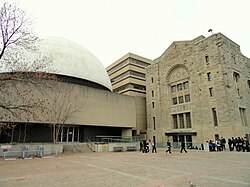
The museum's history is also marked by the rise and fall of the McLaughlin Planetarium. Operated by the museum from 1968 until its closure in 1995 due to budget cuts, the planetarium site was eventually sold to the University of Toronto in 2009 and demolished in 2026.

Architectural Landmarks

The ROM complex is a study in architectural contrast, blending traditional heritage with avant-garde design. The site consists of the original 1914 building, an eastern wing added in 1933, a curatorial centre completed in 1984, and the striking Michael Lee-Chin Crystal.

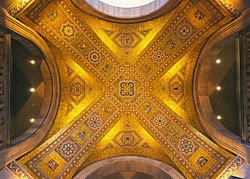
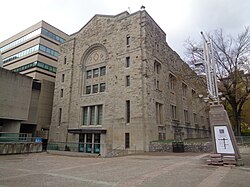
The original structure is designated under the Ontario Heritage Act, featuring classic elements such as the rotunda's mosaic ceiling. This ceiling is crafted from gold back-painted glass tiles in a Byzantine style, depicting various cultural symbols.
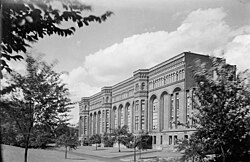
The museum's western façade facing Philosopher's Walk in 1922

The McLaughlin Planetarium next to the museum. The planetarium was operated by the museum from 1968 to 2009; the structure was demolished in 2026.

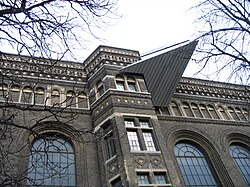
Arched and bay windows along the building's western façade with a very small section of the Crystal jutting out on the top

The mosaic ceiling of the rotunda is covered predominantly in gold back-painted glass tiles with different cultural symbols related to exhibits in the museum in Byzantine style

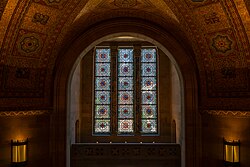
Windows inside the eastern entrance to the museum

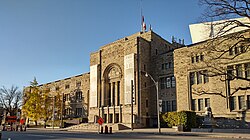
The eastern façade of the 1933 expansion

The Royal Ontario Museum from the southeast. The curatorial centre is visible to the west of the 1933 expansion.

The Michael Lee-Chin Crystal

Unveiled in 2007, the Michael Lee-Chin Crystal is a bold addition that has sparked significant architectural debate. This modern structure expands the museum's capacity and provides a futuristic contrast to the historic stone facades of the earlier wings.
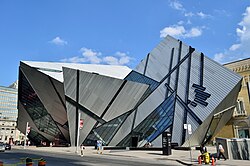
The Michael Lee-Chin Crystal from Bloor Street

Galleries and Collections

The ROM's vast galleries are divided into several thematic areas, ranging from the depths of prehistoric time to the complexities of modern human society.

Natural History and Evolution

The museum is renowned for its extensive natural history exhibits. The James and Louise Temerty Galleries of the Age of Dinosaurs and the Gallery of the Age of Mammals house world-class fossils, including a replica of the massive Futalognkosaurus. Visitors can also explore the diversity of life in the Gallery of Birds and various animal sample collections on the second floor.
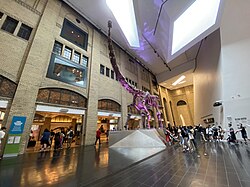
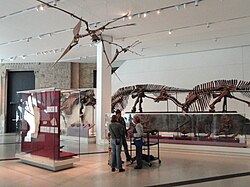
A replica skeleton of Futalognkosaurus inside the Hyacinth Gloria Chen Crystal Court

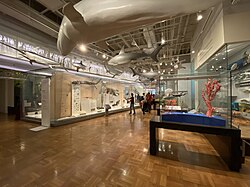
The second floor of the museum contains collections and samples of various animals past and present.

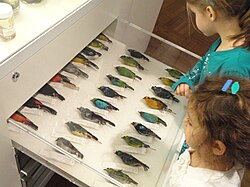
The museum has a large collection of birds from past centuries for viewing.

Fossils in the James and Louise Temerty Galleries of the Age of Dinosaurs and Gallery

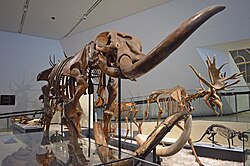
Fossils in the Gallery of the Age of Mammals

World Cultures

The ROM offers a comprehensive look at global civilizations. Key highlights include:

  • The Americas and Asia-Pacific: Featured in the Shreyas and Mina Ajmera Gallery.
  • Middle East and South Asia: The Wirth Gallery explores the Fertile Crescent from the Palaeolithic Age to AD 1900.
  • Mediterranean and Nile Valley: Extensive Roman artifacts are housed in the Eaton and Joey and Toby Tanenbaum galleries, while the Gallery of Africa: Egypt showcases ancient cartonnages.
  • East Asia: The Bishop White Gallery of Chinese Temple Art and the ROM Gallery of Chinese Architecture (featuring the Tomb of General Zu Dashou) provide deep insights into Asian heritage.
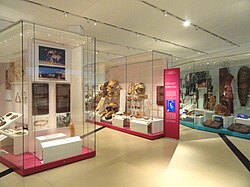
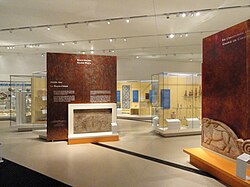
Exhibits at the Shreyas and Mina Ajmera Gallery of Africa, the Americas and Asia-Pacific, one of several world culture galleries at the museum

The Wirth Gallery of the Middle East explores civilizations from the Palaeolithic Age to AD 1900 found within the Fertile Crescent.

The museum is home to an extensive collection of Roman artifacts in the Eaton Gallery of Rome and in the Joey and Toby Tanenbaum Gallery of Rome and the Near East.

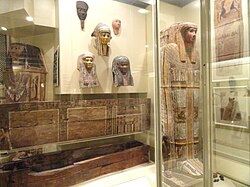
The Gallery of Africa: Egypt includes a number of cartonnages.

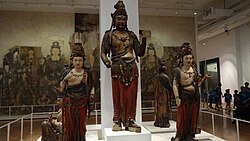
Works on exhibit in the Bishop White Gallery of Chinese Temple Art

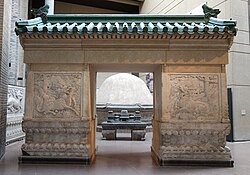
The Tomb of General Zu Dashou on display in the ROM Gallery of Chinese Architecture

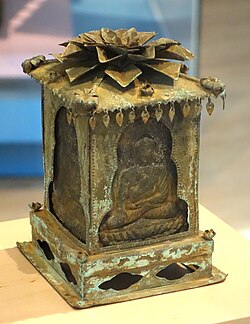
A Buddhist reliquary śarīra casket at the Gallery of Korea gallery

Canadian Heritage

The museum places a strong emphasis on national identity through the Daphne Cockwell Gallery of Canada: First Peoples, which displays First Nations canoes, and the Sigmund Samuel Gallery of Canada, which houses early Canadian memorabilia.
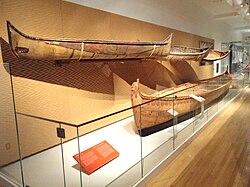
Canoes used by the First Nations at The Daphne Cockwell Gallery of Canada: First Peoples.

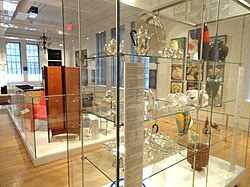
Exhibits of early Canadian memorabilia on display at the Sigmund Samuel Gallery of Canada

Specialized Galleries

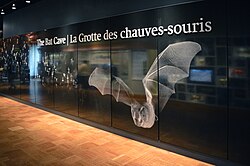
Beyond the main themes, the ROM features the Patricia Harris Gallery of Costumes and Textiles, the Institute for Contemporary Culture, and the Samuel Hall Currelly Gallery lobby. For those seeking interaction, the "Bat Cave" provides an immersive gallery experience.
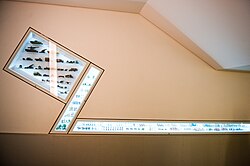
Figurines on display in a vitrine built into the Michael Lee-Chin Crystal

The entrance to the Royal Ontario Museum Bat Cave, an interactive gallery at the museum

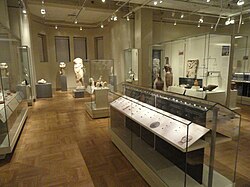
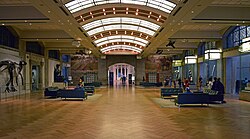
The museum's lobby, the Samuel Hall Currelly Gallery, houses several items from the museum's collection.

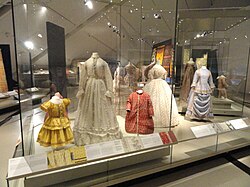
The Patricia Harris Gallery of Costumes and Textiles holds around 200 artifacts from the museum's textile and costume collection.

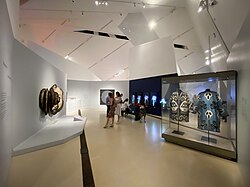
The temporary exhibition Being and Belonging: Contemporary Women Artists from the Islamic World and Beyond, at the Institute for Contemporary Culture gallery

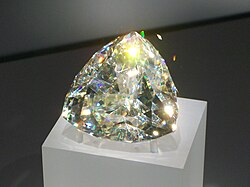
The world's largest faceted cerussite, the Light of the Desert, on display at the Teck Suite of Galleries

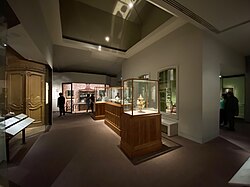
Exhibits in the Samuel European Galleries

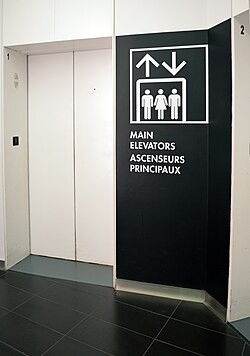
An elevator with bilingual English/French signage at the museum

Museum Overview

Royal Ontario Museum Quick Reference
Category Details
Location 100 Queen's Park, Toronto, Ontario
Opening Date March 19, 1914
Total Area 74,000 square metres
Key Architecture Original Building, Eastern Wing, Michael Lee-Chin Crystal
Primary Focus Art, World Culture, Natural History

Accessibility

The ROM is committed to inclusivity, offering a wide range of accessibility services. These include tactile tours, audio descriptions for the visually impaired, braille and large-print guides, and American Sign Language (ASL) interpretation. The museum also utilizes hearing loop systems and interactive touch screens to ensure all visitors can engage with the exhibits.

Frequently Asked Questions

What is the Michael Lee-Chin Crystal?

The Michael Lee-Chin Crystal is a modern architectural addition to the museum, unveiled in 2007, known for its striking, angular design that contrasts with the museum's original historic buildings.

How large is the ROM's collection?

The Royal Ontario Museum houses a massive collection of over 18 million artifacts spanning art, world culture, and natural history.

Is the ROM a government institution?

Yes, the ROM is an independent Crown agency owned by the Government of Ontario.

What can visitors see in the natural history section?

Visitors can explore a vast array of fossils in the Age of Dinosaurs and Age of Mammals galleries, as well as extensive collections of birds and other animals from across the centuries.

How do I get to the museum via public transit?

The museum is served by the Museum subway station, with the northwestern entrance providing direct access to the facility.

References

  1. "The Royal Ontario Museum Draws Highest Attendance Numbers in its History" (Press release). Royal Ontario Museum. 2 May 2018. Retrieved 17 August 2018 – via rom.on.ca.
  2. "About ROM | Royal Ontario Museum". www.rom.on.ca. 22 March 2026. Retrieved 13 February 2026.
  3. "ROM Announces Record-Breaking 1.35 Million Visitors Annual Attendance" (Press release). Royal Ontario Museum. Retrieved 23 November 2017 – via rom.on.ca.
  4. Adams, James (14 March 2014). "The Royal Ontario Museum makes it to 100. Now, the real work begins". theglobeandmail.com. The Globe and Mail. Retrieved 9 November 2025.
  5. Dickson 1986.