Royal Institute of Chemistry: The Evolution of Professional Standards
The Royal Institute of Chemistry served as a cornerstone for the professionalization of chemistry in Britain. Established to bridge the gap between academic knowledge and industrial application, the organization focused on the qualifications and professional status of chemists, ensuring that those working in analytical and consulting roles were rigorously trained and properly qualified.
The History and Royal Patronage
The organization was founded in 1877 as the Institute of Chemistry of Great Britain and Ireland (ICGBI). Its early years were dedicated to establishing a framework for professional competence in the field. The society's prestige grew steadily, leading to its first Royal Charter on June 13, 1885.
A significant milestone occurred on May 14, 1943, when King George VI granted the society royal patronage. This transition renamed the organization the Royal Institute of Chemistry of Great Britain and Ireland (RICGBI), a designation that was formally solidified through a Supplemental Charter on March 29, 1944.
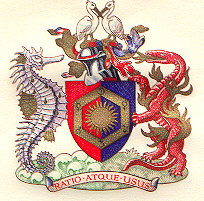
Professional Qualifications and Ethics
Beyond technical skill, the Royal Institute of Chemistry emphasized strict ethical standards for its practitioners. To maintain these standards, the institute developed a tiered system of qualifications based on education and professional experience.
- Licentiate (LRIC): Awarded following a course of practical study to a standard lower than an honours degree.
- Graduate (GRIC): Awarded upon completion of study equivalent to at least a second-class honours degree.
- Associate (ARIC): Granted to those holding an LRIC who had gained further professional experience.
- Member (MRIC): Granted to those holding a GRIC who had gained further professional experience.
- Fellow (FRIC): The highest tier, reserved for those with greater experience and standing than a Member.
In 1975, a supplemental Charter introduced the title of Chartered Chemist (CChem), which Members and Fellows were permitted to use, further elevating the professional status of the designation.
Publications and Academic Contributions
The institute contributed to the scientific community through various publications. It produced the Journal of the Royal Institute of Chemistry and the Royal Institute of Chemistry Reviews. The latter was published from 1968 until 1971, at which point it merged with other publications to form Chemical Society Reviews.
The Path to the Royal Society of Chemistry
While the Royal Institute of Chemistry focused on professional status and qualifications, the Chemical Society focused primarily on the science of chemistry and the publication of learned journals. Recognizing the benefit of a unified body, a merger process began in 1972.
This process involved the Royal Institute of Chemistry, the Chemical Society, the Faraday Society, and the Society for Analytical Chemistry. On May 15, 1980, these four organizations officially merged to form the Royal Society of Chemistry.
Key Facts
- Founded: 1877 as the Institute of Chemistry of Great Britain and Ireland.
- Royal Patronage: Granted by King George VI on May 14, 1943.
- Professional Title: Introduced the CChem (Chartered Chemist) designation in 1975.
- Final Merger: Became part of the Royal Society of Chemistry on May 15, 1980.
- Core Focus: Professional qualifications, ethical standards, and the status of consulting and analytical chemists.
| Qualification | Abbreviation | Requirement |
|---|---|---|
| Licentiate | LRIC | Practical study (below honours degree level) |
| Graduate | GRIC | Study equivalent to at least 2nd class honours degree |
| Associate | ARIC | LRIC + professional experience |
| Member | MRIC | GRIC + professional experience |
| Fellow | FRIC | Advanced experience and standing beyond MRIC |
Frequently Asked Questions
What was the primary goal of the Royal Institute of Chemistry?
Its primary aim was to ensure that consulting and analytical chemists were properly trained and qualified, focusing heavily on professional status and qualifications.
When did the organization become the Royal Institute of Chemistry of Great Britain and Ireland?
The organization received royal patronage from King George VI on May 14, 1943, and this re-designation was formally confirmed by a Supplemental Charter on March 29, 1944.
What is a Chartered Chemist (CChem)?
CChem is a professional designation that Members and Fellows of the Royal Institute of Chemistry were permitted to use following a supplemental Charter in 1975.
Which organizations merged to form the Royal Society of Chemistry?
The Royal Society of Chemistry was formed on May 15, 1980, through the merger of the Royal Institute of Chemistry, the Chemical Society, the Faraday Society, and the Society for Analytical Chemistry.
How did the Royal Institute of Chemistry differ from the Chemical Society?
The Royal Institute of Chemistry focused on professional qualifications and ethical standards, whereas the Chemical Society concentrated on the science of chemistry and the publication of learned journals.