Royal Australian Air ForceRAAFF-35A Lightning IIAustralian Defence Forcemilitary aviation

Royal Australian Air Force: History, Fleet, and Strategic Operations

Royal Australian Air Force The Royal Australian Air Force (RAAF) is the aerial warfare branch of the Australian Defence Force. Founded on March 31, 1921, the RAAF has evolved over a centu...

Royal Australian Air Force

The Royal Australian Air Force (RAAF) is the aerial warfare branch of the Australian Defence Force. Founded on March 31, 1921, the RAAF has evolved over a century from its early roots into a sophisticated air and space force. Operating under the motto Per Ardua ad Astra ("Through Struggle to the Stars"), the force is headquartered at the Russell Offices in Canberra and is tasked with maintaining Australia's air superiority and national security.

Today, the RAAF maintains a robust presence with 16,085 active personnel, 5,499 reserve personnel, and a diverse fleet of 262 aircraft. Its operations span a wide array of roles, including air combat, surveillance, transport, and electronic warfare.

Key Facts
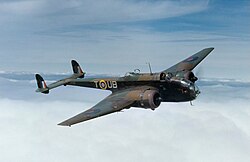
A Handley Page Hampden of No. 455 Squadron, based at RAF Leuchars in Scotland, May 1942
  • Founded: March 31, 1921.
  • Total Personnel: Over 21,500 (Active and Reserve).
  • Primary Role: Aerial warfare and space operations.
  • Key Aircraft: F-35A Lightning II, EA-18G Growler, and P-8A Poseidon.
  • Major Engagements: World War II, Korean War, Vietnam War, and operations in Afghanistan and Iraq.

Historical Evolution
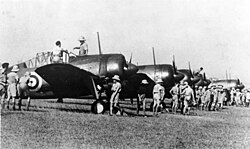
The Brewster F2A Buffalo participated in air campaigns over Malayan, Singapore and Dutch East Indies.

Early Years and World War II

The RAAF's lineage traces back to the Australian Flying Corps of the First World War. Following its formal establishment in 1921, the force expanded rapidly during the Second World War, operating across both the European and Pacific theaters. From the Mediterranean to the jungles of New Guinea, the RAAF provided critical air support and combat capabilities.
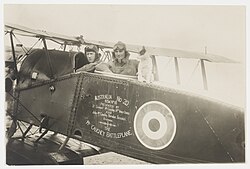
Australian Flying Corps Bristol Fighter F-2B (McCaughey Battleplane), Palestine, 1918

During the Pacific War, aircraft such as the P-40E Kittyhawk were instrumental in defending Australian territories, while heavy bombers like the Avro Lancaster operated in Europe.
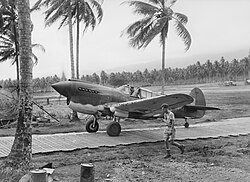
P-40E Kittyhawk piloted by Keith Truscott, commander of No. 76 Squadron, at Milne Bay, New Guinea, September 1942

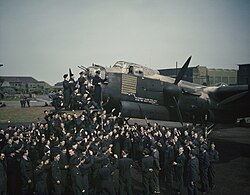
The aircrew and ground staff of No. 467 Squadron at RAF Waddington, England, celebrate Avro Lancaster R5868 "S for Sugar" completing 100 operations, May 1944

Cold War and Modern Era

In the post-war era, the RAAF transitioned into the jet age, deploying forces during the Malayan Emergency, the Korean War, and the Vietnam War. The force continued to modernize its fleet to meet evolving threats, incorporating advanced fighters like the Mirage III and later the F/A-18 Hornet.
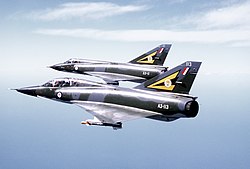
RAAF Mirage III fighters from No. 2 Operational Conversion Unit in 1980

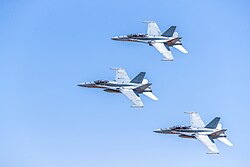
RAAF F/A-18A Hornet and F/A-18B Hornets fly in formation, 2019

Recent history has seen the RAAF engage in diverse global operations, including the War in Afghanistan, the Iraq War, and military interventions against ISIL. The force has also played a pivotal role in regional stability, such as in East Timor.
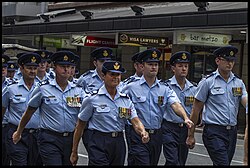
RAAF personnel on parade in Brisbane in honor of Operation Slipper, March 2015

Organizational Structure

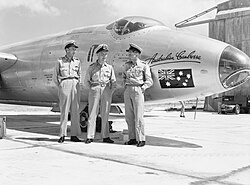
Peter Raw, Bill Kerr, and Noel Davis with their English Electric Canberra in Malta, about to start the 1953 London to Christchurch air race

The RAAF is led by the Chief of the Air Force, currently Air Marshal Stephen Chappell, and is integrated into the broader Australian Defence Force under the Chief of the Defence Force.

Force Element Groups

The RAAF organizes its capabilities into specialized groups to ensure operational efficiency:

  • Air Combat Group: Manages air combat capabilities.
  • Air Mobility Group: Handles airlift and aerial refueling.
  • Air Warfare Centre: Focuses on intelligence, information warfare, and capability development.
  • Combat Support Group: Manages air base operations and combat support.
  • Surveillance and Response Group: Oversees reconnaissance and surveillance.
  • Air Force Training Group: Responsible for the development and training of personnel.
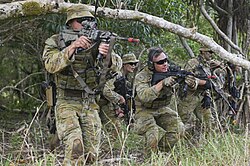
No. 2 Security Forces Squadron demonstrates a combat scenario in Guam, February 2022

Aircraft and Armament

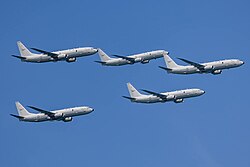
P-8A Poseidons from No. 11 Squadron at RAAF Base Edinburgh in 2024

The RAAF utilizes a mix of multi-role fighters, electronic warfare platforms, and strategic transport aircraft to maintain a versatile operational reach.

Current Fleet Overview

RAAF Primary Aircraft Fleet
Category Aircraft Model Primary Role
Fighter F-35A Lightning II Stealth Multirole
Electronic Warfare EA-18G Growler Radar Jamming / SEAD
Patrol P-8A Poseidon Anti-Submarine / Patrol
Tanker KC-30A MRTT Refueling / Transport
Transport C-17A Globemaster III Strategic Airlifter
Trainer PC-21 Flight Training

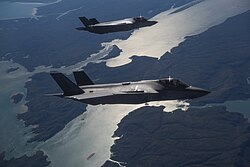
F-35A Lightning II's from No. 3 Squadron in 2023

Advanced Weaponry

To support these platforms, the RAAF employs a sophisticated array of armament. This includes beyond-visual-range missiles like the AIM-120 AMRAAM and the upcoming AIM-260 JATM, as well as precision-guided munitions such as the GBU-39 Small Diameter Bomb and the Paveway II laser-guided bomb.

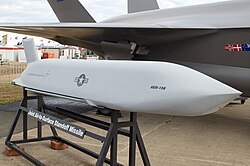
Paveway II laser-guided bomb

AGM-158 Joint Air-to-Surface Standoff Missile, Australian International Airshow, 2009

Personnel and Tradition

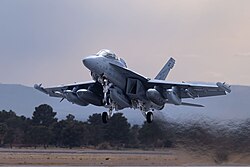
RAAF EA-18G Growler during the 2025 Red Flag exercise

The RAAF maintains a strict hierarchical structure of officers and other ranks. A significant milestone in the force's social evolution occurred in 1988 when the first women graduated from the RAAF pilots' course.

Deborah Hicks and Robyn Williams, the first women to graduate from the RAAF pilots' course in 1988

Traditions are upheld through ceremonial events, such as the ANZAC Day parade, and the high-profile aerobatic displays of the Roulettes, the RAAF's official display team.
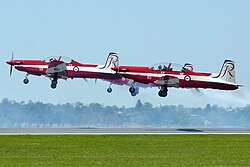
The Roulettes at RAAF Base Amberley, October 2008

Frequently Asked Questions
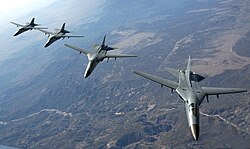
Royal Australian Air Force F-111's fly toward Nellis Air Force Base in 2006 after a refueling exercise during Red Flag training
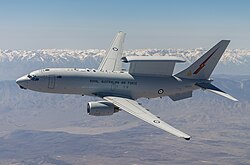
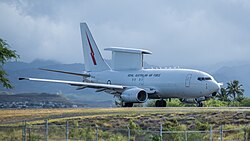
E-7A Wedgetail in 2025
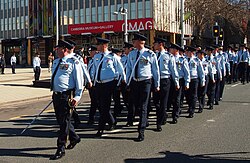
Members of No. 28 Squadron on parade in Canberra, August 2013
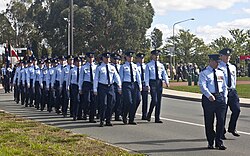
RAAF personnel in the 2011 ANZAC Day parade, Canberra
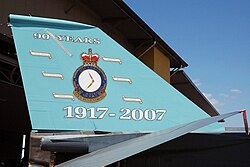
Example of a squadron crest on an F-111G Aardvark from No. 6 Squadron, October 2008
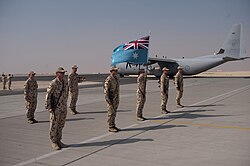
An honor guard from No. 37 Squadron with a C-130J Hercules, November 2009
E-7A Wedgetail in 2019
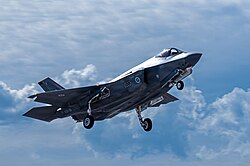
F-35A Lightning II in 2026
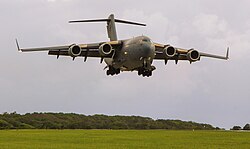
C-17 Globemaster III at Christmas Island Airport in 2016
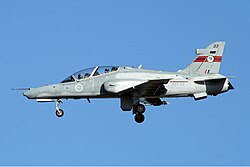
BAE Hawk on approach
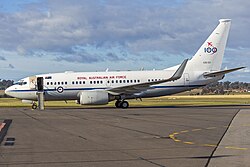
Boeing 737-7DT (BBJ) at Wagga Wagga Airport in 2021
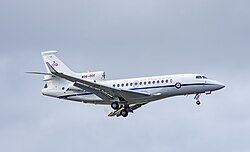
Dassault Falcon 7X at Melbourne Airport in 2022
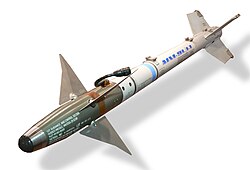
AIM-9L Sidewinder
AIM-9L Sidewinder
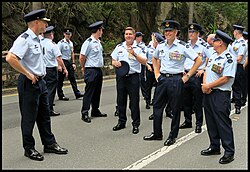
RAAF personnel wearing a variety of shoulder rank slides, 2015
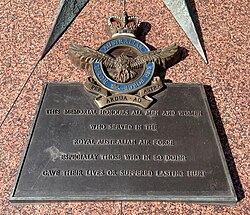
The RAAF badge displayed on the Royal Australian Air Force Memorial in Brisbane
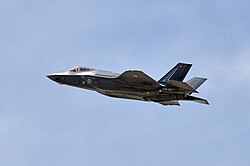
The first Australian F-35A takes off from Luke AFB on a test sortie in 2015.
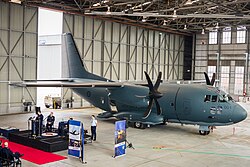
The first RAAF C-27J Spartan at RAAF Base Richmond in 2015

When was the Royal Australian Air Force founded?

The RAAF was founded on March 31, 1921.

What is the motto of the RAAF?

The motto is "Per Ardua ad Astra," which translates from Latin to "Through Struggle to the Stars."

Which aircraft does the RAAF use for stealth multirole operations?

The RAAF utilizes the Lockheed Martin F-35A Lightning II for stealth multirole capabilities.

What is the role of the EA-18G Growler?

The EA-18G Growler is used for electronic warfare, specifically radar jamming and the Suppression of Enemy Air Defenses (SEAD).

Who is the current Chief of the Air Force?

The current Chief of the Air Force is Air Marshal Stephen Chappell.

References

  1. "Brand". www.airforce.gov.au. Royal Australian Air Force. Archived from the original on 9 September 2025.
  2. "Air Force 2021 centenary". RAAF. Archived from the original on 30 May 2024. Retrieved 28 March 2021.
  3. "Defence Annual Reports". Department of Defence (Australia). Retrieved 26 January 2022.
  4. "100 years of the Royal Australian Air Force". www.minister.defence.gov.au. 31 March 2021. Archived from the original on 17 December 2025.
  5. "Brand". www.airforce.gov.au. Royal Australian Air Force. Archived from the original on 16 December 2025. Retrieved 16 March 2026.