Rowing: History, Boat Classes, and Competitive Formats
Rowing is one of the world's most enduring sports, blending raw physical power with precise technical synchronization. From its origins as a practical means of transport to its status as a premier Olympic event, rowing has evolved into a highly specialized discipline. Whether contested on a river, artificial lake, canal, or the open ocean, the sport demands rigorous training and a deep understanding of fluid dynamics.
Today, the sport is governed globally by the World Rowing Federation, which oversees everything from the annual World Rowing Championships to the strict regulations of Olympic competition.

Key Facts
- Governing Body: World Rowing Federation.
- Olympic Presence: Men's events since 1900; women's events since 1976.
- Primary Equipment: Racing shells and oars (blades).
- Core Disciplines: Sculling (two oars per person) and Sweep (one oar per person).
- Standard Distance: 2 kilometers for Olympic and World Championship events.
- Paralympic Inclusion: Integrated into the Paralympic Games since 2008.
The Evolution of Competitive Rowing
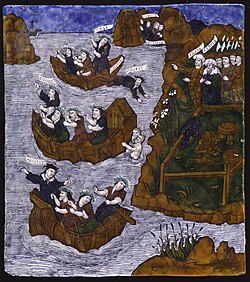
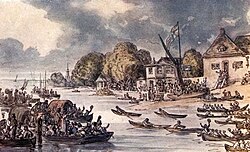
Modern competitive rowing traces its roots to the professional watermen of the United Kingdom, who operated ferry and taxi services on the River Thames in London. These professionals engaged in wager races, often sponsored by wealthy riverside homeowners or London Guilds. The Doggett's Coat and Badge, first contested in 1715, remains the oldest surviving race of this kind.
By the 19th century, the sport shifted toward amateurism. In England, collegiate rowing flourished at Oxford and Cambridge, leading to the first recorded bumping races in 1815 and the inaugural Boat Race between the two universities in 1829. This surge in popularity inspired the creation of the Henley Royal Regatta in 1839. Meanwhile, in the United States, early competition was noted as far back as 1756 in New York.
The Growth of Women's Rowing
Women's rowing entered the international stage with the 1954 European Rowing Championships. However, the most significant catalyst for growth was the inclusion of women's events in the 1976 Montreal Summer Olympics. In the United States, rowing is an NCAA sport for women, a distinction largely driven by the requirements of Title IX.
Boat Classes and Disciplines
Rowing is divided into two primary disciplines: sculling and sweep. The fundamental difference lies in the number of oars each athlete handles.
Sculling
In sculling, each rower uses two oars, one in each hand. This discipline is common in smaller boats and specific Olympic classes.
Sweep Rowing
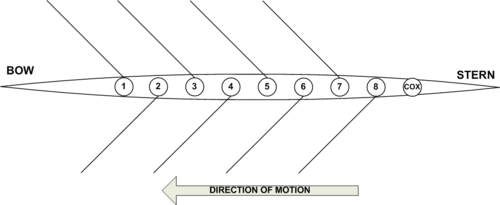
In sweep rowing, each athlete holds a single oar with both hands, requiring the crew to balance the boat's trajectory through coordinated effort.
| Discipline | Abbreviation | Boat Class | Notes |
|---|---|---|---|
| Sweep | 8+ | Eight | Always includes a coxswain |
| Sweep | 4- | Coxless Four | No coxswain |
| Sweep | 2- | Coxless Pair | No coxswain |
| Sculling | 1x | Single Sculls | Solo rower |
| Sculling | 2x | Double Sculls | Two rowers |
| Sculling | 4x | Quadruple Sculls | Four rowers, usually coxless |
Equipment and Technical Roles
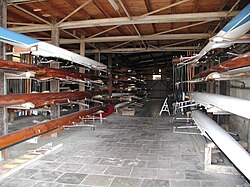
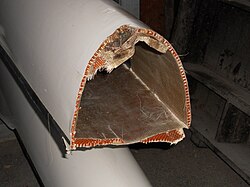
The primary vessel used is the racing shell, a long, narrow boat designed for maximum speed and minimum drag. Propulsion is provided by oars, also known as blades. While historically made of wood, modern blades are constructed from synthetic materials like carbon fiber for increased durability and performance. Sculling oars typically measure 250–300 cm, while sweep oars are longer, ranging from 340–360 cm.
In many boat classes, a coxswain is present. The coxswain does not row but sits in the stern (or bow in some cases), facing the crew. Their role is to steer the boat and provide tactical commands and motivation.
Race Formats and Competition
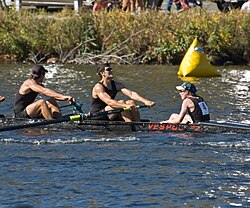
Rowing competitions generally fall into two categories: side-by-side races and head races.
Side-by-Side Racing
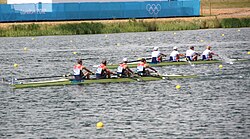
This is the standard format for the Olympics and World Championships, where boats race in parallel lanes over a distance of 2 kilometers. Some youth races in the US are 1.5 kilometers, while masters rowers (those over 27) often compete at 1,000 meters. Notable exceptions include the Oxford-Cambridge and Harvard-Yale Boat Races, which cover approximately 4 miles.
Head Races
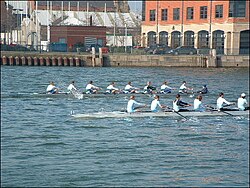
Head races are processional time trials typically held from autumn to early spring. Boats start at intervals of 10–20 seconds and are timed over distances ranging from 2,000 to 12,000 meters. These races test endurance and the ability to overtake other crews in a narrow course.
Athlete Categories and Pararowing
To ensure fair competition, the World Rowing Federation establishes categories based on age and weight.
- Age: Junior (Under 19), U23, and Senior (open age).
- Weight: Lightweight categories limit the average crew weight (70kg for men, 57kg for women) to allow athletes of smaller stature to compete. Note that lightweight events will be removed from the Olympics starting in 2028.
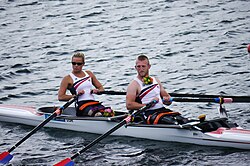
Pararowing has also become a vital part of the sport, appearing in the Paralympics since 2008. These events utilize adapted equipment, such as fixed seats, to accommodate athletes with physical impairments.
Frequently Asked Questions
What is the difference between sculling and sweep rowing?
In sculling, each rower handles two oars (one in each hand). In sweep rowing, each rower handles a single oar with both hands.
What does a coxswain do?
The coxswain is the non-rowing member of the crew responsible for steering the boat and directing the rowers' rhythm and strategy during a race.
How long is a standard Olympic rowing race?
The standard distance for Olympic and World Rowing Championship races is 2 kilometers.
What is a head race?
A head race is a time-trial format where boats start at intervals and race against the clock over a longer distance, rather than side-by-side in lanes.
Are there weight limits in rowing?
Yes, in lightweight categories. The World Rowing Federation sets crew average weights (70kg for men and 57kg for women) to encourage universality among different body types.