Romania: A Comprehensive Overview of History, Geography, and Culture
Located at the crossroads of Central, Eastern, and Southeastern Europe, Romania is a nation defined by its complex history, diverse landscapes, and rich cultural heritage. From the ancient territories of the Kingdom of Dacia to its modern status as a unitary semi-presidential republic, Romania has undergone profound transformations that shape its identity today.
With a population of approximately 19 million people and a total area of 238,397 km², the country offers a unique blend of mountainous terrain, fertile plains, and a strategic position along the Black Sea. This article explores the foundational elements of the Romanian state, including its historical evolution, economic landscape, and cultural richness.
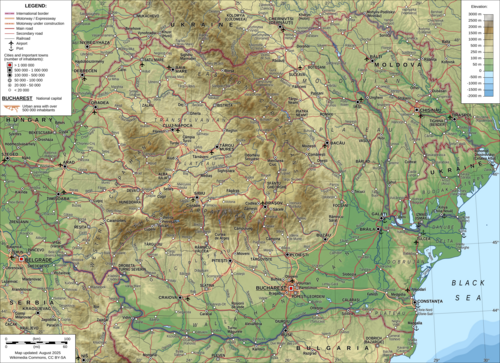
Key Facts
- Capital City: Bucharest
- Official Language: Romanian
- Government Type: Unitary semi-presidential republic
- Major Religions: Christianity (predominantly Romanian Orthodoxy)
- Currency: Romanian leu (RON)
- Total Area: 238,397 km²
Historical Evolution
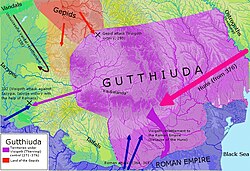
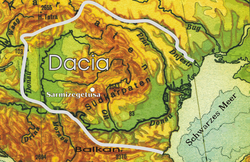
The history of the Romanian people is a tapestry of shifting borders and various political entities. The roots of the nation can be traced back to antiquity, notably during the reign of Burebista in the early 40s BC, when the Kingdom of Dacia reached its maximum territorial extent.
From Medieval Principalities to Unification
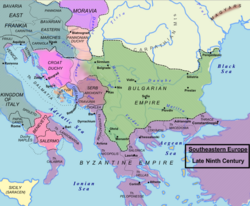
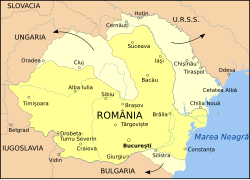
During the Middle Ages, the territories that would form modern Romania were largely represented by the Principality of Wallachia (established around 1330) and the Principality of Moldavia (established around 1346). These entities eventually merged into the United Principalities between 1859 and 1881.
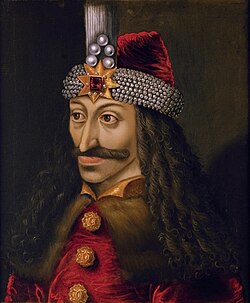
A pivotal moment in the nation's history occurred on 10 May 1877, when Romania gained independence from the Ottoman Empire. This paved the way for the Kingdom of Romania (1881–1947) and the subsequent "Great Union" on 1 December 1918, which significantly expanded the country's borders.
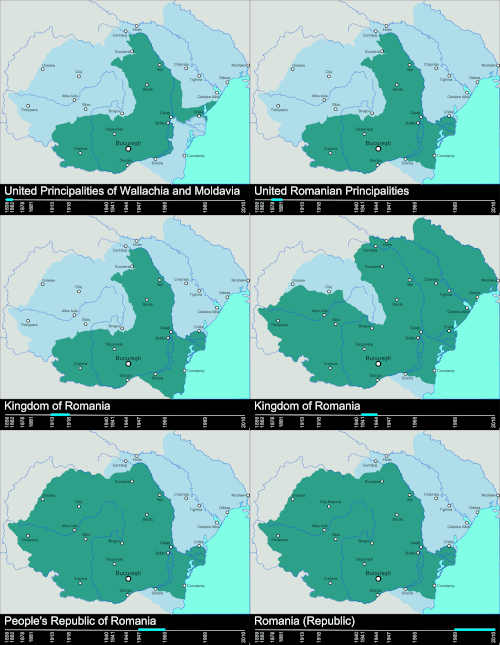
The 20th Century and Modern Era
The 20th century brought significant challenges, including the territorial losses of 1940 and the period of Socialist Romania (1947–1989). Following the revolution, the current constitution was adopted on 8 December 1991, establishing the democratic framework that exists today.
![Nicolae Ceaușescu with Kim Il Sung of North Korea in 1978. In reforming the state, Ceaușescu sought to emulate Juche and Maoist ideas[144][145][146]](/images/ba/a1/baa19449dd6f1721b9dcbd4cecbed494dd9f814cb512c291b65458a2f5b80917.jpg)
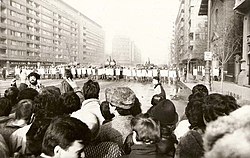
Geography and Climate
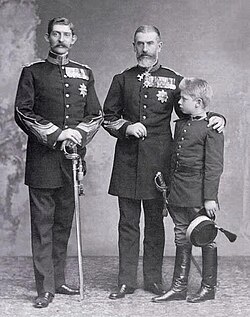
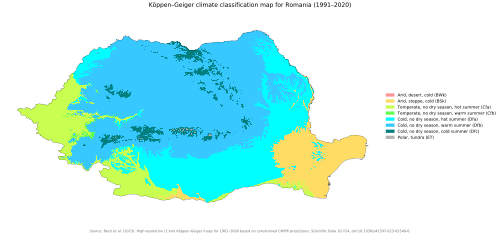
Romania's geography is diverse, featuring varied topography that influences its climate and settlement patterns. The country's climate can be understood through the Köppen climate classification, which categorizes regional weather patterns.
Administrative Divisions and Urban Centers
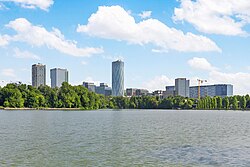
The country is divided into several development regions, including Nord-Vest, Centru, Nord-Est, Sud-Est, Sud-Muntenia, București-Ilfov, Sud-Vest Oltenia, and Vest. The most populous urban centers serve as vital economic and cultural hubs:
- Bucharest: The capital and largest city.
- Cluj-Napoca: The primary hub of the Nord-Vest region.
- Iași: A major center in the Nord-Est region.
- Timișoara: A key city in the Vest region.
Economy and Infrastructure
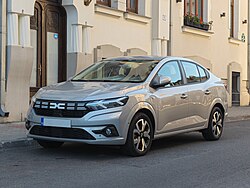
Romania possesses a growing economy with a significant GDP (PPP), estimated at $950.384 billion for 2026. The nation's economic landscape is supported by various sectors, including manufacturing, notably the automobile industry, which is home to the company Dacia.
Energy and Connectivity
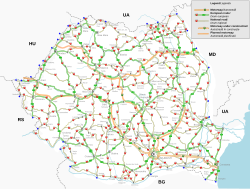
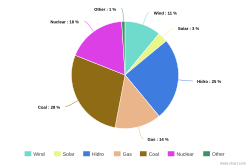
The country's infrastructure includes an extensive road network and a specific electricity supply mix. As of 2015, the energy sector utilized a variety of sources to meet national demand.
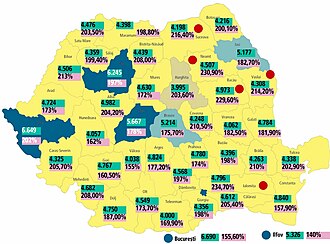
Economic indicators such as net wages vary by county, reflecting the developmental differences across the nation's administrative divisions.
Culture and Society
Romanian culture is deeply rooted in its religious traditions, with Romanian Orthodoxy being the largest denomination, practiced by approximately 73.6% of the population. This spiritual heritage is visible in the country's architecture, such as the People's Salvation Cathedral in Bucharest, which is the largest Eastern Orthodox church building in the world.
![The People's Salvation Cathedral in Bucharest is the tallest and largest Eastern Orthodox church building[c] in the world[329]](/images/5c/d7/5cd7ffab3c6215df927e1d753e220510a49f20f96efc42ae5de4dd018d93fb15.jpg)
Education and Tourism
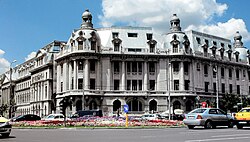
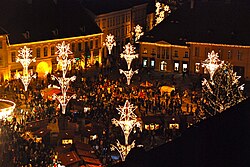
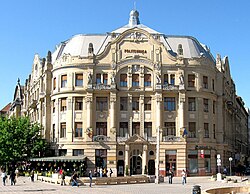
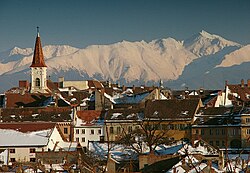
Romania boasts a strong educational foundation, highlighted by institutions like the University of Bucharest, opened in 1864. For visitors, the country offers diverse attractions, from the famous Christmas markets in Sibiu to the cultural designations of Timișoara.
Summary of National Statistics
| Category | Value/Detail |
|---|---|
| Population (2021 Census) | 19,053,815 |
| GDP (Nominal 2026 Est.) | $480.834 billion |
| HDI (2023) | 0.845 (Very High) |
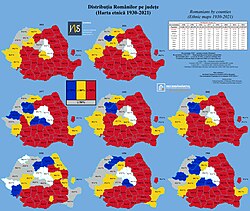
| Main Ethnic Group | Romanian (89.3%) |
| Main Religion | Christianity (84.7%) |
Frequently Asked Questions
![The Colțea Hospital in Bucharest completed a $90 million renovation in 2011[346]](/images/9b/8f/9b8f029c0df44e412d8d7937430972f7be4e3bdfcd059c444952d6f62c836548.jpg)
What is the capital of Romania?
The capital and largest city of Romania is Bucharest.
What are the official languages spoken in Romania?
The official language of the country is Romanian.
What is the primary religion in Romania?
The majority of Romanians practice Christianity, with Romanian Orthodoxy being the most prominent denomination.
What is the currency used in Romania?
The official currency is the Romanian leu (RON).
How is the Romanian economy performing?
Romania has a significant economy with a projected GDP (PPP) of $950.384 billion by 2026 and a very high Human Development Index (HDI) of 0.845.