Rock 'n' Roll New Orleans Marathon: A Legacy of Road Running
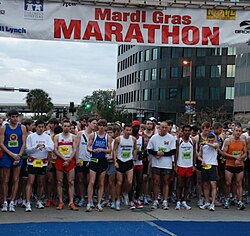
For nearly six decades, the Rock 'n' Roll New Orleans Marathon & 1/2 Marathon served as a premier international road running event in the heart of Louisiana. From its humble beginnings as a local club race to its evolution into a global spectacle under the Rock 'n' Roll Marathon Series, the event captured the spirit of the "Big Easy" while challenging some of the world's fastest athletes.
Organized by the Ironman Group (a division of Advance Publications), the race became a staple of the February sporting calendar. However, the series came to an end in 2022 when the Ironman Group announced the cancellation of all future New Orleans events, citing unresolved conflicts with city officials regarding police staffing and course routing.
Key Facts
- Established: 1965 by the New Orleans Road Runners Club.
- Duration: Held annually from 1965 to 2022 (excluding 1968 and 2021).
- Distances: Offered both full marathon and half marathon options.
- Peak Participation: Approximately 13,000 runners participated in the 2010 events.
- Final Edition: The last race was held in 2022.
The Evolution of the Race
Early Years and Local Roots
The inaugural race, then known simply as "The New Orleans Marathon," took place on March 6, 1965. Organized by the New Orleans Road Runners Club, the first event was a rugged affair with no aid stations. The course ran along the Mississippi levee, starting behind the zoo at Audubon Park, heading to St. Rose, and returning. Of the 19 starters, only 12 finished, with Tulane University student Harry Belin claiming the first victory in 2:47:30.
Transition to the Rock 'n' Roll Series
Over the decades, the race grew in prestige. In the 1980s, it gained local notoriety through participants like John Allen Dixon Jr., the Chief Justice of the Louisiana Supreme Court, who won the over-60 category multiple times. A major shift occurred in 2010 when the Competitor Group took over the event, rebranding it as part of the Rock 'n' Roll Series.
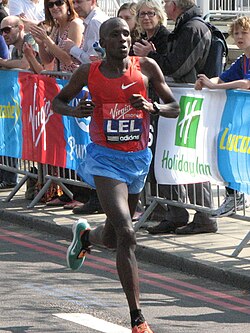
The 2010 edition marked a turning point in the race's competitive profile. While the full marathon operated as a mass-participation event, the half marathon became the focal point for elite athletes. This year saw Martin Lel defeat Olympic champion Samuel Wanjiru, while Berhane Adere and Kim Smith recorded the fastest and third-fastest times ever seen on American soil at the time.
Record-Breaking Performances
The event continued to attract world-class talent. In 2011, Kim Smith returned to the course to set a new U.S. all-comer's record for the women's half marathon with a time of 1:07:36, shaving 19 seconds off her personal best.
Course and Route
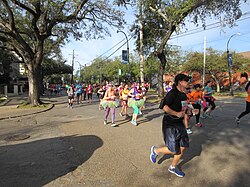
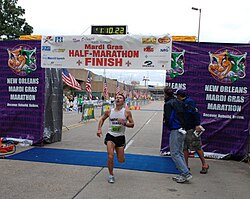
The marathon course was designed to showcase the architectural and natural beauty of New Orleans. The race typically began on Poydras Street near Lafayette Square in the Central Business District and concluded at City Park near Tad Gormley Stadium.
Runners traversed several iconic New Orleans thoroughfares, including:
- St. Charles Avenue: The historic artery of the city.
- Decatur Street: Leading through the heart of the French Quarter.
- Esplanade Avenue: A scenic stretch of the city.
- Lakeshore Drive: Providing a flat, fast stretch along Lake Pontchartrain.
Race Summary and Winners
The following table highlights key winners and times from the later years of the event's history.
| Year | Marathon Men (Time) | Marathon Women (Time) | Half Marathon Men (Time) | Half Marathon Women (Time) |
|---|---|---|---|---|
| 2009 | Meyer Friedman (2:24:32) | Autumn Ray (2:58:23) | Hillary Kogo (1:08:47) | Victoria Martinez (1:21:17) |
| 2010 | Paul Wachira (2:22:31) | Karen Barlow (2:46:06) | Martin Lel (1:01:07) | Berhane Adere (1:07:52) |
| 2011 | Fred Joslyn (2:18:49) | Joasia Zakrzewski (2:47:24) | Josphat Boit (1:03:57) | Kim Smith (1:07:36) |
| 2013 | Meyer Friedman (2:28:43) | Karen Lockyer (2:52:23) | Mo Farah (1:00:59) | Meseret Defar (1:07:25) |
| 2020 | Brett Morley (2:27:46) | Carly Forte (3:07:13) | Panuel Mkungo (1:02:05) | Amy Cragg (1:16:53) |
Frequently Asked Questions
Why was the Rock 'n' Roll New Orleans Marathon cancelled?
The Ironman Group cancelled the event after the 2022 edition due to ongoing conflicts with the city of New Orleans regarding police staffing and course routing.
Who won the very first New Orleans Marathon in 1965?
The inaugural race was won by Harry Belin, a student at Tulane University, who finished with a time of 2:47:30.
What records were set during the 2010 and 2011 events?
In 2010, Berhane Adere and Kim Smith set the fastest and third-fastest women's half marathon times on American soil. In 2011, Kim Smith set a U.S. all-comer's record for the women's half marathon with a time of 1:07:36.
Was the race ever cancelled before 2022?
Yes, the race was not held in 1968, and the 2021 edition was cancelled due to the coronavirus pandemic.
Where did the marathon course typically start and end?
The race generally started on Poydras Street near Lafayette Square in the Central Business District and ended at City Park near Tad Gormley Stadium.