Rijvers: The Pioneering Career of a Dutch Football Legend
The history of Dutch football is marked by pioneers who challenged the status quo to elevate the game. Among these figures, Rijvers stands out as a trailblazer who navigated the complex transition from amateurism to professionalism during the mid-20th century, leaving an indelible mark on both the Netherlands national team and European club football.
Professional Journey and Club Career
Rijvers began his footballing journey making his debut at NAC Breda. His talent soon took him beyond Dutch borders, leading to stints with AS Saint-Étienne, Stade Français, and Feijenoord. His move to AS Saint-Étienne in 1950 was particularly significant, as he became one of the first Dutch players to turn professional.
However, this professional leap came with a heavy price. At the time, the KNVB (Royal Dutch Football Association) strictly prohibited professional players from representing the national team. As a result, the KNVB suspended Rijvers, and he was unable to play for the Netherlands again until 1957.
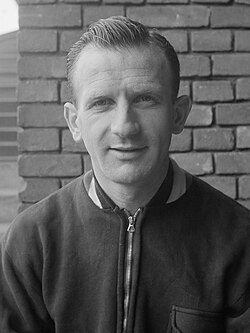
The Golden Inner Three and International Success
Despite the interruptions in his international career, Rijvers is remembered as a vital component of the Gouden Binnentrio (The Golden Inner Three). Alongside teammates Faas Wilkes and Abe Lenstra, Rijvers formed a formidable attacking force for the Dutch national team between the late 1940s and the 1950s.
While the trio only shared the pitch for ten matches, their efficiency was remarkable, combining for a total of 23 goals. This partnership remains one of the most celebrated eras of early Dutch international football.
Charity and Resilience: The Watersnoodwedstrijd
Beyond competitive league play, Rijvers participated in one of the most emotionally charged matches in football history: the Watersnoodwedstrijd. Held on March 12, 1953, at the Parc des Princes stadium in Paris, the match was organized to raise funds for the victims of the devastating North Sea flood of 1953.
The event faced significant opposition from the KNVB, which sought to maintain its distance from professional players. The match only proceeded after the personal intervention of Prince Bernhard, allowing Rijvers and other Dutch professionals playing abroad to compete for a humanitarian cause.
A Lasting Legacy in Football History
Rijvers' influence extends into the annals of individual accolades. In the inaugural 1956 edition of the Ballon d'Or—the prestigious annual award for the world's best player—Rijvers received at least one vote. Following the passing of Marcelino Campanal in May 2020, Rijvers became the final surviving player, and the first Dutch player ever, to have been voted for in that historic first edition.
Key Facts
- Professional Pioneer: One of the first Dutch players to turn professional (1950).
- National Team Impact: Member of the 1948 Summer Olympic Games team.
- The Golden Trio: Part of the Gouden Binnentrio, scoring 23 goals in 10 joint appearances.
- Humanitarian Effort: Played in the 1953 Watersnoodwedstrijd to aid North Sea flood victims.
- Ballon d'Or History: The last surviving player to receive a vote in the 1956 inaugural Ballon d'Or.
| Category | Details |
|---|---|
| Clubs Played For | NAC Breda, AS Saint-Étienne, Stade Français, Feijenoord |
| Major International Event | 1948 Summer Olympic Games |
| Notable Partnership | Gouden Binnentrio (with Faas Wilkes and Abe Lenstra) |
| Key Milestone | First Dutch player voted in the 1956 Ballon d'Or |
Frequently Asked Questions
Why was Rijvers suspended from the Dutch national team?
Rijvers was suspended by the KNVB after turning professional with AS Saint-Étienne in 1950, as the association did not allow professional players to represent the national team at that time.
What was the Gouden Binnentrio?
The Gouden Binnentrio (The Golden Inner Three) was a renowned attacking trio consisting of Rijvers, Faas Wilkes, and Abe Lenstra, who scored 23 goals in the ten matches they played together.
What was the purpose of the Watersnoodwedstrijd?
The Watersnoodwedstrijd was a charity match played in Paris on March 12, 1953, to raise money for the victims of the 1953 North Sea flood.
How is Rijvers connected to the Ballon d'Or?
Rijvers received at least one vote in the first-ever Ballon d'Or in 1956. He became the final surviving player to have received a vote in that inaugural edition after the death of Marcelino Campanal in 2020.