RIA Novosti: The Evolution of Russia's State News Agency
The trajectory of RIA Novosti reflects the broader political shifts of the 20th and 21st centuries, evolving from a wartime information bureau in the Soviet Union to a modern global news-analytical agency. Throughout its history, the organization has served as a primary vehicle for communicating state policy to both domestic and international audiences.
The Soviet Era: From Wartime Bureau to Global Press Agency
The agency's origins date back to June 24, 1941, with the establishment of the Soviet Information Bureau (Sovinformburo). Created by a resolution of the USSR Council of People's Commissars and the Communist Party Central Committee, Sovinformburo was tasked with overseeing the coverage of military events and domestic life across radio and periodicals. During the height of World War II, the bureau was briefly based in Kuibyshev (modern-day Samara) from October 1941 to March 1942.
Sovinformburo focused on compiling frontline reports and managing the activities of various anti-fascist committees, including those for women, youth, scientists, and the Jewish Anti-Fascist Committee (the latter of which was liquidated in 1948). By 1944, it expanded its reach by creating a dedicated bureau for foreign propaganda.
The bureau's reach was immense, utilizing 1,171 newspapers, 523 magazines, and 18 radio stations across 23 countries, alongside Soviet embassies and "friendship societies," to broadcast Soviet domestic and foreign policy.
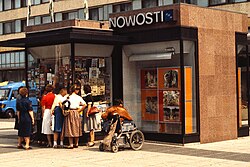
The Transition to Novosti Press Agency (APN)
In 1961, the Novosti Press Agency (APN) succeeded Sovinformburo. Founded on February 21, 1961, APN was established by a coalition of public organizations, including the USSR Journalists Union and the USSR Writers Union. Its stated mission was to foster mutual understanding and friendship between nations by publishing accurate information about the USSR abroad.
Operating under the motto "Information for Peace, for the Friendship of Nations," APN maintained bureaus in over 120 countries. It published 60 illustrated periodicals in 45 languages with a circulation of 4.3 million copies. Notable outputs included the Moscow News newspaper and the ABC Political Science book series. In 1989, the agency launched a TV center, which eventually evolved into the TV-Novosti company and, by 2005, the RT media network.
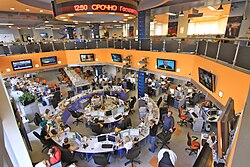
The Final Soviet Phase: Information Agency Novosti (IAN)
On July 27, 1990, President Mikhail Gorbachev renamed the organization the Information Agency Novosti (IAN). This change was intended to support the democratization of mass media while continuing to provide information support for state policies. IAN modernized its operations by creating a computer databank containing over 250,000 documents and launching the Infonews hotline in 1991.
The Russian Federation Era
Following the collapse of the Soviet Union, the Russian Information Agency Novosti was formed in September 1991. By August 1991, it fell under the jurisdiction of the Press and Information Ministry. The agency expanded its reach to approximately 80 foreign bureaus and over 1,600 subscribers across CIS and non-CIS countries.
In September 1993, a presidential decree transformed the organization into a news-analytical agency. This era saw the launch of RIA-Radio in 1996 and the establishment of the Kultura TV channel in 1997. In May 1998, the agency was briefly renamed the Russian Information Agency Vesti before reverting to RIA Novosti on April 1, 2004.
A significant milestone occurred in 2005 with the launch of RT (originally Russia Today), a government-funded, multilingual global news network. While RIA Novosti helped establish the channel, the agency maintained that RT operated with complete legal and editorial independence.

Reorganization and Modern Status
On December 9, 2013, President Vladimir Putin signed a decree to liquidate RIA Novosti and merge it with the Voice of Russia international radio service to create Rossiya Segodnya. Dmitry Kiselyov was appointed president of this new entity. The reorganization sparked concerns regarding the agency's potential shift toward a more explicit propaganda role.
Despite the merger, RIA Novosti was registered by Roskomnadzor as a news agency and online newspaper on April 8, 2014.
Key Facts
- Founded: June 24, 1941, as Sovinformburo.
- Global Reach: At its peak, APN and IAN operated bureaus in over 120 countries.
- Multilingualism: APN published materials in 45 different languages.
- Major Offshoots: The agency's TV initiatives led to the creation of the Kultura channel and the RT network.
- Current Status: Merged into Rossiya Segodnya in 2013, but remains registered as a news agency and online newspaper.
| Period | Organization Name | Primary Focus |
|---|---|---|
| 1941–1961 | Sovinformburo | Wartime reporting and anti-fascist propaganda |
| 1961–1990 | Novosti Press Agency (APN) | International friendship and USSR promotion |
| 1990–1991 | Information Agency Novosti (IAN) | Democratization and state policy support |
| 1991–2013 | RIA Novosti | News-analytical services and global broadcasting |
| 2013–Present | Rossiya Segodnya | Integrated state information agency |
Frequently Asked Questions
What was the original purpose of Sovinformburo?
Sovinformburo was established in 1941 to oversee the reporting of international and military events, as well as domestic life, across radio and print media during the Soviet era.
How did the Novosti Press Agency (APN) differ from its predecessor?
APN shifted the focus toward "Information for Peace," aiming to build trust and friendship between the USSR and other nations through the publication of accurate information in 45 languages.
What is the relationship between RIA Novosti and RT?
RIA Novosti participated in the establishment of RT (originally Russia Today) in 2005, though the agency asserted that the network maintained its own legal and editorial independence.
What happened to RIA Novosti in 2013?
It was liquidated and merged with the Voice of Russia to form a new state information agency called Rossiya Segodnya.
Who was the first president of Rossiya Segodnya?
Dmitry Kiselyov, a former anchorman for Channel One Russia, was appointed as the president of the new agency.