Understanding the Revised Romanization of Korean (RR)
Have you ever wondered how Korean names, cities, and landmarks are translated into the Latin alphabet? Whether you are reading a subway map in Seoul or looking at your passport, you are interacting with a specific system known as the Revised Romanization of Korean (RR). This official system serves as the bridge between the Korean Hangul script and the international community.
Developed by the National Academy of the Korean Language starting in 1995, the RR system was officially released by South Korea's Ministry of Culture, Sports and Tourism on July 7, 2000. Its primary goal is to provide a standardized way to romanize proper nouns, such as place names, personal names, and business names, using only the 26 letters of the ISO basic Latin alphabet.

Key Facts
- Official Status: It is the standard romanization system used in South Korea.
- Primary Purpose: To romanize proper nouns like locations and names.
- Alphabet: Uses only the 26 letters of the ISO basic Latin alphabet.
- Implementation: Widely used on road signs, railway maps, and textbooks.
- Development Goal: Designed to be more distinct and easier to use online than previous systems.
The Conversion Process
Converting Hangul (the Korean alphabet) into RR is not a simple one-to-one letter swap; it involves a multi-step process that considers how words are actually spoken.
1. Adjusting for Pronunciation
Before transcribing, the system often swaps parts of the Hangul string to reflect standard pronunciation. For example, while "독립문" might be spelled differently in a literal sense, it is romanized as Dokripmun to match how it is pronounced (Dongnimmun). However, there are important exceptions: personal names (like "Han Boknam") and certain syllables separated by hyphens (like "Inwang-ri") retain their original spelling rather than their phonetic pronunciation.
2. Breaking Down Syllables
Each syllable is broken down into jamo (individual letters). Depending on whether a consonant is at the beginning (initial) or the end (final) of a syllable, its romanization may change. For instance, the consonant ㄱ is written as 'g' at the start of a word but as 'k' at the end.
3. Final Formatting
The final step involves applying grammatical rules: capitalizing proper nouns, inserting spaces between family and given names, and adding hyphens before certain administrative units.
Technical Rules of Romanization
The RR system uses specific mappings for consonants and vowels to ensure clarity. A key feature is how it handles aspiration—the strength of air released during speech. Unaspirated consonants like ㄱ, ㄷ, and ㅂ are represented as ⟨g⟩, ⟨d⟩, and ⟨b⟩, while aspirated versions like ㅋ, ㅌ, and ㅍ use ⟨k⟩, ⟨t⟩, and ⟨p⟩.
Consonant Mapping Table
| Hangul | Initial Position | Final Position |
|---|---|---|
| ㄱ | g | k |
| ㄴ | n | — |
| ㄷ | d | t |
| ㄹ | r | l |
| ㅁ | m | — |
| ㅂ | b | p |
| ㅅ | s | t |
| ㅇ | — | ng |
Vowel Mapping Guide
Vowels follow a consistent pattern, though some combinations may look unique to English speakers. For example, the vowel ㅓ is written as eo, and ㅡ is written as eu. Special combinations like ㅝ are written as wo, and ㅢ is written as ui.
The Role of Hyphens
Hyphens in the RR system serve two different purposes: they are either mandatory or optional.
- Mandatory Hyphens: These are required when separating an administrative unit (e.g., Pyeongchang-gun).
- Optional Hyphens: These can be used to clarify pronunciation (e.g., Hae-undae) or to separate syllables in a given name (e.g., Hong Gil-dong).
Interestingly, the National Institute of Korean Language discourages the use of optional hyphens. Experts argue that hyphens can be "visually intrusive" and that romanization should not attempt to perfectly mirror every nuance of pronunciation, as spelling and sound do not always match perfectly in any language.
Background and Real-World Usage
The transition to the Revised Romanization was a massive undertaking. It was developed in anticipation of the 2002 FIFA World Cup to ensure international visitors could navigate the country easily. Implementing this system across all road signs, railway stations, and maps cost an estimated 500 billion to 600 billion won.
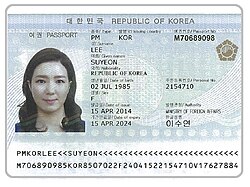
One notable area of flexibility is passports. While the RR is the standard, the South Korean government recommends a modified version for personal names to avoid negative connotations in other languages. For example, the name 신 is often romanized as SHIN rather than the strict RR SIN to avoid the English word "sin."
Frequently Asked Questions
Why was the Revised Romanization created?
It was created to replace the older McCune–Reischauer system, which used special symbols (like apostrophes and breves) that were often lost or confused in digital environments and early internet use. The RR system uses only the standard 26 letters of the Latin alphabet for better compatibility.
Is the romanization always the same as the pronunciation?
Not always. The system prioritizes the spelling of proper nouns and follows specific rules for how sounds change when syllables meet. While it aims for clarity, the goal is not to provide a perfect phonetic transcription, as some pronunciation nuances are better learned separately.
How are personal names handled in passports?
While the RR is the official standard, passport romanizations are more flexible. The government encourages users to choose spellings that avoid words with negative meanings in other languages, though ad-hoc romanizations are permitted.
When must I use a hyphen?
Hyphens are mandatory when you are separating an administrative unit from a name (such as a district or county). They are optional when used to clarify the pronunciation of a word or to separate syllables in a person's given name.
What happens to consonants at the end of a syllable?
Certain consonants change their romanization when they appear in the final position. For example, ㄱ, ㄷ, and ㅂ are transcribed as ⟨k⟩, ⟨t⟩, and ⟨p⟩ respectively when they are at the end of a word or followed by another consonant.