Republic of Ireland National Football Team
Known affectionately as The Boys in Green (Irish: Na buachaillí i nglas), the Republic of Ireland national football team represents the nation on the global stage. Governed by the Football Association of Ireland (FAI) and affiliated with UEFA, the team has a storied history of punching above its weight in international competitions, evolving from its first international match in 1924 to becoming a respected competitor in the modern era.
From the tactical revolutions of the late 20th century to the modern challenges of World Cup qualification, the team has consistently captured the imagination of fans across the island and the Irish diaspora worldwide.
Key Facts
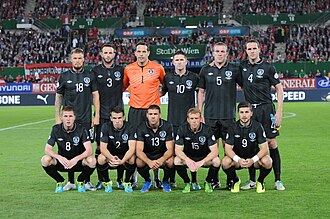
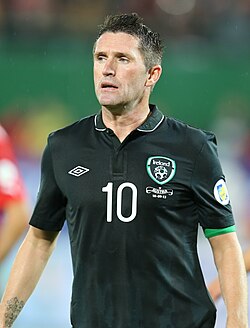
- Most-Capped Player: Robbie Keane (146 caps).
- All-Time Top Scorer: Robbie Keane (68 goals).
- Home Ground: Aviva Stadium.
- World Cup Best: Quarter-finals (1990).
- European Championship Best: Final 8 (1988).
- Biggest Win: 8–0 against Malta (1983).
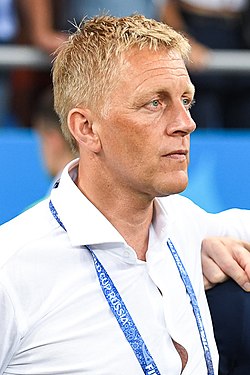
- Current Head Coach: Heimir Hallgrímsson.
Historical Journey and Eras
Early Years to the 1980s
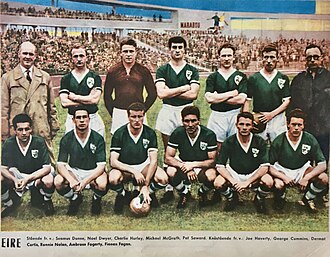
The team's international journey began on May 28, 1924, with a 1–0 victory over Bulgaria in Colombes, France. For several decades, the team built its foundation, experiencing varying degrees of success before entering a golden era of tactical discipline and spirit.
The Jack Charlton Era (1986–1996)
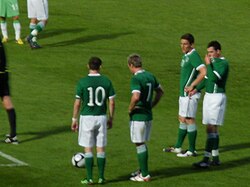
Under the management of Jack Charlton, the Republic of Ireland experienced a surge in success. This period saw the team qualify for the 1988 European Championship and the 1990 and 1994 FIFA World Cups. The 1990 tournament remains a pinnacle of Irish football, where the team reached the quarter-finals.
Modern Transitions (1996–Present)
Following Charlton, the team was led by various managers including Mick McCarthy, Brian Kerr, and Giovanni Trapattoni. Mick McCarthy notably led the team to the 2002 World Cup and later to Euro 2016. More recently, the team has transitioned through the Stephen Kenny era to the current leadership of Heimir Hallgrímsson.
Stadiums and Venues
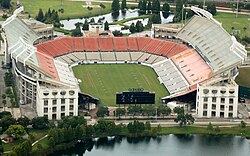
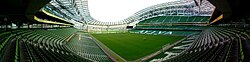
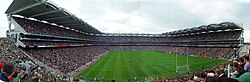
The primary home for the national team is the Aviva Stadium, a state-of-the-art facility in Dublin. However, the team has also utilized other iconic venues to accommodate larger crowds or specific events, most notably Croke Park, the headquarters of the Gaelic Athletic Association.
Competitive Record and Statistics
Ireland's performance in major tournaments is characterized by resilience. In the FIFA World Cup, they have appeared three times (1990, 1994, 2002), with their best finish being 8th place in 1990. In the UEFA European Championship, they have also appeared three times (1988, 2012, 2016), reaching the final 8 in 1988.
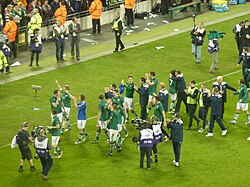
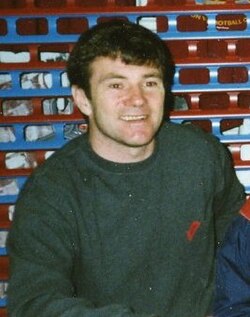
Individual brilliance has often defined these campaigns, with Robbie Keane standing as the most influential player in the team's history in terms of longevity and scoring.
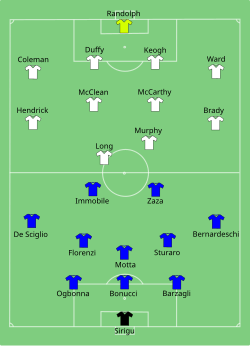
Recent fixtures in 2025 and 2026 show a team in transition, with notable performances in the 2026 FIFA World Cup qualification play-offs and the UEFA Nations League.
| Category | Detail |
|---|---|
| Association | Football Association of Ireland (FAI) |
| FIFA Ranking (Peak) | 6th (August 1993) |
| World Cup Appearances | 3 (1990, 1994, 2002) |
| Euro Appearances | 3 (1988, 2012, 2016) |
| All-time Record | 635 Played, 246 Won, 178 Drawn, 211 Lost |
Frequently Asked Questions
Who is the all-time leading goalscorer for the Republic of Ireland?
Robbie Keane is the all-time leading goalscorer with 68 goals in 146 appearances.
What is the team's best ever finish in a FIFA World Cup?
The team's best finish was reaching the quarter-finals of the 1990 FIFA World Cup.
Where does the national team play its home matches?
The team's official home stadium is the Aviva Stadium in Dublin, though Croke Park has also been used.
Who is the current head coach of the team?
The current head coach is Heimir Hallgrímsson.
What is the team's nickname?
The team is known as "The Boys in Green" (Irish: Na buachaillí i nglas).