Renminbi: A Comprehensive Overview of China's Official Currency
The Renminbi (RMB), which literally translates to "People's Currency," serves as the official legal tender of the People's Republic of China. While the term "Renminbi" refers to the currency system as a whole, the term yuan is used to denote the specific unit of value. Managed by the People's Bank of China, this currency has undergone significant evolution since its introduction in 1948, transitioning from the era of the Chinese gold yuan to a modern, complex financial instrument used in global markets.
Key Facts
- Official Name: Renminbi (RMB)
- Currency Unit: Yuan (¥)
- ISO 4217 Code: CNY
- Subunits: Jiao (1/10) and Fen (1/100)
- Central Bank: People's Bank of China
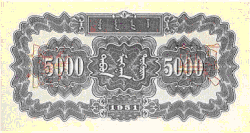
- Introduction Date: 1948
Currency Structure and Terminology
Understanding the Renminbi requires familiarity with both its formal names and its colloquial usage. In daily life, Chinese speakers often use different terms than those found in official banking documents.
Denominations and Subunits
The currency is divided into three primary levels of value:
- Yuan (元): The main unit. Colloquially referred to as kuài (piece).
- Jiao (角): The first subunit, representing 1/10 of a yuan. Colloquially known as máo (feather).
- Fen (分): The second subunit, representing 1/100 of a yuan.
Banknotes and Coins
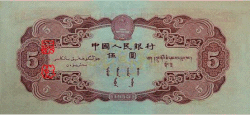
The physical circulation of the Renminbi includes various denominations. As of 2025, five series of banknotes have been issued. Common banknotes include ¥1, ¥5, ¥10, ¥20, ¥50, and ¥100. While ¥0.1 and ¥0.5 denominations exist, they are rarely used in banknote form today.
In terms of coinage, the ¥0.1 (one jiao), ¥0.5 (five jiao), and ¥1 denominations are frequently used, whereas the smallest denominations like ¥0.01 and ¥0.02 are rarely seen in circulation.
Historical Evolution and Exchange Policy
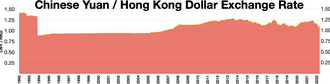
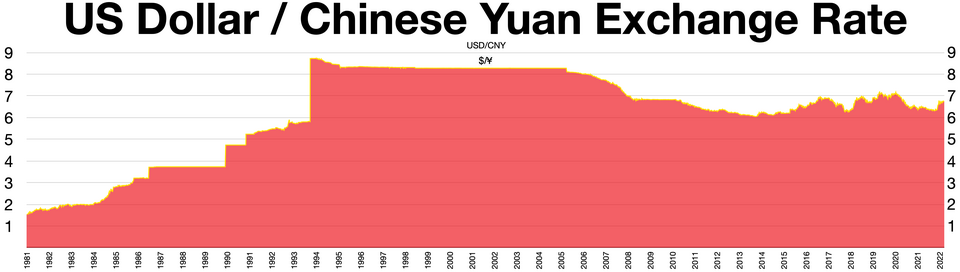
The history of the Renminbi is marked by shifts in economic policy and exchange rate management. Following the era of the command economy, China transitioned through various stages, including the use of Foreign Exchange Certificates between 1980 and 1994.
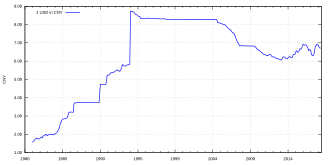
The exchange rate policy has evolved from a fixed system to a managed float, where the currency is partially pegged to a basket of trade-weighted international currencies. A significant milestone occurred in 2015 when the People's Bank of China devalued the currency, and the exchange rate for US$1 was approximately ¥6.38 as of September 1, 2015.
Internationalization and Global Trade
The Renminbi has increasingly become a player in the global financial arena. In November 2010, Vladimir Putin announced that Russia's bilateral trade with China would be settled in roubles and yuan rather than US dollars, signaling a move toward reducing reliance on the greenback.
![On 24 November 2010, Vladimir Putin announced that Russia's bilateral trade with China would be settled in roubles and yuan, instead of US dollars.[88]](/images/9d/b2/9db26b2f7e5bfefdcf521401fcb7a393a3656bb5d8dc1bd2bd76427de1166f22.jpg)
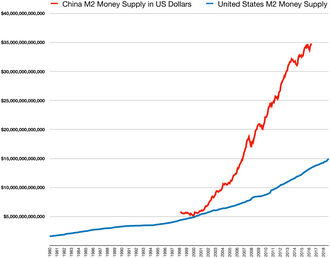
The currency's role in global foreign exchange turnover is growing. While the US dollar remains the dominant currency, the Renminbi's proportion of daily volume has seen upward trends in recent years.

Summary of Currency Details
| Feature | Details |
|---|---|
| ISO Code | CNY |
| Symbol | ¥ |
| Primary Unit | Yuan (元) |
| Subunit 1 | Jiao (角) |
| Subunit 2 | Fen (分) |
| Issuer | People's Bank of China |
Frequently Asked Questions
What is the difference between Renminbi and Yuan?
Renminbi (RMB) is the official name of the currency system of China, while the Yuan is the specific unit of account used within that system.
How is the Renminbi exchange rate determined?
The Renminbi operates under a managed float regime, meaning it is partially pegged to a basket of trade-weighted international currencies.
Are there different versions of the Renminbi?
Yes, there are different series of banknotes (five series as of 2025) and discussions regarding the digital renminbi, which is a state-run digital currency.
Where is the Renminbi used unofficially?
The Renminbi is used unofficially in certain regions, such as the Wa State in Myanmar (Eastern Shan State Special Region 4).
What are the common nicknames for the currency?
In colloquial Chinese, a single yuan is often called "kuài" and a jiao is often called "máo."