Referendums and Plebiscites: The Mechanics of Direct Democracy
In most modern democracies, citizens exercise power by electing representatives to make laws on their behalf. However, there are instances where the decision-making process shifts directly to the people. This is known as a referendum, plebiscite, or ballot measure—a direct vote by the electorate on a specific proposal, law, or political issue.
These votes generally fall into two categories: binding, where the result must be adopted as new policy, or consultative (also called advisory), which serves as a large-scale opinion poll to gauge public sentiment without legally forcing a change.

Key Facts
- Direct Action: Referendums allow voters to decide on issues directly rather than through elected representatives.
- Global Usage: Switzerland is a primary example of frequent use, holding nearly 600 national votes since 1848.
- Legal Status: Votes can be mandatory (required by law) or optional (ad hoc).
- Diversity of Choice: While many are "Yes/No" votes, some countries use multiple-choice or preferential voting systems.
- Modern Trend: Popularity has increased since the 1970s as voters have moved away from strict party loyalty toward specific policy issues.
Etymology and Terminology
The word "referendum" originates from the Latin verb referre, meaning "to carry back." In its original Latin context, it was a gerundive (a verbal adjective) used in phrases like Propositum quod referendum est populo, meaning "A proposal which must be carried back to the people."
In English, "referendum" has evolved into a noun. Because it follows English rather than Latin grammatical rules, the standard plural is referendums. While "referenda" is sometimes used, linguistic analysis suggests it is unsupportable under the strict rules of both languages.
In Australia, the terms "referendum" and "plebiscite" are often used interchangeably, though some erroneously claim that only constitutional changes are called referendums. In reality, both terms are used for various types of public votes, regardless of whether they affect the constitution.
Classifying Referendums
Political scientist David Altman suggests that referendums can be understood through four primary dimensions:
- Mandatory vs. Optional: Whether the vote is legally required or called on an ad hoc basis.
- Binding vs. Consultative: Whether the outcome is legally enforceable or merely advisory.
- Citizen-initiated vs. Authority-initiated: Whether the vote is "bottom-up" (started by the people) or "top-down" (started by the government).
- Proactive vs. Reactive: Whether the vote proposes a new change or seeks to prevent one.
Mandatory Referendums
Certain legal frameworks require a public vote for specific actions. Common examples include:
- Constitutional Changes: Required in countries like Australia, Ireland, Switzerland, and Denmark, as well as 49 of the 50 U.S. states (excluding Delaware).
- Financial Measures: Some localities require votes to issue bonds or raise taxes. In California, for instance, the state cannot borrow more than $300,000 without a statewide bond proposition vote.
- International Relations: Switzerland requires mandatory referendums for treaties involving collective security or joining supranational communities, such as the failed 1986 attempt to join the United Nations.
Optional and Issue-Based Referendums
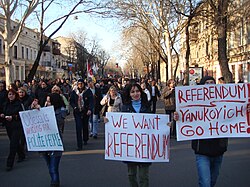
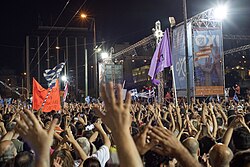
Optional referendums are often used to resolve specific political disputes or social questions. These can range from civil rights and mining permissions to independence movements. A significant example is the series of 48 referendums held by EU member states or candidates since 1972, primarily regarding EU membership, the adoption of the euro, or treaty ratification.
Design and Procedure
While the "Yes/No" binary is common, many jurisdictions employ more complex designs:
Multiple-Choice and Voting Systems
Some countries offer voters several options. For example, New Zealand used a five-option referendum for its electoral system in 1992, and Australia used a four-choice ballot for its national anthem in 1977. Voting methods vary from Single Member Plurality (first past the post) in Sweden to Preferential Instant-Runoff Voting (IRV) in Australia.
Legal Disputes and Quorums
Referendums are frequently subject to legal challenges. These may be pre-referendum (attempting to stop the vote, such as the Spanish Constitutional Court's suspension of the Catalonia independence referendum in 2017) or post-referendum (challenging the result, as seen in the British courts' dismissal of Brexit challenges).
Criticisms and Risks
Despite their democratic appeal, referendums face several criticisms:
- Populist Manipulation: Critics argue that dictators—including Adolf Hitler, Benito Mussolini, and Francisco Franco—used plebiscites to mask oppressive policies as popular will. This history is why Germany has no provision for federal referendums today.
- The Separability Problem: Complex policy issues are often reduced to closed "Yes/No" questions, which may oversimplify nuanced problems.
- Governmental Limitation: Some argue that referendums can unduly limit the power of regular government to manage budgets and maintain constitutional coherence.
| Type | Legal Status | Primary Purpose | Example |
|---|---|---|---|
| Mandatory | Legally Required | Constitutional/Financial changes | Australian Constitutional votes |
| Consultative | Advisory | Gauging public opinion | Opinion-based plebiscites |
| Binding | Enforceable | Implementing new policy | EU membership votes |
| Optional | Ad hoc | Resolving specific issues | Mining or Civil Rights votes |
Frequently Asked Questions
What is the difference between a referendum and a plebiscite?
In general usage, they both refer to direct votes by the electorate. While some regions try to distinguish them—for example, by suggesting plebiscites don't affect constitutions—they are historically and practically used interchangeably in many countries, including Australia.
Is "referenda" the correct plural of "referendum"?
No. Because "referendum" is used as an English noun rather than a Latin adjective, the grammatically correct English plural is "referendums." The use of "referenda" is considered unsupportable by the rules of both Latin and English grammar.
Can a referendum be non-binding?
Yes. These are called consultative or advisory referendums. They function like a large opinion poll, providing the government with a sense of public will without legally requiring the government to implement the result.
Why do some countries avoid federal referendums?
Some countries, most notably Germany, avoid them at the federal level due to historical trauma. Dictators in the early 20th century often used plebiscites to legitimize oppressive regimes and disguise authoritarianism as populism.
How are multiple-choice referendums decided?
Depending on the country, they may be decided by a plurality (the option with the most votes wins), a majority, or through preferential voting systems where voters rank their choices.