Rakuten Group: The Evolution of a Global E-Commerce and FinTech Giant
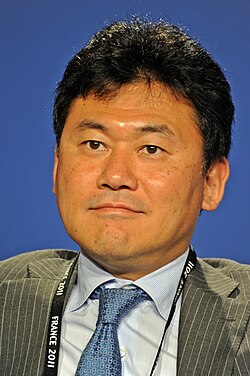
Founded in the late 1990s, Rakuten Group has transformed from a modest online marketplace into a diversified global ecosystem. Headquartered in Setagaya, Tokyo, the company operates across three primary pillars: e-commerce, financial technology (FinTech), and telecommunications. Under the leadership of founder Hiroshi Mikitani, Rakuten has expanded its reach worldwide, integrating digital content and mobile services to create a seamless user experience.
Key Facts
- Founded: February 7, 1997, as MDM, Inc.
- Founder & CEO: Hiroshi Mikitani.
- Core Industries: E-commerce, FinTech, and Telecommunications.
- 2024 Revenue: ¥2.279 trillion.
- Total Assets: ¥16.8 trillion (2024).
- Global Reach: Operates worldwide with major subsidiaries including Viber, Kobo, and Viki.
The Journey from MDM, Inc. to Global Powerhouse
Early Years and Public Listing
Rakuten began its journey as MDM, Inc. on February 7, 1997. The company's flagship online shopping marketplace, Rakuten Ichiba (Rakuten Shopping Mall), launched on May 1, 1997, starting with just six employees and 13 merchants. By April 19, 2000, the company went public on the JASDAQ market, boasting 2,300 stores and 95 million monthly page views.
Diversification into FinTech
In 2004, Rakuten strategically entered the financial sector by acquiring Aozora Card Co., Ltd., which became Rakuten Card Co., Ltd. This move allowed the company to launch its own credit card in 2005. By 2016, financial services accounted for nearly 40% of Rakuten's revenue, driven by the success of Japan's largest internet bank and its third-largest credit company. The company further modernized its offerings in 2016 with the introduction of Rakuten Pay, a smartphone-based payment system.
Global Expansion and "Englishnization"
The 2010s marked a period of aggressive international growth. Rakuten expanded its e-commerce and travel footprints into markets including Canada, Spain, Taiwan, Thailand, France, and China. To facilitate this global transition, Rakuten adopted English as its official corporate language in 2012—a policy known as "Englishnization." This shift aimed to better integrate non-Japanese speakers, resulting in nearly 40% of its Japanese engineers being non-Japanese by 2016.
Expanding the Ecosystem: Sports, Gaming, and Mobile
Sports and Entertainment
Rakuten has leveraged sports for brand visibility, acquiring the J1 League football team Vissel Kobe in 2015 and the Taiwanese baseball team Rakuten Monkeys in 2019. Additionally, the company entered a high-profile partnership with FC Barcelona starting in the 2017-18 season, a deal valued at at least €220 million.
Digital Content and Gaming
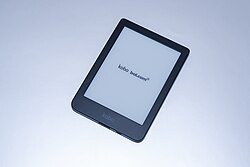
The company's digital portfolio includes the messaging app Viber and the e-book platform Kobo. In 2017, Rakuten partnered with Blackstorm Labs to launch R Games, an HTML5-based social gaming platform featuring titles like Pac-Man and Space Invaders, designed for integration with Viber.
The Leap into Telecommunications
In May 2018, Rakuten announced the launch of Rakuten Mobile, Japan's fourth wireless mobile network. By September 2020, the company deployed its 5G network using the Rakuten Communications Platform (RCP), which utilizes cloud computing to reduce operational costs. To fund this massive infrastructure project, Rakuten entered a major capital tie-up in 2021, bringing in investments from Japan Post Holdings, Tencent, and Walmart.
Business Segment Overview
Rakuten organizes its vast array of services into three distinct segments to manage its diverse portfolio.
| Segment | Key Services & Subsidiaries |
|---|---|
| Internet Services | Rakuten Ichiba, Viber, Rakuten Rewards, Rakuten TV, Viki, Voyagin, Rakuten Advertising |
| FinTech | Banking, Securities, Credit Cards, Life Insurance, Digital Wallet |
| Mobile | Rakuten Mobile, Rakuten Mobile Phones (Mini, Hand, Big series) |
Corporate Challenges and Controversies
Despite its growth, Rakuten has faced several public challenges. In 2012, the launch of the Kobo Touch eReader was met with criticism due to technical failures, leading the company to temporarily disable product reviews. The company also faced scrutiny from the Consumer Affairs Agency regarding the misrepresentation of available e-book titles and illegal artificial price hikes during a 2013 site-wide sale.
Furthermore, in 2014, the Environmental Investigation Agency identified Rakuten as a major online retailer of whale meat and elephant ivory. In response, Rakuten banned the sale of whale and dolphin meat in April 2014 and ivory in July 2017.
Frequently Asked Questions
Who founded Rakuten and when?
Rakuten was founded by Hiroshi Mikitani on February 7, 1997, originally under the name MDM, Inc.
What is "Englishnization" at Rakuten?
Englishnization is the company's policy of adopting English as its official internal language, implemented in 2012 to increase global competitiveness and integrate a diverse, international workforce.
What are the main business segments of Rakuten Group?
The company operates in three primary segments: Internet Services (e-commerce, messaging, and digital content), FinTech (banking, credit cards, and insurance), and Mobile (telecommunications and device sales).
How did Rakuten enter the telecommunications market?
Rakuten launched Rakuten Mobile in 2018, eventually deploying a 5G network in 2020 powered by the cloud-based Rakuten Communications Platform (RCP).
Which sports teams does Rakuten own or partner with?
Rakuten owns Vissel Kobe (football) and the Rakuten Monkeys (baseball), and it previously held a major global partnership with FC Barcelona.