Rafael Correa: The Presidency and Political Legacy of Ecuador's 45th President
Rafael Vicente Correa Delgado served as the 45th President of Ecuador from January 15, 2007, to May 24, 2017. A highly educated economist, Correa rose to power on a platform of systemic change, leading the PAIS Alliance (Patria Altamente Solidaria) and spearheading what he termed the "Citizen Revolution." His decade in office was marked by significant constitutional reform, a shift in foreign policy, and a complex relationship with both the media and international financial institutions.
Before ascending to the presidency, Correa's academic background provided the foundation for his political ideology. He earned a BA from the Catholic University of Guayaquil, an MA from UCLouvain, and both an MS and PhD from the University of Illinois at Urbana–Champaign.
Key Facts
- Presidential Tenure: Served three terms from 2007 to 2017.
- Political Party: Founded the PAIS Alliance, later evolving into the Citizen Revolution Movement.
- Constitutional Impact: Oversaw the creation of the 2008 Constitution via a Constituent Assembly.
- International Role: Served as the President of UNASUR (Union of South American Nations).
- Academic Credentials: Holds a PhD in economics from the University of Illinois at Urbana–Champaign.
The Path to Power
Correa's entry into high-level governance began in April 2005 when he was appointed Minister of Economy and Finance under President Alfredo Palacio. However, his tenure was brief, ending in August 2005. He subsequently launched a presidential campaign in 2006, positioning himself as a challenger to the established political order.
The Presidency (2007–2017)
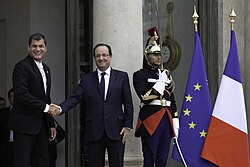
First Term and Constitutional Reform (2007–2009)
Upon taking office, Correa focused on restructuring the state. A pivotal moment was the establishment of a Constituent Assembly, which led to the adoption of the 2008 Constitution. Economically, his administration sought to reduce dependence on international lenders, notably paying off the last of Ecuador's debt to the International Monetary Fund (IMF) in April 2007.
Environmental policy became a cornerstone of his early term. He launched the Yasuní-ITT Initiative, a proposal to leave oil reserves in the Amazon rainforest untouched in exchange for international compensation to combat climate change.
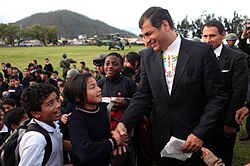
Second Term and Internal Crisis (2009–2013)
Correa's second term saw a mix of infrastructure development and social tension. He expanded healthcare and implemented the Higher Education Law. However, this period was also marked by the 2009 electricity crisis and significant mining protests.
In September 2010, Ecuador faced a severe political crisis when a police uprising occurred. Correa described the event as an attempted coup d'état, leading to a period of intense instability before order was restored.
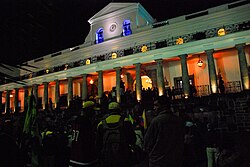
Third Term and Foreign Relations (2013–2017)
During his final term, Correa strengthened ties with other South American leaders and shifted strategic partnerships toward China, securing significant credits to fund national projects. He also maintained a high-profile presence in regional diplomacy as the head of UNASUR.
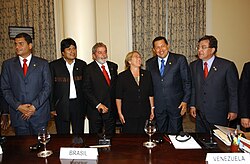
Diplomacy and International Relations
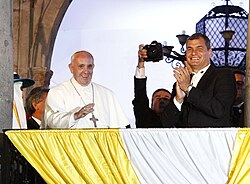
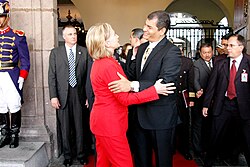
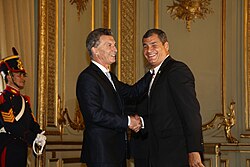
Correa's foreign policy was characterized by a desire for regional autonomy. He maintained close ties with leaders like Hugo Chávez of Venezuela and Evo Morales of Bolivia. While he engaged with global figures, including Pope Francis and various European heads of state, his relationship with the United States was often strained, eventually leading to a U.S. travel ban.
Summary of Presidential Administration
| Term | Period | Vice President | Key Focus/Event |
|---|---|---|---|
| First | 2007–2009 | Lenín Moreno | 2008 Constitution & IMF Debt Exit |
| Second | 2009–2013 | Lenín Moreno / Jorge Glas | UNASUR Presidency & 2010 Police Crisis |
| Third | 2013–2017 | Jorge Glas | Chinese Credits & Infrastructure |
Post-Presidency and Legal Challenges
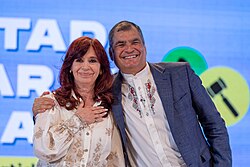
Following his departure from office in 2017, Correa's relationship with the Ecuadorian government soured. He entered a period of self-imposed exile in Belgium, where he requested political asylum in 2018. He has faced numerous legal battles in Ecuador, including convictions in absentia related to corruption and the Odebrecht scandal.
Frequently Asked Questions
What was the "Citizen Revolution"?
The Citizen Revolution was the political project led by Rafael Correa and the PAIS Alliance, aimed at transforming Ecuador's social and economic structures to reduce inequality and increase state sovereignty.
What was the Yasuní-ITT Initiative?
It was an environmental proposal to keep oil reserves in the Yasuní National Park underground to protect biodiversity and indigenous peoples, requesting that the international community compensate Ecuador for the lost revenue.
Why did Rafael Correa go into exile?
Correa moved to Belgium and sought asylum following legal proceedings and arrest orders issued by Ecuadorian courts regarding corruption allegations and the Odebrecht scandal.
Which international organization did Correa lead?
Rafael Correa served as the President of UNASUR (Union of South American Nations), promoting regional integration and cooperation among South American countries.
What was Correa's academic background?
He is an economist with a BA from the Catholic University of Guayaquil, an MA from UCLouvain, and a PhD from the University of Illinois at Urbana–Champaign.