Rafael Altamira y Crevea: The Legacy of a Spanish Historian and Jurist
Rafael Altamira y Crevea (1866–1951) stands as one of the most influential Spanish intellectuals of the 20th century. A man of immense curiosity and academic rigor, Altamira was not only a distinguished historian and jurist but also a scholar who bridged the gaps between journalism, pedagogy, politics, and literature.
Born in Alicante, Altamira dedicated his life to the pursuit of knowledge and the democratization of education. His work sought to define the Spanish identity and promote international cooperation during a period of significant global transition.
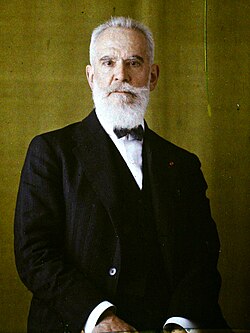
Key Facts
- Lifespan: February 10, 1866 – June 1, 1951.
- Primary Roles: Historian, jurist, and professor.
- Major Work: Historia de España y de la Civilización Española (1899).
- Educational Innovation: Co-founded the University Extension at the University of Oviedo.
- International Recognition: Nominated for the Nobel Peace Prize in 1933.
- Honors: Foreign Honorary Member of the American Academy of Arts and Sciences.
Defining the Spanish Ethos
Altamira's contribution to historiography is most prominently seen in his 1899 publication, Historia de España y de la Civilización Española. Written as a comprehensive manual for Spanish history, this work is celebrated for its graphic and vivid portrayal of the Spanish ethos—the characteristic spirit and cultural identity of the Spanish people.
Advancing Educational Accessibility
In 1898, Altamira and several colleagues from the Law School at the University of Oviedo pioneered a new structural approach to higher education by establishing the University Extension. This initiative was designed to break down the walls of academia, bringing university-level knowledge to social classes that previously lacked access to such education.
The University Extension utilized conferences, specialized courses, and various public activities to disseminate knowledge. This model was inspired by existing practices in English universities, as well as similar educational movements in Belgium and Germany.
International Diplomacy and Global Recognition
Altamira's influence extended far beyond the borders of Spain. He was a prolific lecturer, delivering courses and conferences at universities across the globe, including institutions in the United States, France, England, Peru, and Argentina.
His commitment to global stability led him to serve as a justice of The Hague Tribunal in the Netherlands. In this capacity, he focused his legal expertise on fostering international dialogue and working toward lasting peace. These efforts culminated in a nomination for the Nobel Peace Prize in 1933.
That same year, his academic and humanitarian contributions were recognized internationally when he was elected as a Foreign Honorary Member of the American Academy of Arts and Sciences.
Summary of Rafael Altamira's Career
| Category | Key Achievement / Role |
|---|---|
| Literature | Author of Historia de España y de la Civilización Española |
| Education | Co-founder of the University Extension (University of Oviedo) |
| Law | Justice of The Hague Tribunal |
| Global Reach | Lecturer in USA, France, England, Peru, and Argentina |
| Honors | Nobel Peace Prize nominee (1933) |
Frequently Asked Questions
What was the purpose of the University Extension founded by Altamira?
The University Extension was created to spread university-level knowledge to social classes that did not have traditional access to higher education through the use of courses and conferences.
Which major historical work is Rafael Altamira best known for?
He is best known for Historia de España y de la Civilización Española, published in 1899, which serves as a manual of Spanish history and a study of the Spanish ethos.
What role did Altamira play in international law?
Altamira served as a justice of The Hague Tribunal in the Netherlands, where he worked to promote international dialogue and peace.
When was Rafael Altamira nominated for the Nobel Peace Prize?
He was nominated for the Nobel Peace Prize in 1933, the same year he was elected to the American Academy of Arts and Sciences.
Where did Altamira lecture outside of Spain?
He gave courses and conferences in several countries, including Argentina, Peru, the USA, France, and England.