Radon Testing: Protocols, Action Levels, and Global Standards
The first and most critical step in reducing exposure to radon—a naturally occurring radioactive gas—is accurate testing. Because radiation cannot be entirely eliminated from the environment, health organizations and governments establish action levels. These are specific concentration thresholds that signal when radon levels in a building should be reduced to protect human health.
While radon can be found in both air and water, airborne radon is considered a more significant health threat. Consequently, the US Environmental Protection Agency (EPA) generally recommends against testing water unless air tests first indicate concentrations above the action level. However, in regions with higher-than-average levels, such as Maine, testing all well water is recommended.
Key Facts
- WHO Action Level: 100 Bq/m³ (2.7 pCi/L) for indoor air.
- US EPA Action Level: 4 pCi/L (148 Bq/m³).
- Health Canada Action Level: 200 Bq/m³.
- Testing Frequency: The EPA recommends all homes be tested at least once every five years.
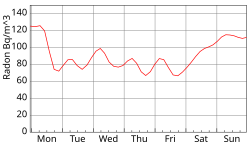
- Air Fluctuations: Radon levels change daily and seasonally based on weather, barometric pressure, and ventilation.
Methods of Radon Detection
Testing for airborne radon is performed using either passive or active devices. Passive collectors are common in commercial kits; these are placed on the lowest livable floor for 2 to 7 days and then sent to a laboratory. Long-term kits provide a more stable average by collecting data over 91 days to one year.
Other options include digital radon detectors that provide on-site results and specialized devices like the Lucas cell. While open land test kits exist to measure emissions before construction, the EPA does not recommend them as they cannot accurately predict final indoor levels.
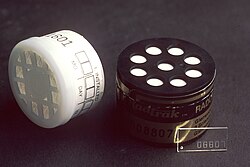
Short-Term vs. Long-Term Testing
Short-term tests (90 days or less) are ideal for quickly identifying unhealthy conditions. However, they can be influenced by transient weather, wind, and ventilation habits, such as opening windows or using exhaust fans.
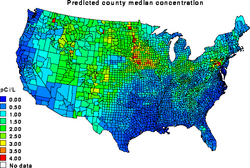
Radon Testing in the United States
In the US, ASTM E-2121 serves as the standard for reducing airborne radon to as far below 4 pCi/L as practicable, though some states aim for 2.0 pCi/L or less. The accuracy of these tests depends on maintaining "closed house conditions," meaning windows and doors must remain shut for at least two days.
Retesting and Mitigation
Retesting is essential in several scenarios to ensure safety and financial prudence:
- Pre-Mitigation: If initial results are between 4 and 10 pCi/L, a follow-up test is warranted. If results exceed 10 pCi/L, a second short-term test is recommended to avoid delaying abatement.
- Post-Mitigation: Testing after a system is installed or repaired (e.g., replacing a fan) ensures the system is functioning correctly.
- Maintenance: The EPA recommends retesting homes with known radon problems every two years.
Legal and Professional Standards
Radon disclosure is becoming a legal requirement in the US, with 37 states requiring sellers to disclose known radon levels. Additionally, over half of state legislatures have integrated radon requirements into building codes. Professional certification for service providers, once managed by the EPA, is now administered by the American Association of Radon Scientists and Technologists (AARST) via the National Radon Proficiency Program (NRPP).
International Testing Standards
Canada
Health Canada suggests annual testing, either through a professional or quarterly home-test kits. The Canadian action level was originally 800 Bq/m³ but was reduced to 200 Bq/m³ in October 2006.
United Kingdom and Norway
In the UK, radon testing is managed by UKradon and the UKHSA. In Norway, the Norwegian Radiation and Nuclear Safety Authority (DSA) governs measurements in residential and rental dwellings under the Radiation Protection Regulations.
Summary of Global Radon Action Levels
| Organization/Country | Action Level (Bq/m³) | Action Level (pCi/L) |
|---|---|---|
| World Health Organization (WHO) | 100 | 2.7 |
| United States (EPA) | 148 | 4.0 |
| Canada (Health Canada) | 200 | ~5.4 |
Frequently Asked Questions
How often should I test my home for radon?
The US EPA recommends that all homes be tested at least once every five years. For homes that have already experienced radon problems and have mitigation systems, retesting should occur every two years.
Can I test for radon in my drinking water?
The US EPA suggests testing water only if air tests show concentrations above the action level. However, in certain high-risk states like Maine, it is recommended that all well water be tested regardless of air levels.
Why do radon levels change throughout the week?
Radon concentrations fluctuate naturally due to seasonal changes, daily weather patterns, barometric pressure, and the amount of ventilation (such as open windows) in the building.
What is a "closed house condition"?
A closed house condition occurs when occupants keep windows and exterior doors closed for a specific period (usually two days or more) during a test to ensure the measurement accurately reflects the indoor radon concentration.
What happens if my radon test is between 4 and 10 pCi/L?
Measurements in this range warrant a follow-up short-term or long-term test before proceeding with expensive mitigation system installations.