Radiative Cooling: Harnessing the Coldness of Space for Sustainable Thermal Management
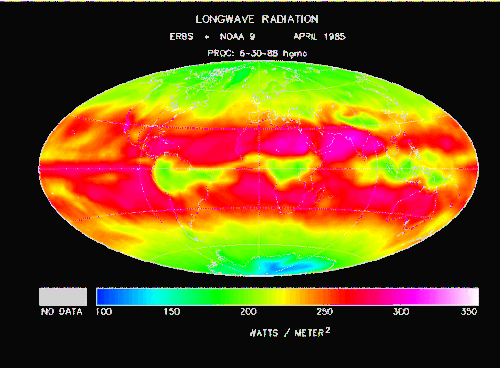
Every physical object in the universe is constantly emitting electromagnetic radiation, a phenomenon described by Planck's law. When a body loses heat through this thermal radiation, the process is known as radiative cooling. While this is a fundamental law of physics, recent scientific breakthroughs have transformed it from a natural occurrence into a powerful tool for energy efficiency and climate mitigation.
Historically, humans have utilized radiative cooling in diverse ways, from the ancient ice-making techniques of India and Iran to the sophisticated heat shields protecting modern spacecraft. However, the most significant leap occurred in 2014, when the development of photonic metamaterials—engineered materials designed to manipulate light—made passive daytime radiative cooling (PDRC) possible. This technology allows surfaces to cool down even under direct sunlight, offering a promising strategy to combat global warming and the urban heat island effect.
Key Facts
- The Infrared Window: Radiative cooling relies on the 8–13 μm wavelength range, where infrared radiation can pass through dry, clear air into space.
- Sub-Ambient Cooling: Advanced materials can achieve temperatures several degrees below the surrounding air, even during the day.
- Solar Reflectance: To work in sunlight, materials must reflect 95% or more of solar radiation (200 nm to 2.5 μm).
- Space Temperature: Outer space acts as a massive heat sink, radiating at approximately 3 K (−270.15 °C).
- Climate Potential: Covering a small fraction of Earth's land mass with these materials could potentially stabilize or reduce global temperatures.
The Mechanism of Terrestrial Radiative Cooling
The Earth's atmosphere acts as a selective filter. While it blocks many wavelengths, there is a specific "atmospheric transmission window" between 8 and 13 micrometers (μm). Materials designed to emit thermal radiation specifically within this window can "dump" heat directly into the freezing void of outer space.
For a material to provide cooling during the day, it must solve a dual challenge: it must maximize the emission of longwave infrared radiation while minimizing the absorption of solar energy. If a material reflects 95% or more of sunlight, it can maintain a cooling effect even when exposed to the sun's intense radiation.

Nocturnal Cooling and the Atmospheric Effect
The reality of radiative cooling can be felt on a clear night. If you look up at a cloudless sky, your skin loses heat to the cosmos. However, if you place a sheet of paper between your face and the sky, your skin feels warmer. This is not because the paper "blocks the cold," but because the paper (at roughly 300 K) radiates more heat back toward your face than the darkened cosmos does. This effect is moderated by water vapor in the atmosphere, which makes the apparent temperature of the sky warmer than the actual temperature of deep space.
Practical Applications in Architecture and Engineering
The integration of radiative cooling into the built environment offers a way to reduce reliance on energy-intensive air conditioning.
Cool Roofs and Advanced Coatings
The most widespread application is the cool roof. Traditional white roof paints use dielectric pigments like titanium dioxide or zinc oxide to achieve high solar reflectance (up to 0.94) and thermal emittance (up to 0.96). However, because these pigments absorb some ultraviolet radiation, their reflectance is capped at 0.95.
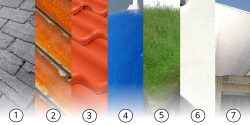
Recent innovations have pushed these limits further. Researchers have developed porous polymer coatings that scatter sunlight more effectively, achieving solar reflectances of 0.96–0.99 and cooling powers of 96 W/m, resulting in temperatures 6 °C below the ambient air. Other high-performance options include silvered polymer films and polymers embedded with resonant polar silica microspheres, the latter of which allows for economical roll-to-roll manufacturing.
Building-Scale Systems
Beyond simple paints, active hydronic systems are being tested. In Arganda del Rey, Spain, a radiant-capacitive cooling system—combining sky-exposed radiators and thermal energy storage—achieved average cooling potentials of 84.9 W/m² and reduced indoor temperatures by up to 8.7 K, even when ambient temperatures approached 40 °C.
Radiative Cooling in Space Exploration
In the vacuum of space, radiative cooling is the primary method of thermal management. The James Webb Space Telescope is a prime example; it utilizes a massive reflective sunshield to block radiation from the Sun, Earth, and Moon. This allows the telescope's structure, kept in permanent shadow, to radiate its own heat away until it reaches an operational temperature of approximately 50 K.
Summary of Radiative Cooling Technologies
| Technology | Solar Reflectance | Thermal Emittance | Key Benefit/Performance |
|---|---|---|---|
| Standard White Paint | Up to 0.94 | Up to 0.96 | Common, low cost |
| Porous Polymer Coatings | 0.96 – 0.99 | 0.97 | 6 °C sub-ambient cooling |
| Silvered Polymer Films | 0.97 | 0.96 | 11 °C cooler than white paint |
| Silica Microsphere Polymers | High | 0.93 | Economical roll-to-roll production |
| Hydronic Systems (Spain) | N/A | N/A | 8.7 K indoor temp reduction |
Frequently Asked Questions
What is passive daytime radiative cooling (PDRC)?
PDRC is a process where specially engineered materials reflect almost all sunlight while simultaneously emitting heat as infrared radiation through the atmosphere's "window" into space, allowing a surface to cool down even under direct sunlight without using electricity.
How does the 8–13 μm wavelength range help in cooling?
This specific range is known as the atmospheric transmission window. Unlike other wavelengths that are absorbed by greenhouse gases or water vapor, radiation in the 8–13 μm range can pass through the atmosphere relatively unimpeded, allowing heat to escape directly into the cold void of space.
Can radiative cooling actually fight global warming?
Yes, potentially. By increasing the amount of heat the Earth radiates back into space, these materials can reduce the net radiative flux. Some estimates suggest that covering a small percentage of Earth's land mass (or a larger portion of urban areas) could help stabilize or lower global temperatures.
Why is a white roof better than a dark roof for cooling?
White roofs have a higher albedo, meaning they reflect a larger portion of solar radiation. This prevents the roof from absorbing heat in the first place, which reduces the cooling load for the building and lowers energy costs.
How does the James Webb Space Telescope use this technology?
The telescope uses a large reflective sunshield to block external heat sources. Once shielded, the telescope's components lose their heat via thermal radiation into the vacuum of space, allowing it to reach the ultra-cold temperatures necessary for its instruments to function.