Race Winners History: A Legacy of Long-Distance Excellence
The history of this prestigious long-distance event spans over five decades, evolving from its inaugural race in 1958 to its 55th edition in 2012. The competition has served as a showcase for elite endurance athletes, transitioning through various distances including the marathon (42.195 km), 30 km, and 20 km formats. Over the years, the podiums have been dominated by a mix of local Japanese talent and international powerhouses, particularly from Kenya.
Key Facts
- Longest Tenure: The event has run for 55 editions, starting in 1958.
- Women's Record: Catherine Ndereba holds the record for the most women's victories with three wins.
- Men's Dominance: Kenyan athletes have been a dominant force in the men's category in the 21st century.
- Course Evolution: The race has utilized different distance formats, including the full marathon and shorter 20 km and 30 km distances.
The Evolution of the Men's Competition
In the early decades, the race was primarily won by Japanese athletes. From the first winner, Masao Suzuki in 1958, through the 1970s and early 80s, local runners like Morio Shigematsu and Yutaka Taketomi set the standard. However, the late 1980s saw the arrival of international contenders, most notably Juma Ikangaa of Tanzania, who secured three consecutive victories from 1988 to 1990.
The 1990s and 2000s marked a shift toward Kenyan dominance. Stephen Mayaka achieved a hat-trick of wins between 1995 and 1997, and Mekubo Mogusu later secured three titles in 2005, 2007, and 2008. The men's competition reached a peak of speed in 2007 when Mogusu clocked a time of 59:54.
The Rise of the Women's Field
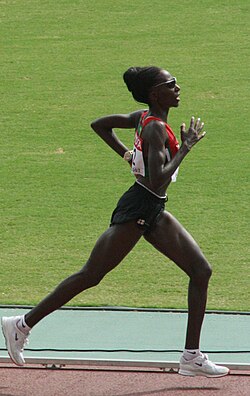
The women's race has seen a fierce rivalry between Japanese and international athletes. Catherine Ndereba of Kenya established herself as a legendary figure in the event, winning a record three times in 2002, 2003, and 2005.
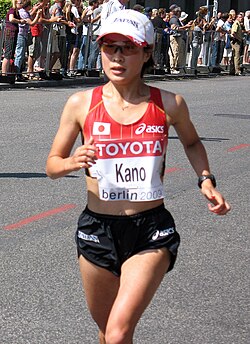
Japanese runners have also maintained a strong presence. Yuri Kanō proved her consistency by winning the title in both 2008 and 2010.
Other notable performances include Mizuki Noguchi, who won back-to-back titles in 2006 and 2007, and Lidia Șimon of Romania, who claimed victory in 1999 and 2001.
Historical Performance Summary
The following table provides a snapshot of the winners from the most recent editions (2007–2012), highlighting the competitive times achieved during this era.
| Edition | Year | Men's Winner | Men's Time | Women's Winner | Women's Time |
|---|---|---|---|---|---|
| 55th | 2012 | Martin Mathathi (KEN) | 1:01:35 | Mai Ito (JPN) | 1:10:52 |
| 54th | 2011 | Cyrus Njui (KEN) | 1:01:47 | Florence Kiplagat (KEN) | 1:10:29 |
| 53rd | 2010 | Cyrus Njui (KEN) | 1:01:20 | Yuri Kanō (JPN) | 1:11:46 |
| 52nd | 2009 | Gedion Ngatuny (KEN) | 1:00:39 | Yurika Nakamura (JPN) | 1:09:20 |
| 51st | 2008 | Mekubo Mogusu (KEN) | 1:00:52 | Yuri Kanō (JPN) | 1:08:57 |
| 50th | 2007 | Mekubo Mogusu (KEN) | 59:54 | Mizuki Noguchi (JPN) | 1:08:22 |
Frequently Asked Questions
Who has won the women's race the most times?
Catherine Ndereba from Kenya holds the record for the most women's victories, having won the race three times.
Which male athlete won three consecutive titles in the late 80s?
Juma Ikangaa of Tanzania won three consecutive titles from 1988 to 1990.
What was the fastest men's time recorded in the 2007-2012 period?
The fastest time in that period was 59:54, achieved by Mekubo Mogusu in 2007.
Has the race distance always been the same?
No, the event has featured different distances over its history, including the full marathon, 30 km, and 20 km.
Which countries have had the most successful runners?
Japan and Kenya have been the most successful nations, with Japan dominating the early years and Kenya becoming a powerhouse in the later editions.