Quranic Inimitability and the Debate Over Literary and Scientific Miracles
The literary quality of the Quran has long been a subject of intense study and admiration among both Muslim and non-Muslim scholars. Central to this discussion is the concept of I'jaz, or inimitability—the belief that the Quran possesses a unique quality that surpasses all human production. While some historians attribute the early success of Islam to social or military factors, many Muslim sources argue that the text's sheer eloquence was the decisive factor in the adoption of the Islamic creed during the 7th century.
At the time of Muhammad, the Arabian Peninsula possessed a thriving poetic tradition. Despite being unlettered, Muhammad presented a text that scholars like Afnan Fatani contend was superior to any existing poetry or oratory. While some early critics rejected the Quran's monotheistic ideas, the text's linguistic power remained a point of contention and study.
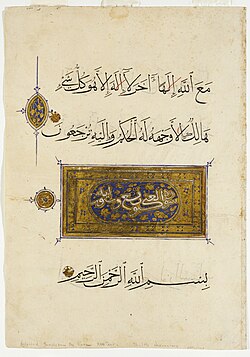
Key Facts
- I'jaz refers to the doctrine of the Quran's inimitability, suggesting it cannot be replicated by humans.
- Abd al-Qahir al-Jurjani argued that eloquence stems from the stylistic arrangement and the "meaning of the meaning."
- Al-Baqillani viewed the Quran as creating an entirely new genre of expression rather than just improving existing forms.
- Scientific I'jaz is a modern movement claiming the Quran predicts scientific facts, though this is heavily debated.
- Ummi is the Arabic term used to describe Muhammad as "illiterate" or "unlettered," emphasizing his role as a medium for revelation.
Classical Perspectives on Literary Excellence
Islamic literary criticism has produced numerous works examining the style and structure of the Quran. These scholars sought to explain why the text was considered inimitable, with theories ranging from linguistic structure to divine intervention.
The Linguistic Approach
Abd al-Qahir al-Jurjani (d. 1078 CE), in his seminal work Dalāʾil al-Iʿjāz, proposed that the Quran's excellence lies in its stylistic composition. He rejected the separation of words (alfaz) and meaning (ma'ani), arguing that meaning determines the quality of style. Jurjani introduced the concept of the "meaning of the meaning," distinguishing between meanings that appeal to the intellect and those that appeal to the imagination.
Genre and Content
Other scholars focused on different aspects of the text. Al-Baqillani (d. 1013 CE) argued that the Quran did not simply excel in existing poetry or prose but created a new genre entirely. Conversely, Ibrahim al-Nazzam (d. 846 CE) and Al-Murtaza (d. 1044 CE) suggested that the supremacy of the Quran lay in its divine content and knowledge rather than its linguistic style.
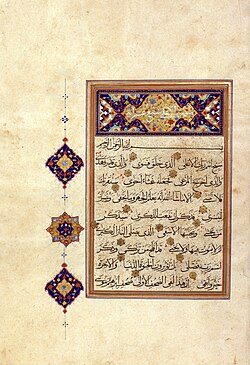
The Doctrine of Sarfah
Some theorists proposed the doctrine of sarfah, the idea that God performed a miracle to prevent humans from producing a rival text. However, Al-Qadi Abd al-Jabbar (d. 1025 CE) rejected this, arguing that sarfah would make the miracle about the prevention rather than the Quran itself. He believed the lack of competition was due to the recognized impossibility of matching the text's quality.
The Debate Over Scientific Miracles
In recent times, a movement has emerged claiming that the Quran contains scientific theories discovered only in the modern era, such as plate tectonics, the expansion of the universe, and human evolution. Proponents like Maurice Bucaille argue that the Quran does not contradict modern science and that such knowledge could not have been produced by a human in the 7th century.
However, this approach is widely criticized by the scientific community and many mainstream Islamic scholars. Critics argue that these interpretations require "mental gymnastics" and that the verses are often allegorical or poetic rather than scientific. Ziauddin Sardar and Nidhal Guessoum point out that verses encouraging reflection on nature are often incorrectly transformed into scientific claims, such as interpreting references to stars as descriptions of black holes.
![Ziauddin Sardar; "According to some Muslim scholars, everything from genetics to robotics and space travel is described in the Quran. What nonsense".[30]](/images/ae/ef/aeefeee41da7e42c624c20738c630c65b6312a119af9868faf17cc21b0bc5f39.jpg)
Diverse Interpretations
Mustansir Mir suggests a multi-level approach to interpretation, noting that a phrase may hold one meaning for an audience in one age and another meaning for a subsequent generation without negating the first. This contrasts with the view of Ali Talib, who notes that while science is probabilistic and ever-changing, the Quran deals in absolute certainty.
The Significance of Muhammad's Illiteracy
In Islamic theology, the fact that Muhammad was ummi (illiterate) is central to the claim of the Quran's divine origin. The argument is that an uneducated man could not have authored a text of such linguistic complexity. This is supported by verses 7:158, 29:48, and 62:2.
While traditional views emphasize total illiteracy, some historical records mention Muhammad using scribes for correspondence or making minor changes to a signature during a peace treaty. Despite these accounts, theologians like Fakhr Al-Razi argue that Muhammad's lack of formal education and absence from scholarly centers like Mecca prove he did not study previous scriptures or learn from human teachers.
Summary of Scholarly Views on Inimitability
| Scholar/Group | Primary Focus | Core Argument |
|---|---|---|
| Abd al-Qahir al-Jurjani | Linguistic/Stylistic | Eloquence resides in the stylistic arrangement and "meaning of the meaning." |
| Al-Baqillani | Genre | The Quran created a new, unclassifiable genre of expression. |
| Ibrahim al-Nazzam | Content | Supremacy lies in the divine knowledge contained within the text. |
| Maurice Bucaille | Scientific | Compatibility with modern science proves divine origin. |
| Ziauddin Sardar | Reflective | Verses encourage observation of nature rather than providing scientific data. |
Frequently Asked Questions
What is the meaning of I'jaz in the context of the Quran?
I'jaz refers to the inimitability of the Quran, the belief that its linguistic beauty, structure, and content are so superior that no human could possibly produce a work like it.
How do critics view the claim of scientific miracles in the Quran?
Critics argue that these claims often rely on distorting poetic or allegorical verses to fit modern scientific discoveries, asserting that the text contains fallacies when read as a scientific document.
What does the term "ummi" imply about the Prophet Muhammad?
The term "ummi" is generally translated as illiterate or unlettered. In theology, this emphasizes that Muhammad was a transparent medium for revelation, as he lacked the formal education to compose the text himself.
What is the doctrine of sarfah?
Sarfah is the theory that God supernaturally prevented people from creating a rival to the Quran, even if they had the ability to do so. This view is less popular than the belief that the text is inherently inimitable.
How did Abd al-Qahir al-Jurjani define eloquence?
Jurjani argued that eloquence is not merely correct grammar or a choice of words, but a special quality in the stylistic arrangement and the way meanings are realized within the text.