Quirino Cristiani: The Forgotten Pioneer of Feature Animation
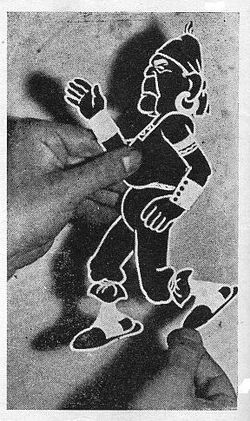
Long before the global dominance of Disney, a visionary artist in Argentina was rewriting the rules of cinema. Quirino Cristiani (1896–1984) was an Italian-born Argentine director and cartoonist who achieved several world firsts in the realm of animation. He created the world's first two animated feature films and the first animated feature with sound, utilizing a unique technique involving cardboard cutouts.
Despite his groundbreaking contributions, Cristiani's legacy is shrouded in tragedy. The only existing copies of his most significant works were destroyed by fire, leaving historians to piece together his achievements through records and memories.
Key Facts
- World Firsts: Created the first two animated feature films and the first sound-integrated animated feature.
- Signature Technique: Pioneered the use of cardboard cutouts for full-length animation.
- Political Satire: Much of his early work focused on satirizing Argentine President Hipólito Yrigoyen.
- Lost Legacy: His major feature films were lost in separate fires in 1926, 1957, and 1961.
Early Life and Artistic Beginnings
Born on July 2, 1896, in Santa Giuletta, Italy, Quirino Cristiani moved to Buenos Aires, Argentina, in 1900. Growing up in the vibrant, politically charged atmosphere of the city, he identified strongly as a porteño (a native of the port of Buenos Aires). His early passion for drawing led him to the Academy of Fine Arts and eventually to a career publishing political caricatures in local newspapers.
The Birth of Feature Animation: El Apóstol
Cristiani's career took a pivotal turn when he met Federico Valle, a producer and pioneer of aerial cinematography. Valle introduced Cristiani to the techniques of Émile Cohl, and by 1916, Cristiani produced his first short, La Intervención en la provincia de Buenos Aires. This film introduced his lifelong preference for cardboard cutout animation.
Building on this success, Cristiani embarked on an ambitious project: El Apóstol (The Apostle). Premiering on November 9, 1917, this 70-minute satire consisted of 58,000 frames. The plot depicted President Hipólito Yrigoyen ascending to heaven to cleanse Buenos Aires of corruption using Jupiter's thunderbolts. While the film was a success, it was tragically destroyed in a 1926 fire.
Political Conflict and Sin dejar rastros
In 1918, Cristiani released his second feature, Sin dejar rastros (Leaving No Trace). The film targeted a diplomatic scandal involving Baron von Luxburg, a German commander who had attempted to manipulate Argentina into joining World War I. The film was so provocative that President Yrigoyen ordered the Ministry of Foreign Affairs to confiscate it the day after its premiere.
Following this period of censorship, Cristiani diversified his work. He founded Publi-Cinema, an advertising company where he created commercial cartoons. He famously traveled to impoverished neighborhoods, screening Charlie Chaplin shorts interspersed with his own animations—a venture so popular it was eventually shut down by police for disturbing the peace.
Peludópolis and the Transition to Sound
In 1928, following the re-election of Hipólito Yrigoyen, Cristiani began work on Peludópolis. This film was a fable featuring a floating city beset by sharks, representing the corrupt leaders of the Radical party. Notably, Cristiani integrated sound into the film using a primitive sound-on-disc system.
Production was interrupted by a 1930 military coup that ousted Yrigoyen. To avoid persecution, Cristiani revised the plot to portray the military generals as heroes and introduced a character named Juan Pueblo to serve as the film's moral center. The film premiered on September 16, 1931, but like his previous features, the only prints were eventually lost to fire.
Later Years and Legacy
As the animation industry evolved, Cristiani found it impossible to compete with the massive budgets and technological advantages of Walt Disney. He eventually converted his studio into a dubbing and subtitling laboratory. Despite this, he remained a respected figure; when Walt Disney visited Argentina, Cristiani shared his work with him and introduced him to the cartoonist Molina Campos.
Cristiani passed away in Bernal, Argentina, on August 2, 1984. Though his films are gone, he is remembered as the man who anticipated the feature-length animation revolution.
Summary of Major Works
| Year | Title | Significance | Status |
|---|---|---|---|
| 1917 | El Apóstol | World's first animated feature film | Lost |
| 1918 | Sin dejar rastros | World's second animated feature film | Lost |
| 1931 | Peludópolis | First animated feature with sound | Lost |
| 1923 | Firpo-Dempsey | Sports-themed animated short | Unknown |
Frequently Asked Questions
Why is Quirino Cristiani considered a pioneer?
He is credited with creating the first two animated feature-length films in history and the first animated feature to incorporate sound, predating many of the industry's most famous milestones.
What was the "cardboard cutout" technique?
Instead of drawing every frame by hand on celluloid, Cristiani used articulated figures cut from cardboard, which he moved incrementally to create the illusion of motion.
What happened to his films?
Tragically, the only copies of his major feature films were destroyed in a series of fires occurring in 1926, 1957, and 1961.
Who was "Peludo"?
"Peludo" (meaning Armadillo) was the satirical nickname given to President Hipólito Yrigoyen due to his reclusive personality, and he served as the primary subject of Cristiani's early satires.
Did he ever interact with Walt Disney?
Yes, when Walt Disney toured Latin America, Cristiani showed him his films and introduced him to the artist Molina Campos, who influenced the gaucho segments in Disney's Saludos Amigos.