Quetta: The High-Altitude Fruit Garden of Pakistan
Nestled within a valley surrounded by towering mountains, Quetta serves as the capital and largest city of the Balochistan province in Pakistan. Known for its strategic location and unique geography, it is the ninth largest city in the country and holds the distinction of being Pakistan's highest-altitude major city, sitting at an average elevation of 1,680 metres (5,510 feet) above sea level.
Historically, the Quetta Valley was inhabited by Pashtun tribes, including the Kasi, forming a cultural bridge between southern Afghanistan and northern Balochistan. Today, the city is affectionately nicknamed the "Fruit Garden of Pakistan" due to its lush orchards and the wide variety of fresh and dried fruits produced in the region.
Key Facts
- Status: Capital of Balochistan Province, Pakistan.
- Population: Approximately 1,565,546 (2023 Census).
- Elevation: 1,680 metres (5,510 feet), the highest major city in Pakistan.
- Climate: Cold semi-arid (Köppen BSk).
- Nickname: Fruit Garden of Pakistan.
- Diversity: A multi-ethnic hub with Pashtun, Baloch, Hazara, and Brahui populations.
Geography and Climate
Quetta's location in a mountain-ringed valley creates a cold semi-arid climate, characterized by significant temperature swings between seasons. Unlike the eastern regions of Pakistan, Quetta does not experience a traditional monsoon season of heavy rainfall.
Seasonal Variations
- Summer (Late May to Early September): Average temperatures range from 24 to 26 °C. The record high was 42 °C, set on July 10, 1998.
- Autumn (Mid-September to Mid-November): Mild temperatures typically between 12 and 18 °C.
- Winter (Late November to Late February): Cold temperatures averaging 4 to 5 °C. The record low reached −18.3 °C on January 8, 1970.
- Spring (Early March to Mid-May): Average temperatures hover around 15 °C.
Snowfall in Quetta is erratic. While some years see no snow, others experience heavy accumulation; for instance, in February 2008, the city recorded 25.4 centimetres (10 inches) of snow in just 10 hours.
Demographics and Culture
Quetta is one of Pakistan's most ethnically diverse urban centers. While it has a Pashtun plurality, the city is home to significant populations of Balochs, Hazaras, Brahui, Sindhis, Saraikis, Punjabis, and Urdu-speakers. Urdu serves as the lingua franca, enabling communication across these diverse linguistic groups.
The Hazara community is particularly prominent, with estimates suggesting between 500,000 and 600,000 Hazaras reside in Quetta and its surrounding areas.
| Year | Population | Growth (%) |
|---|---|---|
| 1941 | 65,000 | — |
| 1961 | 107,000 | +27.4% (from 1951) |
| 1981 | 286,000 | +81.0% (from 1972) |
| 2017 | 1,001,205 | +77.2% (from 1998) |
| 2023 | 1,565,546 | +56.4% (from 2017) |
Infrastructure and Transportation
Transportation in Quetta is anchored by its historic railway and road networks. The Quetta Railway Station, built during the British Raj, is one of the highest stations in the country at 1,676 metres.
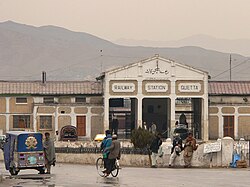
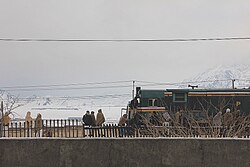
The railway connects Quetta to major Pakistani hubs: Karachi (863 km), Lahore (1,170 km), and Peshawar (1,587 km). Additionally, a metalled road runs parallel to the railway, linking the city to Karachi via Sibi, Jacobabad, and Rohri.
Education and Sports
Quetta is a center for higher learning in Balochistan, hosting institutions such as the University of Balochistan, Bolan Medical College, and the Balochistan University of Information Technology, Engineering and Management Sciences (BUITEMS). It also houses the Pakistan Command and Staff College.
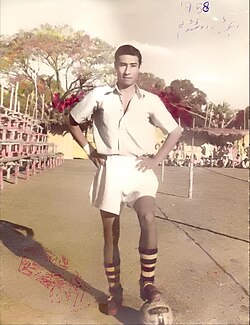
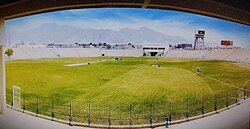
Sports are a vital part of the city's culture. Football is particularly popular, with facilities like the Qayyum Papa Stadium—named after national captain Qayyum Changezi—and the Bugti Stadium, which serves as the home of the Quetta Gladiators.
Frequently Asked Questions
Why is Quetta called the "Fruit Garden of Pakistan"?
Quetta earned this nickname because of its numerous fruit orchards and the high quality and variety of both fresh and dried fruits produced in the region.
What is the highest temperature ever recorded in Quetta?
The highest recorded temperature in Quetta was 42 °C (108 °F), which occurred on July 10, 1998.
Which ethnic groups primarily inhabit Quetta?
Quetta is ethnically diverse, with a Pashtun plurality followed by Baloch, Hazara, and Brahui populations, as well as Sindhis, Saraikis, Punjabis, and Urdu-speakers.
How high is Quetta's elevation?
Quetta is situated at an average elevation of 1,680 metres (5,510 feet), making it the highest-altitude major city in Pakistan.
What is the primary language used for communication in Quetta?
While many local languages are spoken, Urdu is the national language and serves as the lingua franca understood by all residents.