Quantum Electrodynamics: The Jewel of Physics and the Interaction of Light and Matter
Quantum Electrodynamics (QED) is the relativistic quantum field theory that describes how light and matter interact. It represents the first successful synthesis of quantum mechanics and special relativity, providing a complete mathematical account of how electrically charged particles interact through the exchange of photons. In essence, QED is the quantum counterpart to classical electromagnetism.
Often described by Richard Feynman as "the jewel of physics," QED is renowned for its extraordinary predictive power. It has produced some of the most precise agreements between theory and experiment in all of science, specifically regarding the Lamb shift in hydrogen energy levels and the anomalous magnetic moment of the electron. However, the theory is not without its mysteries; the discrepancy between QED's prediction of vacuum zero energy and observed values is staggering—a difference of 10120 known as the cosmological constant problem or the vacuum catastrophe.
Key Facts
- Core Function: Describes the interaction between light (photons) and matter (charged particles).
- Scientific Status: The most stringently tested and precise theory in physics.
- Foundational Synthesis: Achieves full agreement between special relativity and quantum mechanics.
- Key Mechanism: Uses the exchange of photons to mediate interactions between charged particles.
- Legacy: Served as the template for subsequent theories like Quantum Chromodynamics (QCD) and the electroweak theory.
The Evolution of QED
Early Formulations and the Problem of Infinities
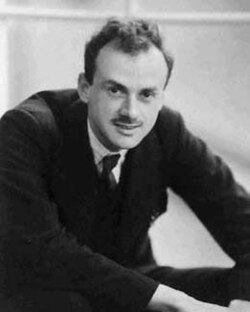
The origins of QED date back to the 1920s with Paul Dirac, who computed the coefficient of spontaneous emission of an atom and coined the term "quantum electrodynamics." Dirac conceptualized the quantization of the electromagnetic field as an ensemble of harmonic oscillators, introducing creation and annihilation operators.
Throughout the 1930s, contributions from physicists such as Wolfgang Pauli, Werner Heisenberg, and Enrico Fermi suggested that any physical process involving photons and charged particles could be computed. However, researchers including Felix Bloch, Arnold Nordsieck, and Victor Weisskopf discovered a critical flaw: while first-order computations were reliable, higher-order calculations resulted in infinities. This suggested a fundamental incompatibility between special relativity and quantum mechanics.
The Breakthrough of Renormalization
By the late 1940s, advancements in microwave technology allowed for precise measurements of the Lamb shift (the shift in hydrogen atom energy levels) and the electron's magnetic moment, exposing gaps in existing theory. In 1947, Hans Bethe provided a pivotal insight by performing a non-relativistic computation of the Lamb shift.
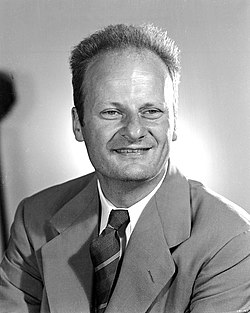
Bethe's solution was to "absorb" the infinities into the mass and charge of the particle, which were then fixed to finite values based on experimental data. This process, known as renormalization, allowed physicists to obtain finite, accurate results. This work was further developed into fully covariant formulations by Shin'ichirō Tomonaga, Julian Schwinger, and Richard Feynman, who jointly received the 1965 Nobel Prize in Physics. Freeman Dyson later proved that Feynman's diagrammatic approach and the operator-based methods of Schwinger and Tomonaga were mathematically equivalent.

Feynman's Conceptual Approach to QED
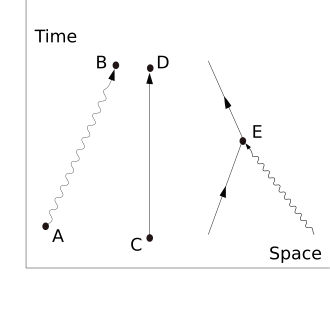
Richard Feynman simplified the complexities of QED for a broader audience, focusing on three basic actions: a photon moving through space-time, an electron moving through space-time, and an electron emitting or absorbing a photon.
Probability Amplitudes and Arrows
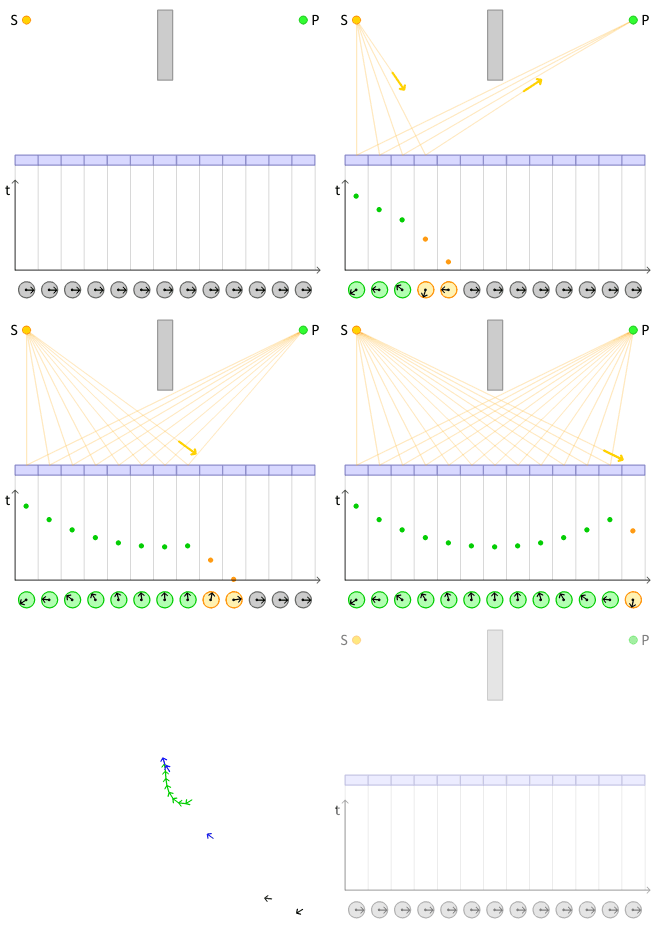
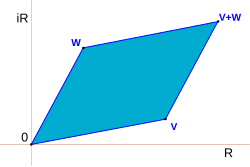
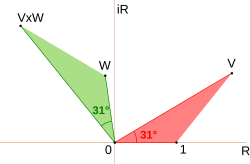
In QED, probabilities are not calculated directly. Instead, they are derived from probability amplitudes, which are complex numbers. To visualize this, Feynman replaced complex numbers with spinning arrows. The total probability of an event is the square of the length of the final arrow, which is the sum of all possible arrows (paths) the particle could have taken.
Feynman Diagrams
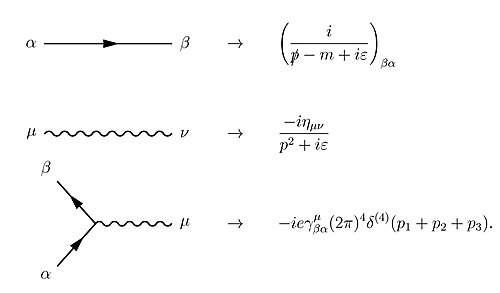
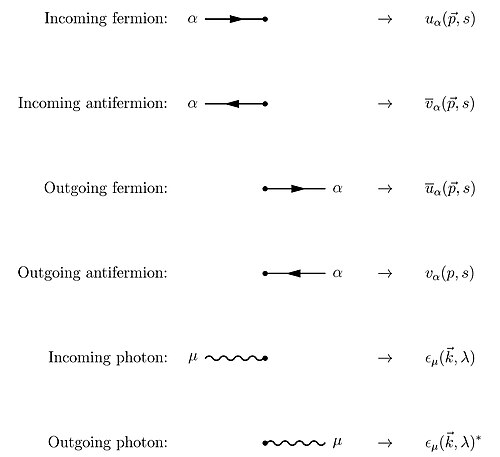
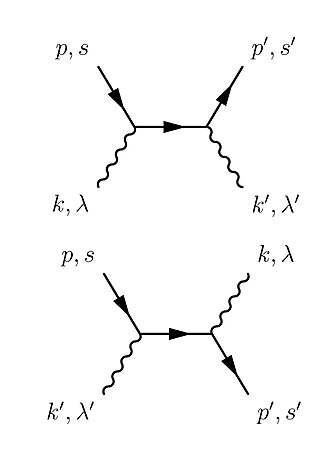
Feynman introduced a visual shorthand known as Feynman diagrams to represent the mathematical terms of the S-matrix (the matrix that describes how a system evolves from an initial to a final state). These diagrams make the computation of probability amplitudes straightforward.
A classic example is Compton scattering, where an electron and a photon undergo elastic scattering. By drawing the corresponding diagrams, physicists can calculate the cross-section of the scattering event.

Mathematical Framework
Mathematically, QED is an abelian gauge theory with the symmetry group U(1) defined on Minkowski space. The interaction is mediated by the electromagnetic field, which acts as the gauge field for charged spin-1/2 fields. The theory is defined by the QED Lagrangian, which leads to the equations of motion for both the electron field (ψ) and the electromagnetic field (Aμ).
The theory also addresses complex phenomena such as vacuum polarization and electron self-energy, which are represented by loops in Feynman diagrams.

While renormalization makes the theory practically successful, it remains a point of theoretical tension. Feynman himself was famously skeptical of its mathematical validity, referring to the process as a "shell game" or "hocus pocus."
Summary of QED Fundamentals
| Feature | Description |
|---|---|
| Primary Interaction | Electromagnetic interaction between charged particles. |
| Mediating Particle | Photon (spin-1). |
| Key Mathematical Tool | Feynman Diagrams and Probability Amplitudes. |
| Critical Technique | Renormalization (handling infinities). |
| Major Successes | Lamb shift, anomalous magnetic moment of the electron. |
| Major Conflict | Cosmological constant problem (vacuum energy). |
Frequently Asked Questions
What exactly is Quantum Electrodynamics?
QED is the relativistic quantum field theory that describes how light and matter interact. It explains how electrically charged particles, like electrons, interact by exchanging photons.
Why is renormalization necessary in QED?
Renormalization is used to resolve the problem of infinities that appear in higher-order perturbation calculations. By absorbing these infinities into physical constants like mass and charge, physicists can obtain finite, experimentally accurate results.
What are Feynman diagrams?
Feynman diagrams are visual representations of the mathematical expressions used to calculate the probability amplitudes of particle interactions. They simplify the complex bookkeeping of quantum field theory.
How does QED relate to other physics theories?
QED served as the model for all subsequent quantum field theories. It led to the development of Quantum Chromodynamics (QCD) and was later merged with the weak nuclear force to create the electroweak theory.
What is the "vacuum catastrophe"?
The vacuum catastrophe, or cosmological constant problem, is the massive discrepancy (10120) between the vacuum zero energy predicted by QED and the energy density actually observed in the universe.