Understanding the Quaking Aspen: North America's Most Widely Distributed Tree
Across the vast landscapes of North America, from the frost-touched reaches of Canada to the high elevations of central Mexico, one tree stands out for its unique ability to dance in the wind. The quaking aspen (*Populus tremuloides*) is a resilient, fast-growing deciduous tree that defines entire ecosystems, most notably the aspen parkland biome in the Canadian Prairie Provinces and northwest Minnesota.
Often referred to by many names—including trembling aspen, American aspen, mountain aspen, or golden aspen—this species is a cornerstone of the continent's biodiversity. Whether it is the shimmering gold of its autumn leaves or its remarkable ability to form massive, ancient colonies, the quaking aspen is a biological marvel.
Key Facts
- Scientific Name: Populus tremuloides
- Distribution: Found from Canada to central Mexico.
- Growth Habit: Primarily propagates through root sprouts to form large clonal colonies.
- Lifespan: Typically 80–100 years, though root systems can live much longer.
- Distinguishing Feature: Flattened leaf petioles (stems) that cause leaves to "quake" or tremble in the wind.
- Conservation Status: Listed as Least Concern by the IUCN.
Physical Characteristics and Identification
The quaking aspen is a tall tree, typically reaching maturity at heights of 15–18 meters (50–60 ft), though exceptional specimens have been recorded at over 36 meters (119 ft). Its trunk is characterized by smooth, whitish or pale green bark marked by thick black horizontal scars and prominent knots.
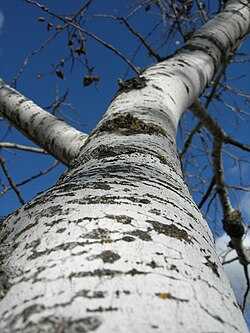
One way to identify aspen stands is by looking for vertical scars on the bark, which are often left by elk stripping the bark with their teeth. The leaves are nearly round, measuring 4–6 cm in diameter, with a glossy green upper surface and a duller gray underside. A defining anatomical feature is the petiole—the stalk connecting the leaf to the branch. In aspens, these petioles are flattened from side to side, allowing the leaves to twist easily even in a light breeze.
Seasonal Changes and Reproduction
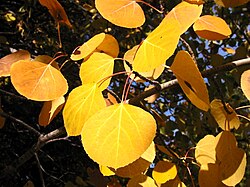
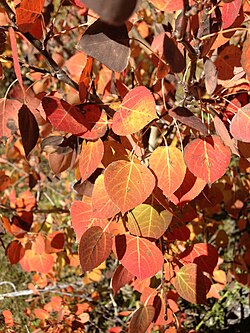
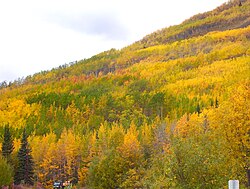
As autumn approaches, the foliage undergoes a dramatic transformation. While the leaves are primarily golden to yellow, they can occasionally turn red. This seasonal display is a hallmark of the species' presence in North American forests.
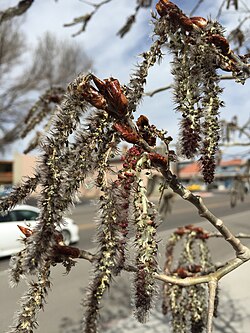
Aspens are dioecious, meaning individual trees are either male or female. In early spring, before the leaves emerge, the trees produce catkins—long, drooping flower clusters. Once pollinated, the female trees produce fruit in the form of 10 cm-long strings of capsules. Each capsule contains tiny seeds embedded in cottony fluff, which uses the wind to disperse the seeds across the landscape.
The Power of Clonal Colonies
While aspens do produce seeds, they rarely grow from them. Instead, they primarily propagate through their root systems. This process creates clonal colonies, where a single group of trees shares an identical genetic makeup and a single, massive root structure known as an ortet. New growth develops from adventitious buds on these parent roots.
The most famous example of this phenomenon is Pando, a clonal colony that spans 43 hectares. Scientists believe Pando may be one of the oldest and heaviest living organisms on Earth, with a root system estimated to be between 8,000 and 12,000 years old.
Ecology and Habitat
The quaking aspen is highly adaptable, thriving in a wide range of climates. In the humid east, the trees grow quickly but may decay within 60 years. In the drier western regions, they grow more slowly but can live significantly longer. They are found in diverse environments, from the waterlogged soils of Alaska (where they grow near road margins) to high-elevation mountains in Mexico.
The tree serves as a vital food source for a variety of wildlife. Its buds and bark are consumed by moose, deer, elk, and snowshoe hares, while its foliage is a food source for various insects, including caterpillars of certain moths and butterflies. Even beavers utilize the tree, eating the bark and foliage and storing logs for winter food.
Challenges: Dieback and Environmental Stress
Since the early 1990s, researchers have noted increased mortality in aspen stands. This "dieback" is attributed to a complex mix of stressors:
- Biological Factors: Defoliation by the forest tent caterpillar and attacks from wood-boring beetles like the poplar borer.
- Fire Suppression: Because aspens are vigorous resprouters, they often rely on wildfire to clear out competing conifers. Strict fire suppression can allow conifers to overtake aspen groves.
- Climate Change: Increased frequency of severe droughts and unusual thaw-freeze events in late winter have contributed to declining health in many stands.
- Grazing: High levels of browsing by ungulates (such as cattle or deer) can prevent young sprouts from reaching maturity.
Summary of Quaking Aspen Profile
| Feature | Details |
|---|---|
| Common Names | Quaking aspen, trembling aspen, mountain aspen, popple |
| Primary Use | Pulp for paper, newsprint, oriented strand board (OSB), and crates |
| Typical Height | 15–18 meters (50–60 ft) |
| Reproduction | Root sprouting (clonal) and wind-dispersed seeds |
| State Tree | Utah |
Frequently Asked Questions
Why do aspen leaves "quake" or tremble?
The leaves tremble because they have flattened petioles (leaf stalks). This unique shape allows the leaves to twist and move easily in response to even the slightest breeze.
What is a clonal colony?
A clonal colony is a group of trees that are genetically identical and connected by a single, shared root system. Instead of growing from seeds, new trees sprout from the roots of the parent organism.
Can aspen wood be used for firewood?
Aspen is generally considered poor fuel wood. It dries slowly, rots quickly, and does not produce much heat compared to other wood species.
How do aspens help the ecosystem?
Aspens provide essential food and habitat for many animals, including moose, elk, beavers, and various birds and insects. They also play a key role in the structure of the aspen parkland biome.
Is the quaking aspen endangered?
No, the quaking aspen is currently classified as Least Concern by the IUCN, though certain stands are facing challenges from climate change and pests.