Exploring Qiqihar: The Crane City of Heilongjiang
Located in the west-central part of China's Heilongjiang province, Qiqihar (also known as Tsitsihar) stands as a significant industrial and historical hub. Known affectionately as "The Crane City" (鹤城), it is the second-largest city in the province and serves as a vital gateway to the northern regions of the country. From its origins as a nomadic settlement to its modern status as a center for heavy equipment manufacturing, Qiqihar offers a unique blend of natural beauty and industrial strength.
Key Facts
- Nickname: The Crane City (鹤城)
- Province: Heilongjiang, China
- Population: Approximately 4.07 million (2020 census)
- Primary Industry: Heavy equipment manufacturing
- Climate: Humid continental (Dwa) with distinct four seasons
- Major Landmark: Zhalong Nature Reserve (home to red-crowned cranes)
Geography and Climate
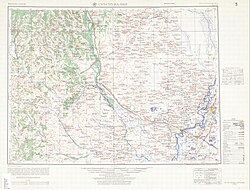
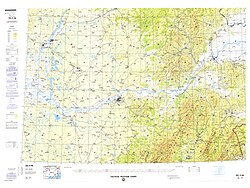
Qiqihar occupies a vast land area of approximately 42,205.82 km². The terrain is characterized by an average elevation of 147 meters, with regional altitudes ranging between 100 and 500 meters. The city is bordered by several key regions, including Baicheng in Jilin to the south, Daqing to the east, and parts of Inner Mongolia to the west.
The city experiences a humid continental climate, marked by four distinct seasons. Winters are long, dry, and bitterly cold, with January averages reaching -18.1°C. Conversely, summers are warm and humid, with July averages around 23.3°C. Despite the harsh winters, the city enjoys abundant sunshine, receiving roughly 2,839 hours of bright sunlight annually.
A Journey Through History
Early Settlements and the Qing Dynasty
The region was originally inhabited by nomadic Daur and Tungus herdsmen. The city's earliest name was Bukui, a Dagur word meaning "auspicious." Historically, the area served as a major military garrison and a center for Russo-Chinese trade around 1700. During the Qing Dynasty, the government initially restricted large-scale agricultural settlement, focusing instead on the fur trade and maintaining the area as a semi-pastoral zone.
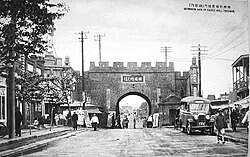
: Gate of castle wall, TsitsiharThe Second Sino-Japanese War
Qiqihar played a significant role during the conflict in the 1930s. Following the September 18 Incident, Japanese forces occupied the city in November 1931. During this period, the puppet Manchukuo government established Qiqihar as the administrative center of Longjiang province. A somber part of this era includes the presence of Unit 516, which conducted chemical warfare research. The legacy of this period was highlighted in 2003 when an underground mustard gas tank from the war era was accidentally damaged.
Modern Industrialization
Following the establishment of the People's Republic of China in 1949, Qiqihar became a cornerstone of the nation's industrial strategy. During China's first five-year plan (1951–1956), the city received significant aid from the Soviet Union to build massive industrial facilities. This transformed Qiqihar into a major center for equipment manufacturing, hosting prominent enterprises like China First Heavy Industries.
Demographics and Administration
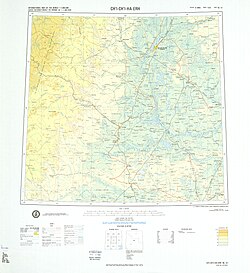
Qiqihar is a diverse city, primarily inhabited by Han Chinese, but also home to thirty-four ethnic minorities, including the Manchu, Daur, and Mongol peoples. As of the 2020 census, the prefecture-level population was 4,067,489. The city is organized into 16 administrative divisions, including 7 districts, 8 counties, and 1 county-level city.
Administrative Breakdown
| Division Name | Type | Population (Est.) | Area (km²) |
|---|---|---|---|
| Longsha District | District | 354,987 | 283 |
| Jianhua District | District | 292,579 | 81 |
| Tiefeng District | District | 331,951 | 695 |
| Nehe City | City | 625,892 | 6,664 |
| Longjiang County | County | 572,764 | 6,197 |
| Yi'an County | County | 480,035 | 3,780 |
Economy and Infrastructure
The economy of Qiqihar is heavily driven by its manufacturing sector. The city is home to numerous large-scale equipment manufacturing enterprises that contribute significantly to the regional GDP. In 2009, the city's industrial enterprises above a designated size accounted for a substantial portion of its total assets and employment.
Transportation and Connectivity
Qiqihar is well-connected through multiple transport networks:
- Aviation: Qiqihar Sanjiazi Airport provides daily flights to major hubs like Beijing, Guangzhou, and Shanghai.
- Rail: The city is a major railway junction. The Harbin–Qiqihar intercity railway offers high-speed service, while the Qiqihar Railway Station connects the city to Beijing, Dalian, and Xi'an.
Frequently Asked Questions
Why is Qiqihar called "The Crane City"?
The nickname comes from the nearby Zhalong Nature Reserve, which is famous throughout China for being a vital habitat for numerous red-crowned cranes.
What is the main industry in Qiqihar?
Qiqihar is a heavily industrialized city, serving as a major center for equipment manufacturing in Northeast China.
How is the weather in Qiqihar?
The city has a cold, monsoon-influenced continental climate. It features very cold, dry winters and warm, humid summers, with four distinct seasons.
How can I travel to Qiqihar from other major Chinese cities?
You can reach Qiqihar via Qiqihar Sanjiazi Airport for domestic flights or by using the extensive railway network, including high-speed intercity trains from Harbin.
What are the major ethnic groups in the city?
While the population is mainly Han Chinese, Qiqihar is home to 34 different minorities, including the Manchu, Daur, and Mongol peoples.