Pumas UNAM: The History and Legacy of Mexico's University Giants
Club Universidad Nacional, widely known as Pumas or UNAM, stands as one of the most prestigious and popular professional football clubs in Mexico. Based in Mexico City and representing the National Autonomous University of Mexico (UNAM), the club is a member of the Liga MX, the top tier of Mexican football. Recognized as one of the Cuatro Grandes (Big Four) of Mexico, Pumas is distinguished not only by its sporting success but also by its unique identity as a university-affiliated institution.
One of the most remarkable achievements of the club is its longevity at the top; Pumas is one of only seven Mexican clubs that have never been relegated from the first division.
Key Facts
- Founded: August 2, 1954, as Club Deportivo Universidad.
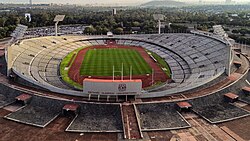
- Home Ground: Estadio Olímpico Universitario (Capacity: 72,000).
- Ownership: National Autonomous University of Mexico (UNAM).
- Status: One of the "Cuatro Grandes" of Mexican football.
- Notable Achievement: Only team to win back-to-back championships since the league split into two seasons (2004).
- Colors: Blue and Gold, inspired by the University of Notre Dame.
The Evolution of a Powerhouse
Foundations and Early Struggles
The journey to professionalism began with Dean Luis Chico Goerne, whose initial attempt to join the Liga Mayor de Fútbol Professional del Distrito Federal was rejected. Consequently, the team spent 13 years in the Liga De Ascenso. In the 1940s, under the guidance of Rodolfo "Butch" Muñoz, the team was built using the university's own student body, fostering a deep connection between the campus and the pitch.
The club finally entered the professional ranks in August 1954, joining the Segunda División. Their first professional match took place on September 12, 1954, in an away game against Monterrey.
The Golden Eras: 1970s and 1980s
The 1970s marked the beginning of Pumas' ascent to glory. After winning the Copa México and the Campeón de Campeones in the 1974–75 season, the club secured its first league championship in the 1976–77 season. This era saw the debut of the legendary Hugo Sánchez and the signing of Ricardo "Tuca" Ferretti in 1978.
The 1980s brought further consolidation. The club won its second league title in the 1980–81 season and captured both the CONCACAF Championship and the Interamerican Cup. The club's influence extended to the national team during the 1986 FIFA World Cup, as Pumas manager Velibor "Bora" Milutinović was appointed head coach of Mexico, bringing several Pumas players with him.
Modern Success and Challenges
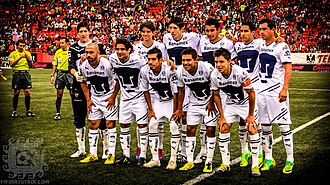
After a relatively quiet 1990s—highlighted by a memorable 1990–91 championship win over Club América—the 2000s saw a resurgence. Under the management of Hugo Sánchez, Pumas achieved a historic feat in 2004, winning back-to-back championships. They also reached the Copa Sudamericana final in 2005, narrowly losing to Boca Juniors on penalties.
The 2010s and 2020s have been a period of fluctuation. The club won the Clausura 2011 tournament and reached several finals, including the 2020 Apertura and the 2022 Champions League Final. Most recently, under Efraín Juárez, the team set a club record of 36 points in the short tournament format during the Clausura 2026 regular phase, though they finished as runners-up after a final against Cruz Azul.
Stadium and Identity
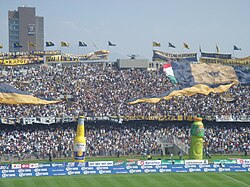
Pumas plays its home matches at the Estadio Olímpico Universitario, a historic venue that served as a primary site for the 1968 Summer Olympics. With a capacity of 72,000, the stadium is integrated into the university campus, allowing students easy access to matches.
The club's iconic blue and gold colors are a tribute to the University of Notre Dame. The nickname "Pumas" was coined by coach Roberto 'Tapatio' Mendez, who used the wild cat as a metaphor for the strength and agility he expected from his players.
Rivalries
Clásico Capitalino
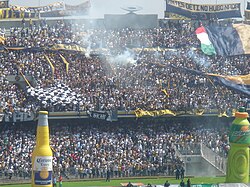
The rivalry with Club América is one of the most intense in Mexico. Born from geographic proximity in Mexico City and fueled by high-profile player transfers and controversial final matches, it is often cited as the most violent rivalry in the country, requiring extreme security measures.
Clásico Universitario
This is a historic rivalry based on university origins, primarily against Leones Negros. While it peaked during the 1976-77 final, the intensity has faded as Leones Negros declined in the professional standings.
Club Overview
| Category | Details |
|---|---|
| Full Name | Club Universidad Nacional, A.C. |
| League | Liga MX |
| Home Stadium | Estadio Olímpico Universitario |
| Current Head Coach | Esteban Solari |
| Fan Base Size | Approx. 12 million (2021 survey) |
| Key Rival | Club América |
Frequently Asked Questions
Why are the team colors blue and gold?
The colors were chosen as a tribute to the University of Notre Dame, whose coaches helped develop the university's American-style football program.
What is the "Cuatro Grandes"?
The "Cuatro Grandes" (Big Four) refers to the four most popular and historically successful clubs in Mexican football, of which Pumas UNAM is a member.
Who is the most iconic player in Pumas history?
Hugo Sánchez is widely regarded as one of the club's greatest legends, having played for the team as a player and later leading them to back-to-back championships as a manager in 2004.
Has Pumas ever been relegated?
No, Pumas is one of only seven Mexican clubs that have never been relegated from the top division.
What is the Clásico Capitalino?
It is the fierce rivalry between Pumas UNAM and Club América, both based in Mexico City, known for its high intensity and historical tension.