Puerto Ricans: History, Demographics, and Cultural Identity
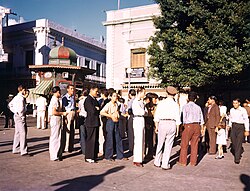
The Puerto Rican people, often referring to themselves as Boricuas, possess a rich and complex identity shaped by centuries of migration, colonial history, and cultural blending. From the island of Puerto Rico to a vast global diaspora, the Puerto Rican experience is defined by a unique intersection of Spanish, African, and Indigenous influences.
Today, the population is split between the island and various international hubs, with a particularly significant presence in the United States. This movement has created a dynamic cultural exchange that continues to evolve as Puerto Ricans navigate their political status and ethnic self-perception.
Key Facts
- Total Population: Approximately 15 million people (9 million on the island/diaspora and 6 million in the diaspora).
- Primary Languages: Spanish is dominant, with English also widely spoken.
- Citizenship: Puerto Ricans became U.S. citizens via the Jones-Shafroth Act of 1917.
- Major Religions: Predominantly Christian, with Catholicism and Protestantism being the most common.
- Ethnic Roots: A blend of Spaniards, Canarians, Taínos (Indigenous people), and Black Latin Americans.
Population and Global Distribution
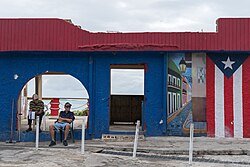
The Puerto Rican population is widely distributed, with the largest concentrations found in Puerto Rico and the United States. According to 2024 data, there are approximately 3,063,719 people in Puerto Rico and 6,110,356 in the United States.
Beyond these two primary regions, significant populations exist in the U.S. Virgin Islands, the Dominican Republic, Canada, Mexico, and Brazil. This dispersion highlights a history of emigration driven by economic, political, and social factors.
| Region | Population | Data Year |
|---|---|---|
| United States | 6,110,356 | 2024 |
| Puerto Rico | 3,063,719 | 2024 |
| U.S. Virgin Islands | 7,759 | 2020 |
| Dominican Republic | 6,083 | 2015 |
| Canada | 3,405 | 2016 |
Ethnogenesis and Racial Identity
The ethnic composition of Puerto Rico has shifted significantly over the centuries. During Spanish rule (1765–1897), the population grew from roughly 44,000 to nearly 900,000. In 1765, the population was approximately 39.2% White and 11.2% African, with nearly half categorized as "Other," including Mulattoes and Indigenous people.
By 1897, the White population had increased to 64.3%, while the African population stood at 8.6% and mixed identities at 27.1%. This historical blending is a cornerstone of Puerto Rican ethnogenesis—the process by which a new ethnic group emerges.
Modern Perceptions of Race
Self-identification has changed dramatically in recent decades. In the 1899 census, 61.8% of the population identified as White. By the 2010 Census, this number had risen to 75.8%. However, the 2020 Census showed a sharp decline, with only 17.1% identifying as White, while 49.8% identified as "Two or more races." This shift reflects a changing cultural understanding of race and heritage on the island.
Ancestry and Genetic Influence
While the primary roots are Spanish, African, and Taíno, other groups have contributed to the genetic tapestry. In the 1930s and 1940s, European Jews fleeing German-occupied Europe settled on the island. Later, in the 1950s, thousands of Cuban Jews arrived following the rise of Fidel Castro.
Language and Religion
Puerto Rican Spanish is the primary language for education, business, and daily interaction. According to 2015 data, 94.1% of adults speak Spanish. While many are bilingual, approximately 78.3% of the population does not speak English "very well," and 15.8% are fully bilingual.
Spiritually, the population is overwhelmingly Christian (97%). While the CIA World Factbook reports that 85% identify as Roman Catholic and 15% as Protestant, other reports suggest a more diverse landscape, including significant growth in Pentecostalism and independent churches.
Political Status and Citizenship
The legal status of Puerto Ricans is unique. Under the Jones-Shafroth Act of 1917, Puerto Ricans were granted U.S. citizenship. Because this was achieved through Congressional legislation rather than a Constitutional amendment, they are considered statutory citizens. Since 1948, Congress has determined that all Puerto Ricans, regardless of whether they were born on the island or in the U.S., are naturally born United States citizens.
Frequently Asked Questions
What does the term "Boricua" mean?
Boricua is a term used by Puerto Ricans to refer to themselves, derived from Borikén, the Indigenous Taíno name for the island.
How did Puerto Ricans become U.S. citizens?
Puerto Ricans were granted U.S. citizenship through the passage of the Jones-Shafroth Act in 1917.
What is the dominant language in Puerto Rico?
Spanish is the dominant language of daily life, business, and education, though English is also spoken and taught.
Why did the percentage of people identifying as "White" drop in the 2020 Census?
The decrease from 75.8% in 2010 to 17.1% in 2020 reflects a shift in how Puerto Ricans perceive and report their racial identity, with more people choosing to identify as "Two or more races."
What are the primary religious affiliations in Puerto Rico?
The vast majority of the population is Christian, with Roman Catholicism being the most prominent, followed by various Protestant denominations.