Public Libraries: Evolution, Services, and Community Impact
Public libraries serve as vital hubs of knowledge, offering far more than just a collection of printed books. From their origins as exclusive repositories for the learned to their modern role as digital gateways and community centers, these institutions provide equitable access to information for all members of society. By evolving alongside technology and social needs, public libraries continue to foster literacy, education, and civic engagement.
Key Facts
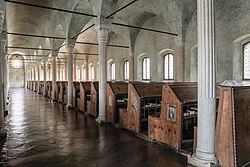
- Chetham's Library in Manchester (opened 1653) claims to be the oldest public library in the English-speaking world.
- Andrew Carnegie funded 1,689 libraries in the United States between 1883 and 1929.
- By 1930, approximately half of all American public libraries had been built through Carnegie's philanthropy.
- Libraries are critical for digital equity; in 2006, 73% of branches were the sole local provider of free internet access.
- Modern services have expanded to include makerspaces, tool lending, and disaster recovery support.
The History of Public Libraries
Early Foundations
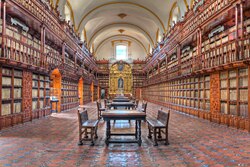
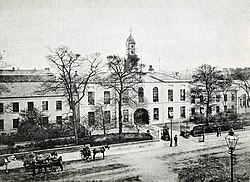
The roots of the public library movement can be traced back to the early 17th century in England. Notable early institutions include the Norwich City library, established in 1608, and the Bodleian Library, which was designed to be open to the "whole republic of the learned." In 1653, Chetham's Library opened in Manchester, marking a significant milestone in the availability of texts to the public.
The Enlightenment and Subscription Models
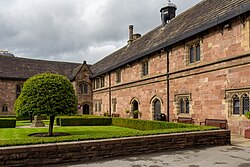
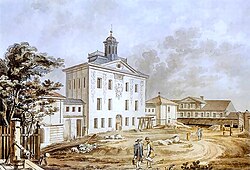
During the Enlightenment, the concept of the library expanded through subscription models. These were divided into commercial subscription libraries and private-subscription libraries, where members paid a fee to access a shared collection of books. This era saw the rise of institutions like the Redwood Library and Athenaeum in 1768 and the Biblioteka Załuskich in mid-18th century Warsaw.
The 19th and 20th Century Expansion
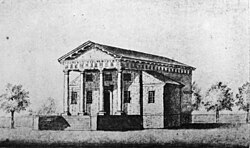
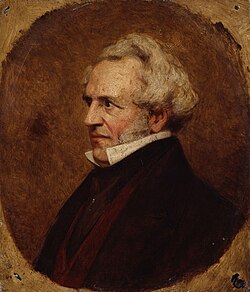
The 19th century brought a shift toward truly free public access. In the United Kingdom, James Silk Buckingham led a prominent campaign for public libraries in the mid-1800s. In the United States, the landscape was transformed by the philanthropy of Andrew Carnegie. Between 1883 and 1929, Carnegie funded the construction of 1,689 libraries, ensuring that communities across the country had access to free educational resources.
Modern Library Services
Book Borrowing and Resource Sharing
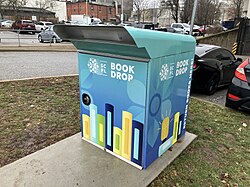
While traditional lending remains a core function, libraries have optimized the process through tools like outdoor book drop boxes and interlibrary loans—a system where libraries borrow materials from one another to satisfy a patron's request.

Digital Engagement and Technology
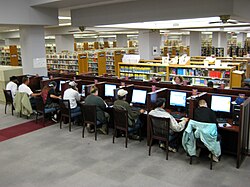
In the modern era, internet access is nearly as critical as book access. A 2008 study revealed that 100% of rural, high-poverty library outlets provide public internet access, bridging the digital divide for underserved populations. Many libraries now feature dedicated computer labs and high-speed connectivity.
Community Outreach and Programming
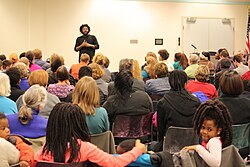
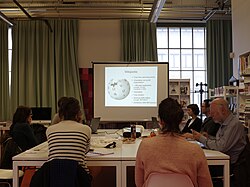
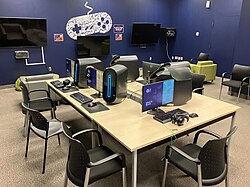
Libraries have transitioned into community centers by offering diverse programming for children, teens, and adults. This includes author talks, Wikipedia edit-a-thons, and specialized spaces like gamer rooms for young adults. Furthermore, the introduction of makerspaces—collaborative workspaces for making, learning, and exploring—began at the Fayetteville Free Library in 2011.
Non-Traditional Lending and Social Services
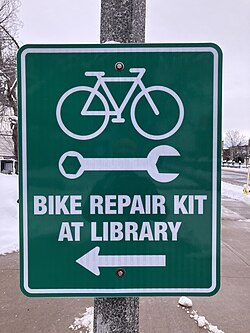
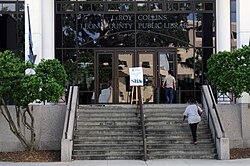
Beyond media, some libraries now lend practical tools, such as bike repair kits or sewing machines. They also serve as critical infrastructure during crises; for example, the LeRoy Collins Public Library has hosted FEMA Disaster Recovery Centers.
Organization and Funding
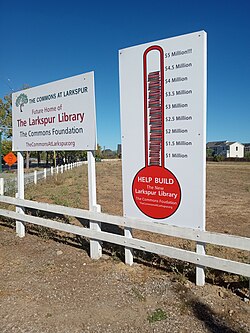
Public libraries are funded through a variety of streams. While the majority of support comes from state and local sources, federal funding provides essential assistance. Some libraries operate as library districts or through public-private partnerships to maintain efficiency and service quality.
| Era/Category | Key Feature/Institution | Primary Purpose |
|---|---|---|
| Early 17th Century | Chetham's Library (1653) | Academic and learned republic access |
| Enlightenment | Subscription Libraries | Member-funded shared collections |
| Late 19th Century | Carnegie Libraries | Mass expansion of free public access |
| 21st Century | Digital Hubs & Makerspaces | Internet equity and community creation |
Frequently Asked Questions
What is the oldest public library in the English-speaking world?
Chetham's Library in Manchester, which opened in 1653, claims this distinction.
How did Andrew Carnegie influence public libraries?
Carnegie funded 1,689 libraries in the U.S. between 1883 and 1929, and by 1930, half of all American public libraries had been built through his contributions.
What is a makerspace in a library?
A makerspace is a community outreach area that provides tools and space for educational and entrepreneurial activity, first introduced in public libraries by the Fayetteville Free Library in 2011.
Do libraries provide services other than lending books?
Yes. Modern libraries provide free internet access, meeting spaces, research assistance, and in some cases, the lending of physical tools like bike repair kits and sewing machines.
How are public libraries typically funded?
Funding primarily comes from state and local sources, though federal funding and public-private partnerships also provide critical financial support.