Prussian Union of Churches: A History of Unity, Schism, and Resistance
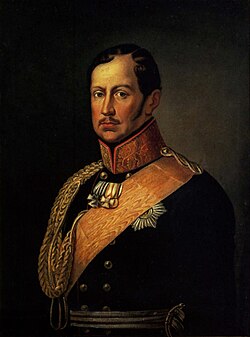
The Prussian Union of Churches represents one of the most significant ecclesiastical experiments in European history. Established in 1817, this body sought to bridge the theological divide between Lutheran and Calvinist traditions, creating a massive United Protestant entity that mirrored the political ambitions of the Prussian state. Over two centuries, the church evolved from a state-controlled institution into a battleground for religious freedom during the rise of National Socialism, eventually integrating into the modern Union of Evangelical Churches.
The union was not merely a theological shift but a structural one, bringing together diverse congregations across the vast territories of Prussia under a single administrative umbrella. This journey from royal decree to modern integration is marked by periods of immense growth, internal conflict, and courageous resistance against totalitarianism.
Key Facts
- Founded: 1817 through the merger of Lutheran and Calvinist congregations in Prussia.
- Peak Membership: Reached approximately 19.5 million parishioners by 1933.
- Core Conflict: The Kirchenkampf (Church Struggle) during the Nazi era, pitting the state-aligned "German Christians" against the "Confessing Church."
- Modern Status: Subsumed into the Union of Evangelical Churches (EKD) in 2003/2004.
- Administrative Center: Historically headquartered in Berlin.
Evolution of Status and Nomenclature
The church's identity shifted frequently, reflected in its changing official names. These changes often signaled a shift in the relationship between the church and the Prussian state.
| Years | Official Name | Status/Context |
|---|---|---|
| 1817–1821 | Prussian Union of Churches | Initial formation |
| 1821–1845 | Evangelical Church in the Royal Prussian Lands | State church |
| 1845–1875 | Evangelical State Church of Prussia | State church alongside other bodies |
| 1875–1922 | Evangelical State Church of Prussia's older Provinces | Administrative restructuring |
| 1922–1953 | Evangelical Church of the old-Prussian Union | Independent church body |
| 1953–2004 | Evangelical Church of the Union | Post-war reorganization |
Administrative Structure and Growth
By the late 19th century, the church operated through a sophisticated hierarchy. The executive power rested with the Evangelical Supreme Church Council (EOK), established in 1850, while legislative authority belonged to the General Synod. The church was divided into ecclesiastical provinces covering regions such as East Prussia, Brandenburg, Pomerania, Posen, the Rhineland, Saxony, Silesia, and Westphalia.
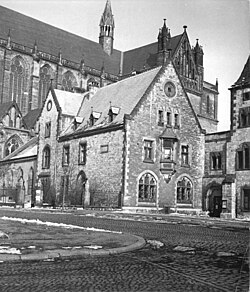
The church experienced rapid growth during the industrial era. From 11 million parishioners in 1865, the population climbed to 14.9 million by 1890 and peaked at 19.5 million in 1933. However, the mid-20th century saw a sharp decline, dropping to 14.7 million by 1950 and further to 9.26 million by 1990.
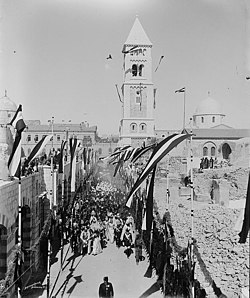
The Era of Conflict: Nazi Rule and the Kirchenkampf
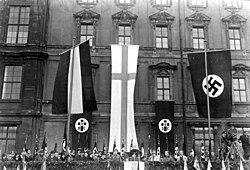
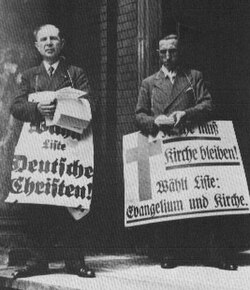
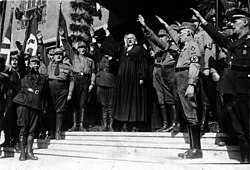
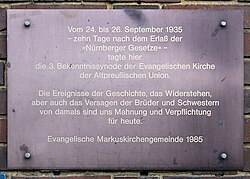
The most tumultuous period for the church began in 1933. The Nazi government abolished religious autonomy and imposed a "streamlined" leadership loyal to the regime. This led to the rise of the German Christians, a faction that sought to align church doctrine with Nazi ideology, including the implementation of the "Aryan paragraph" to exclude those of Jewish descent from the ministry.
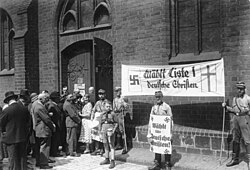
The Confessing Church Resistance
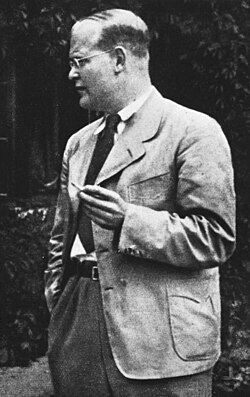
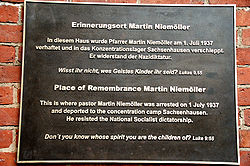
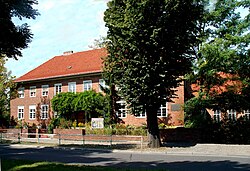
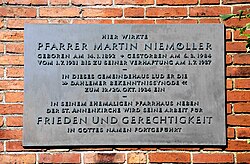
In response, a movement known as the Confessing Church emerged. These Christians declared that the Nazi-inspired leadership had caused a schism and that the Confessing Church represented the true Evangelical body. Figures such as Dietrich Bonhoeffer and Martin Niemöller became central to this resistance.
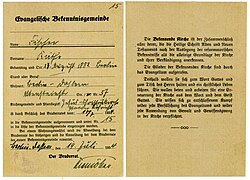
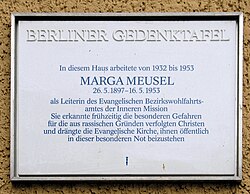
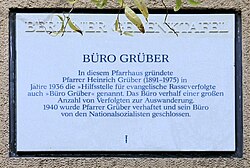
Because the Nazi government banned public Confessing Church events, members used "Red Cards" to verify their affiliation and gain access to clandestine meetings. Despite the danger, the church established networks to support the persecuted, including the Bureau Grüber founded in 1936 to assist Protestants of Jewish descent.
The struggle was marked by arrests and state pressure. The government attempted to merge the church into a single "Reich Church" under State Bishop Ludwig Müller, though some regional bodies in Bavaria and Württemberg resisted this merger.
Post-War Reconstruction and Integration
Following the collapse of the Third Reich in 1945, the church underwent a period of deep reflection and restructuring. In 1951, a new constitution was adopted, transforming the Evangelical Church of the old-Prussian Union into an umbrella organization. The Supreme Church Council was replaced by the Church Chancery, and the governing body became the Council of the Evangelical Church of the old-Prussian Union.
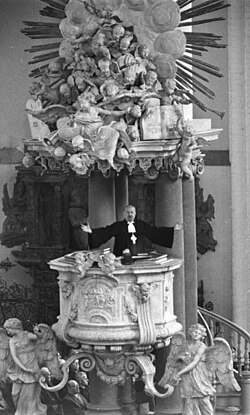
The latter half of the 20th century was characterized by the division of Germany. The church operated with separate bishops for the Western and Eastern regions until the reunification of Germany allowed for a reunited synod in 1992. This period also saw significant social progress, including the first ordination of women as pastors of full competence at the Sachsenhausen Church in early 1943.
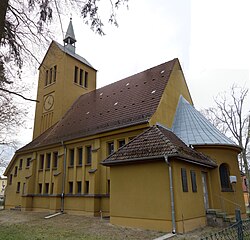
Ultimately, the distinct identity of the old-Prussian Union concluded in 2003, when it was subsumed into the Union of Evangelical Churches (EKD), moving its seat from Berlin to Hanover.
Frequently Asked Questions
What was the primary purpose of the Prussian Union of 1817?
The union was designed to merge Lutheran and Calvinist (Reformed) congregations into a single Protestant body within Prussia, promoting religious unity and state cohesion.
Who were the "German Christians"?
The German Christians were a pro-Nazi faction within the church that attempted to synthesize Christianity with National Socialist ideology, including the adoption of racial laws.
What was the role of the Confessing Church?
The Confessing Church was a resistance movement that rejected the Nazi-controlled church leadership, asserting that the church must remain faithful to the Gospel rather than the state.
How did the church handle the persecution of Jews?
While the broader church structure struggled, the Confessing Church and specific initiatives like the Bureau Grüber (est. 1936) worked to create networks of support for persecuted Protestants of Jewish descent.
When did the church finally merge into the EKD?
The church was incorporated into the Union of Evangelical Churches (EKD) on July 1, 2003, with the official transition completing in 2004.