Understanding Promotion and Relegation in Sports Leagues
In the world of competitive sports, movement is often the key to excitement. One of the most fundamental ways leagues manage this movement is through a system of promotion and relegation. This process allows teams to move up or down between different divisions based on their performance over a season, creating a dynamic environment where every match can impact a team's future.
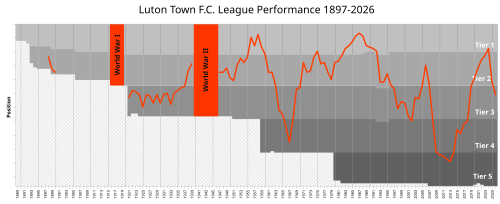
Leagues that utilize this system are often referred to as open leagues. In these structures, the highest-performing teams in a lower division earn promotion to a higher tier, while the lowest-performing teams in a higher division are relegated to a lower tier. Teams positioned to be promoted are said to be in the promotion zone, while those facing relegation are in the relegation zone (sometimes colloquially called the "drop zone").
Open Leagues vs. Closed Models
Not all sports operate under the same rules. While many international football leagues use promotion and relegation, other regions utilize a closed model. This model is primarily seen in the United States, Canada, Australia, the Philippines, and Singapore. In a closed model, leagues are organized around franchises or licenses. This means the same teams remain in the league from year to year, with movement occurring only through the admission of expansion teams or the relocation of existing ones, rather than through competitive merit.
Some organizations, such as the Belgian Pro League or the Super League in rugby league, use hybrid systems. These allow for movement between divisions but base the decisions on a combination of competitive performance and administrative or financial scores.
The Mechanics of Movement
In most systems, the number of teams moving up is roughly equal to the number of teams moving down. However, exceptions occur when a league decides to change its total membership size or if a club is removed due to financial insolvency or expulsion. Such changes can create a "knock-on" effect, forcing adjustments in lower divisions or regional feeder leagues to maintain numerical balance.
Beyond competition, relegation can also serve as a disciplinary tool. For instance, the Italian Football Federation has used relegation to punish clubs involved in match-fixing, most notably during the 2006 Serie A scandal involving Juventus.
Key Facts
- Open Leagues: Use performance-based promotion and relegation to move teams between divisions.
- Closed Models: Use a franchise-based system where teams remain constant (common in US sports).
- Hybrid Systems: Combine sporting merit with financial and administrative criteria.
- Disciplinary Relegation: Movement can be used as punishment for rule violations like match-fixing.
- Economic Impact: Lack of salary regulation in open leagues can lead to predictable results and lower revenue compared to closed leagues.
Historical Evolution: Baseball and Football
The Rise of Professional Baseball
In the United States, early baseball leagues like the National Association of Base Ball Players (NABBP) initially embraced amateurism. However, as clubs began secretly compensating players, the sport moved toward professionalism. The National League (NL), founded in 1876, eventually established a "closed shop" franchise system. This model was solidified by the 1922 Supreme Court ruling in Federal Baseball Club v. National League, which granted Major League Baseball a legal monopoly.
The Development of English Football
English football took a different path. The Football Association (FA) accepted professionalism in 1885, and the founding of The Football League in 1888 created a top-tier competition that was not initially a "closed" circuit. Instead, the worst teams had to win re-election to stay in the league. Over time, mergers between various leagues helped establish the structured hierarchy of divisions seen today.

Modern Applications: eSports and Beyond
The concept of promotion and relegation has expanded into the digital age through eSports. Various titles use different structures:
- StarCraft II: Uses a "ladder" system based on skill ratings derived from wins and losses.
- League of Legends: While many regions have moved toward franchising (a closed model), some leagues still utilize mixed models where only certain "guest" teams are eligible for relegation.
- Valorant: Employs a mixed model where most teams are permanent partners, but others must qualify via promotion tournaments or face relegation.
- Counter-Strike: Historically used a "Legends" seed system to guarantee qualification for top performers in Major tournaments.
Even non-sporting events have used these principles. From 1993 to 2003, the Eurovision Song Contest used relegation to manage the number of participating countries within television time constraints. Similarly, in the Brazilian Carnival, samba schools are promoted or relegated between different groups based on their performance.
The "Promedios" System in Argentina
A unique approach to relegation is found in the Argentine First Division, which has used a system called Promedios. Instead of basing relegation solely on a single season, clubs are judged on their average performance over several seasons. This coefficient is calculated by dividing total points by matches played over a set period.
While intended to provide stability, the system is controversial. Critics argue it protects large, traditionally successful clubs and unfairly penalizes newly promoted teams who have fewer matches to build a stable average. Due to these criticisms, officials have expressed intentions to phase the system out.
| Feature | Open League (Promotion/Relegation) | Closed League (Franchise Model) |
|---|---|---|
| Movement Basis | On-field performance | Expansion or relocation |
| Team Stability | Variable (can move between tiers) | High (teams remain in the league) |
| Primary Regions | Europe, South America | North America, Australia |
| Competitive Focus | High stakes for every match | Focus on league stability/revenue |
Frequently Asked Questions
What is the difference between a promotion zone and a relegation zone?
The promotion zone consists of the top-ranked teams in a lower division that are eligible to move up to a higher division. The relegation zone consists of the lowest-ranked teams in a higher division that are at risk of being moved down to a lower division.
Why do some leagues use a closed franchise model instead of promotion and relegation?
Closed models, common in the US, prioritize league stability and financial predictability. Because teams cannot be relegated, they are often more willing to invest in long-term infrastructure and local markets without the immediate threat of losing their top-tier status.
Can a team be relegated for reasons other than losing matches?
Yes. Relegation can be used as a disciplinary measure. For example, if a club is found guilty of match-fixing or other serious violations, governing bodies may mandate their relegation to a lower division.
What are "Promedios" in football?
Promedios is a system used in Argentina where relegation is determined by a club's average points per match over several seasons, rather than their performance in a single season. This is designed to account for long-term performance.
How does relegation work in eSports?
In eSports, relegation varies by game. Some use skill-based ladders (like StarCraft II), while others use a hybrid model where most teams are "partners" with permanent spots, and only a few specific teams are subject to relegation based on their performance in qualifying tournaments.