Prometheus: The Visionary Blended Lifting Body Spaceplane Concept
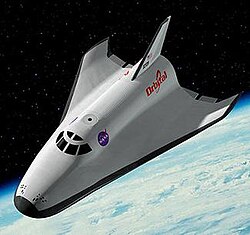
In late 2010, as part of the second phase of NASA's Commercial Crew Development (CCDev) program, Orbital Sciences Corporation introduced a bold concept for the future of human spaceflight: the Prometheus spaceplane. Designed as a crewed vehicle capable of vertical takeoff and horizontal landing (VTHL), Prometheus represented a significant attempt to bridge the gap between traditional rocket launches and reusable, pilot-friendly spacecraft.
The Evolution of Spaceplane Design
The architecture of Prometheus was not built from scratch; rather, it was an evolution of existing aerospace research. The design drew heavily from NASA's earlier HL-20 Personnel Launch System. However, Orbital Sciences aimed to push the boundaries further by incorporating improvements developed during NASA's Orbital Space Plane program.
From Lifting Body to Blended Lifting Body
While the original HL-20 was a pure lifting body—a flight vehicle that derives lift from its shape rather than traditional wings—Prometheus utilized a more advanced Blended Lifting Body (BLB) design. This hybrid approach was engineered to provide the best of both worlds: high volumetric efficiency (the ability to carry more internal volume relative to size) and superior aerodynamic qualities.
By utilizing a BLB configuration, engineers sought to optimize several critical flight characteristics, including high lift-to-drag ratios for better cross-range capability, low wing loading to ensure reduced landing speeds, and passive stability to maintain safety during all abort conditions.
Mission Capabilities and Launch Logistics
Prometheus was envisioned as a versatile workhorse for low Earth orbit. Its primary mission profile involved transporting astronauts to the International Space Station (ISS) or future commercial space stations. The spacecraft's capacity was designed to be scalable:
- Initial Capacity: Four astronauts.
- Expanded Capacity: Up to six crew members or a combination of crew and cargo.
To reach orbit, the baselined launch vehicle for the Prometheus spacecraft was the Atlas V rocket. While the Atlas V was the primary choice, the design was flexible enough to accommodate other launch vehicles. The estimated cost for developing the Prometheus spacecraft and performing the necessary upgrades to the Atlas V was projected to be between $3.5 billion and $4 billion.
The CCDev Consortium and Project Outcome
The development of Prometheus was a collaborative effort involving several major industry players. This consortium included:
- Orbital Sciences: The primary proposer.
- Northrop Grumman: Tasked with the construction of the spaceplane.
- United Launch Alliance (ULA): Responsible for providing the launch vehicle.
- Virgin Galactic: A confirmed partner in the Orbital CCDev 2 project.
Despite the ambitious design and strong industry backing, the project faced a setback when it was not selected for a NASA CCDev phase 2 award. Consequently, in April 2011, Orbital Sciences announced it would likely wind down its efforts to develop a dedicated commercial crew vehicle.
Key Facts
- Design Type: Blended Lifting Body (BLB) with Vertical Takeoff, Horizontal Landing (VTHL) capability.
- Primary Inspiration: NASA's HL-20 Personnel Launch System.
- Crew Capacity: Initially 4 astronauts, with potential for up to 6.
- Primary Launch Vehicle: Atlas V.
- Estimated Development Cost: $3.5 to $4 billion.
- Key Partners: Northrop Grumman, United Launch Alliance, and Virgin Galactic.
Technical Summary
| Feature | Specification/Detail |
|---|---|
| Vehicle Category | Blended Lifting Body (BLB) |
| Launch Method | Vertical Takeoff |
| Landing Method | Horizontal Landing (Runway) |
| Target Destination | International Space Station / Commercial Stations |
| Primary Rocket | Atlas V |
Frequently Asked Questions
What is a Blended Lifting Body?
A Blended Lifting Body is an aerodynamic design that integrates the fuselage and the lifting surfaces into a single, smooth shape. This provides better internal volume and improved aerodynamic performance compared to traditional lifting bodies.
How did Prometheus differ from the HL-20?
While the HL-20 was a pure lifting body, Prometheus used a Blended Lifting Body design to improve volumetric efficiency and aerodynamic qualities.
What does VTHL stand for?
VTHL stands for Vertical Takeoff, Horizontal Landing. It describes a spacecraft that launches like a traditional rocket but lands on a runway like an airplane.
Why was the Prometheus project discontinued?
The project was wound down after Orbital Sciences was not selected for a phase 2 award in NASA's Commercial Crew Development (CCDev) program.
Who were the main partners in the Prometheus project?
The project involved a consortium including Orbital Sciences, Northrop Grumman, United Launch Alliance, and Virgin Galactic.