Prions: The Science of Protein-Based Infectious Agents
In the traditional understanding of biology, infectious diseases are caused by organisms containing genetic material, such as bacteria, viruses, or fungi. However, prions challenge this paradigm. A prion is an infectious agent composed entirely of a protein, devoid of any DNA or RNA, that can trigger normal proteins in the brain to fold abnormally, leading to devastating neurological decay.
These agents cause a group of conditions known as transmissible spongiform encephalopathies (TSEs). These diseases are characterized by the development of microscopic holes in the brain tissue, giving it a sponge-like appearance, and are universally fatal in all known cases.
Key Facts
- Composition: Prions are misfolded proteins that contain no nucleic acids (DNA or RNA).
- Mechanism: They propagate by inducing normal cellular prion proteins (PrPC) to misfold into the infectious form (PrPSc).
- Outcome: All known prion diseases in humans and animals are untreatable and fatal.
- Resistance: Prions are highly resistant to standard sterilization methods and environmental degradation.
- Scope: They affect a wide range of mammals, including humans, cattle, sheep, and deer.
The Prion Protein: From Normal to Pathogenic
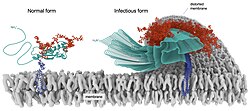
The central figure in these diseases is the prion protein (PrP). In its healthy state, known as PrPC (cellular prion protein), it is found on the membranes of cells, particularly in the central nervous system. While its exact primary purpose is still being studied, PrPC is linked to several vital biological functions, including the regulation of cell death, the consolidation of long-term memory, stem cell renewal, and the body's innate immunity.
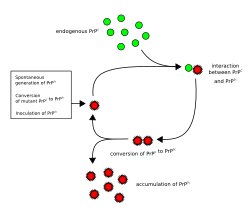
The disease begins when PrPC transforms into an abnormal, misfolded isoform called PrPSc (scrapie prion protein). Unlike the normal form, PrPSc is protease-resistant, meaning the body cannot easily break it down. This abnormal protein then acts as a template, forcing other healthy PrPC molecules to misfold into the PrPSc shape, creating a cascading effect of protein aggregation.
Models of Propagation
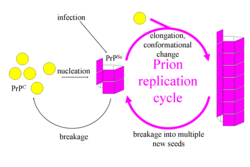
Scientists have proposed different models to explain how this replication occurs. One theory suggests a heterodimer model, where a single infectious prion interacts with a normal protein to convert it. Another theory proposes a fibril model, where PrPSc forms long, amyloid-like fibers that fragment, creating new "seeds" that accelerate the conversion process.
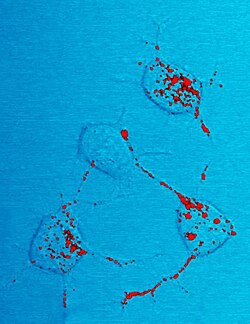
When these misfolded proteins accumulate, they form plaques and aggregates that disrupt neuronal function and eventually lead to cell death.
Transmissible Spongiform Encephalopathies (TSEs)
Prion diseases manifest differently depending on the species affected. In humans, these can occur sporadically, through genetic inheritance, or via iatrogenic transmission (accidental transmission during medical procedures).
| Affected Animal/Human | Disease Name |
|---|---|
| Humans | Creutzfeldt–Jakob disease (CJD), Kuru, Fatal insomnia, Gerstmann–Sträussler–Scheinker syndrome |
| Cattle | Bovine spongiform encephalopathy (BSE) |
| Sheep and Goats | Scrapie |
| Deer, Elk, Moose | Chronic wasting disease (CWD) |
| Cats | Feline spongiform encephalopathy |
| Mink | Transmissible mink encephalopathy |
| Camels | Camel spongiform encephalopathy |
Prions Beyond Mammals: Fungal Prions
Interestingly, prion-like mechanisms are not limited to disease. In fungi, such as Saccharomyces cerevisiae (brewer's yeast), certain proteins can exist in both a normal and a prion state. Unlike mammalian prions, these fungal prions often do not cause death but instead alter the phenotype of the organism, affecting traits like growth on specific nitrogen sources or translation termination.
- Ure2p: Affects growth on poor nitrogen sources.
- Sup35p: Increases levels of nonsense suppression.
- HET-S: Regulates heterokaryon incompatibility in Podospora anserina.
The Broader Impact on Neurodegenerative Disease
The "prion concept"—the idea that a misfolded protein can seed the misfolding of others—is now being applied to other non-infectious neurodegenerative diseases. Researchers are investigating whether proteins like alpha-synuclein (linked to Parkinson's), Tau, and Beta-amyloid (linked to Alzheimer's) behave in a prion-like manner, spreading pathology through the brain via similar aggregation mechanisms.
Frequently Asked Questions
Are prions the same as viruses?
No. Viruses consist of genetic material (DNA or RNA) encased in protein. Prions contain no genetic material at all; they are simply misfolded proteins that can induce other proteins to misfold.
Can prion diseases be cured?
Currently, all known prion diseases are untreatable and fatal. Research is ongoing, but there is no known cure once symptoms manifest.
How are prions transmitted?
Transmission can occur through the ingestion of contaminated tissues, genetic mutations in the PRNP gene, or iatrogenic means, such as contaminated surgical instruments.
Why are prions so hard to destroy?
Prions are exceptionally stable and resistant to standard sterilization techniques, including heat, radiation, and many chemical disinfectants that would typically kill bacteria or viruses.
Do prions exist in plants?
The provided data focuses on mammals and fungi; there is no mention of prions occurring in plants.